Mobility and possibility
Written by
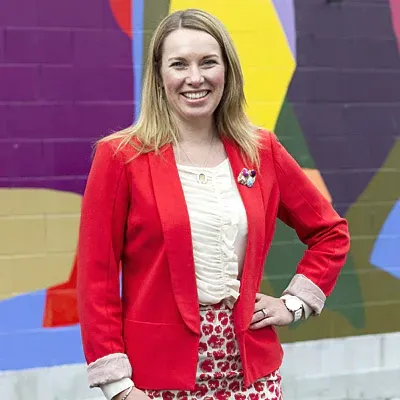
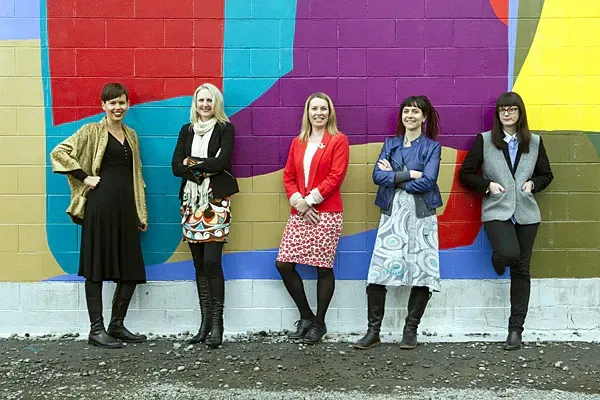
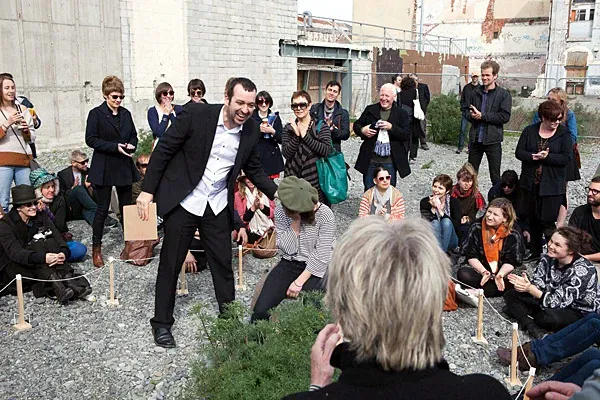
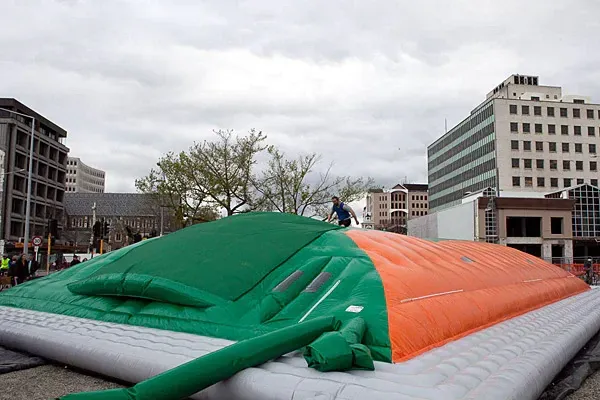
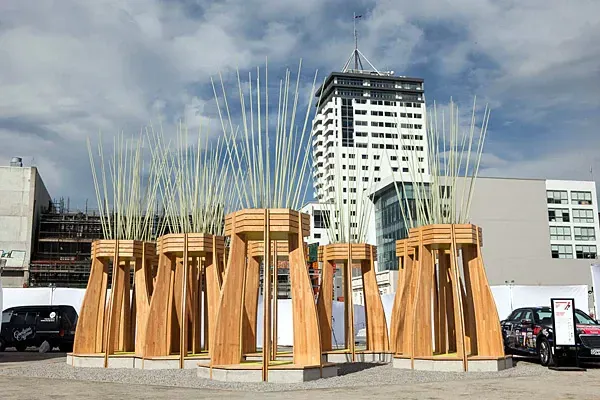
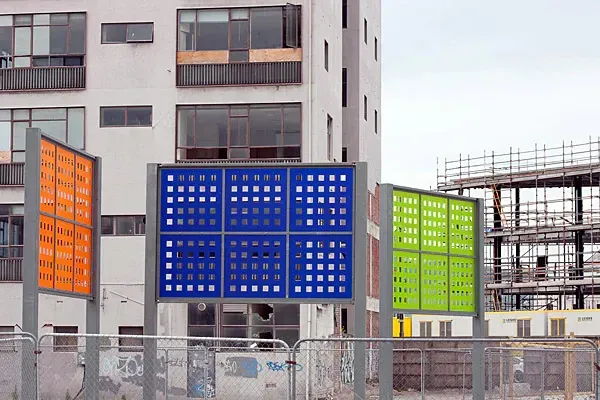

Mobility, possibility and the unexpected are the SCAPE 7 curatorial themes but also describe what the team has dealt with since the first Christchurch earthquake three years ago.
After multiple stops and starts since then, director Deborah McCormick says it's provided previously unthinkable opportunities, including evolving to deliver public art year round.
Mobility, possibility and the unexpected are the SCAPE 7 curatorial themes but also describe what the team has dealt with since the first Christchurch earthquake three years ago.
After multiple stops and starts since then, director Deborah McCormick says it's provided previously unthinkable opportunities, including evolving to deliver public art year round.
As the latest SCAPE Biennial comes to a close, she tells us how the theme also addressed the logistics of creating movable 'city specific' instead of 'site specific' works.
"In one case, the final location for a work was still in flux a week before our opening – due to the current every changing state of a city under transition. One of the sites for Miranda Parkes’ Fielder artworks had to be rethought after a hotel demolition suffered an unplanned collapse and closed a road."
Tell us a bit about SCAPE Public Art
SCAPE Public Art installs free-to-view contemporary public art in Christchurch city.
SCAPE Public Art has been operating for fifteen years and we install art year-round as well as during our biennial events.
What are some of the themes and highlights at SCAPE 7?
The curatorial themes for SCAPE 7 are ‘mobility’, ‘possibility’ and ‘the unexpected’.
SCAPE 7 has created an opportunity for Christchurch people to positively re-engage with their city. Many people who have not been back into the central city for three years have returned to the city for the first time to take one of our self guided tours or join groups on our walking tours, biking tours or as part of our community engagement and education programme.
Tell us a bit about your background
As a recent graduate from the School of Fine Arts at the University of Canterbury I proposed a one off exhibition of ‘art’ and ‘industry’ to Warren Pringle who had set up a bureau for young arts graduates called ‘art works’ to find employment opportunities after graduation. Together Warren and I worked to set-up the Art & Industry Biennial Trust towards the inaugural public art event in 2000. Under my directorship, SCAPE Public Art has produced and commissioned more than 160 new temporary public artworks with a gifting programme of ten permanent artworks including: Blue, Bill Culbert, 2000; Nucleus, Phil Price 2006; Flour Power, Regan Gentry, 2008; Passing Time, Anton Parsons, 2010/11; Tree Houses for Swamp Dwellers, Julia Morison, 2013 and Solidarity Grid, Mischa Kuball, 2013-2015.
How did you get involved as SCAPE Public Art director, what keeps you involved?
I needed to establish my career in Christchurch as my (now husband) had an established business here. Many of my contemporaries from Art School went overseas to London and Melbourne to work and do their OE. I worked as a waitress in the evenings and during the days I worked on the establishment of SCAPE Public Art until we secured a grant for a full time position. As director I have developed and implemented a range of artistic strategies for the SCAPE Public Art Christchurch Biennial and worked with leading national and international artists and curators.
What combination of people and resources are required to put it on?
We have a very active and supportive Board of Trustees who are drawn from a wide range of disciplines.
For SCAPE 7 our curator Blair French worked with thirteen local, national and international artists.
During the Biennial we operate with a small staff team which includes myself, a project manager, an education and community engagement manager, a financial controller and a marketing manager. We also have approximately ten additional staff who assist our artists, act as visitor hosts and perform general support tasks.
A major specialty of SCAPE Public Art is the process of matching artists with industry, materials, intellectual property and resources to enable the production of new innovative artworks, activating and involving communities in the exploration of contemporary art.
6th SCAPE was the most challenging yet to deliver; and the earthquakes of September 2010 and February 2011 required the SCAPE Public Art team, artists and curators to deftly jump from Plan A to Plan B to Plan C.
This year’s SCAPE Biennial has been a long time coming – tell us about this.
The last three years have undoubtedly been challenging for the arts and culture in our city. These challenges have also provided us with opportunities that were previously unthinkable. We have evolved our brand to deliver public art year round with a focus on the SCAPE Biennial activity. I sit on the CERA Community Forum to inform and lobby for the arts in Christchurch and our Marketing & Publicity Manager Jane Leighs is leading a ground-breaking pan-arts and culture audience development project for the city.
How have you dealt with it? How has it affected the team and artists?
6th SCAPE curatorial group (Blair French, Julia Morison, and William Field) came together with the SCAPE Public Art Team following both earthquakes to re-consider the relevance of each artists project to the changed context of Christchurch and the more practical aspects related to progressing them. We committed to working on a project-by-project basis – with each artist bringing each to the best possible public realisation and resolution. New partnerships were formed to present works in Christchurch in 2011 in partnership with The Christchurch Arts Festival and The Body Festival with others presented in Auckland at the Auckland Art Fair.
There were inevitably disappointments along the way. A number of our key public interfaces were cancelled – the parade, the visitor hub and much of the comprehensive public programme. We lost a “venue” where people felt safe and energetic, and it was replaced by a geographically diverse stage and a Christchurch where people’s key driver for visiting was trying to see what was left.
How have you dealt with accessing site specific work and the work not being dwarfed by a city under construction?
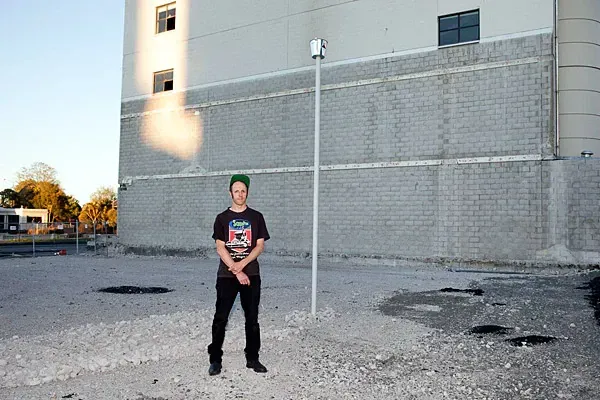
We were aware in the planning stages of the difficulties of staging public artwork in such a changeable environment. The three key themes developed by our curator Blair French of ‘mobility’, ‘possibility’ and ‘the unexpected’ address not only the context for which artists responded to but also the more logistical aspects. Blair asked artist to consider works that were able to be moved and respond to different sites as well as multiple works. So in essence the works are no longer site specific but rather the whole of Christchurch city specific. In one case, the final location for a work was still in flux a week before our opening – due to the current every changing state of a city under transition. One of the sites for Miranda Parkes’ Fielder artworks had to be rethought after a hotel demolition suffered an unplanned collapse and closed a road.
What do you hope SCAPE Public Art does for the audience and Christchurch?
Public art engenders conversation, discussion and opinion. It also creates literal and metaphorical colour in its environment. In Christchurch, art can encourage us to think about our past, present and future city. Many people have commented that the SCAPE 7 artworks have enabled them to express emotions of joy, but also to address their grief at our broken city.
The new works of art of SCAPE 7 enhance the city’s new identity and act as an active part of the recovery and rebuilding processes, energising the community in the aftermath of Christchurch’s earthquakes.
SCAPE Public Art is involved in the Christchurch Arts Audience Development Steering Group. Why is this important, what do you hope the group achieves?
At the simplest level we now sit down with other Christchurch arts organisations once a month and talk. This allows us to understand how much we’ve got in common, what we can learn from and share with one another and how we can be more efficient and successful by working together.
We have conducted research into audiences for the arts in Christchurch which shows that there is potential for us to grow and better engage with our current audiences. Our hope is that this group will drive the development an intelligent and achievable pan-arts audience development strategy for our city.
What’s your vision for the future of SCAPE Public Art?
The vision for SCAPE Public Art is for Christchurch people to be excited, engaged and stimulated by the contemporary public art which is well regarded and known by the national and international art world.
Philosophically what the Trust is striving for are artworks to occupy the intersections between the global and the local, without dis-empowering the local or diminishing the art, which needs to speak persuasively about new possibilities for a transaction between art and society.
To realise the Trust’s vision, the presentation and promotion of SCAPE Public Art is required to operate on two levels - a ‘laboratory’ where site-specific and socially engaged public art practice is realized within the socio political fabric of Christchurch city; and as a player networked into the art market over time, becoming a visitor destination for art lovers.
What’s your big idea for 2014?
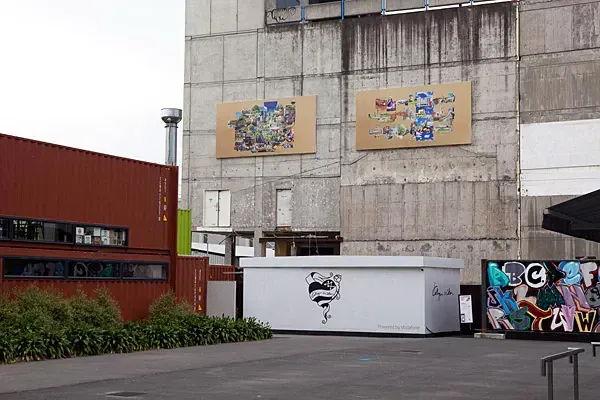
Following the earthquakes Christchurch city’s visual art community has been faced with a complex raft of issues to rebuild art infrastructure as well as capital assets and gallery spaces. This has meant that everyone has had to work differently with much of the arts taking to the streets in empty gaps, public spaces and on end walls. This is building a momentum that can see Christchurch through this transitional period becoming a leading public art destination.
My big idea is for the visual arts in Christchurch is to collectively work to position the city as the most dynamic and exciting public art and street art capital in Australasia.