Location, Location, Location
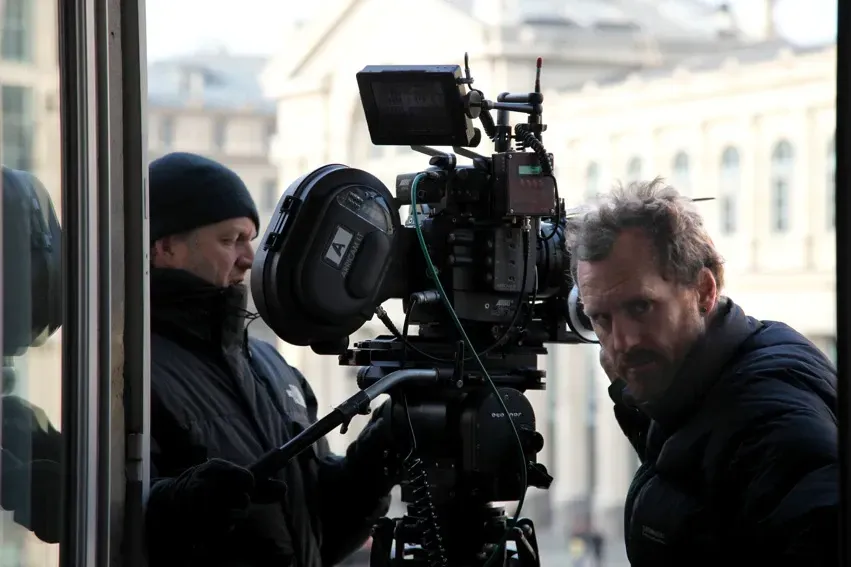
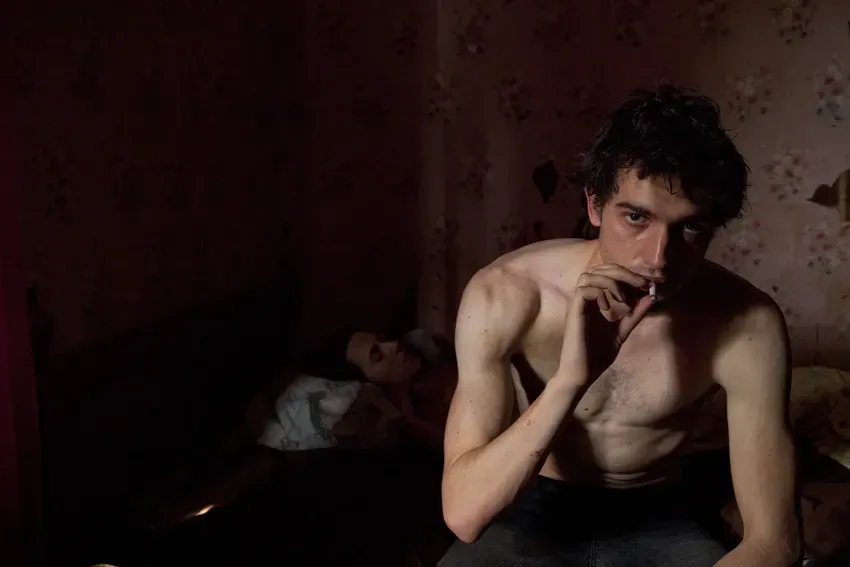
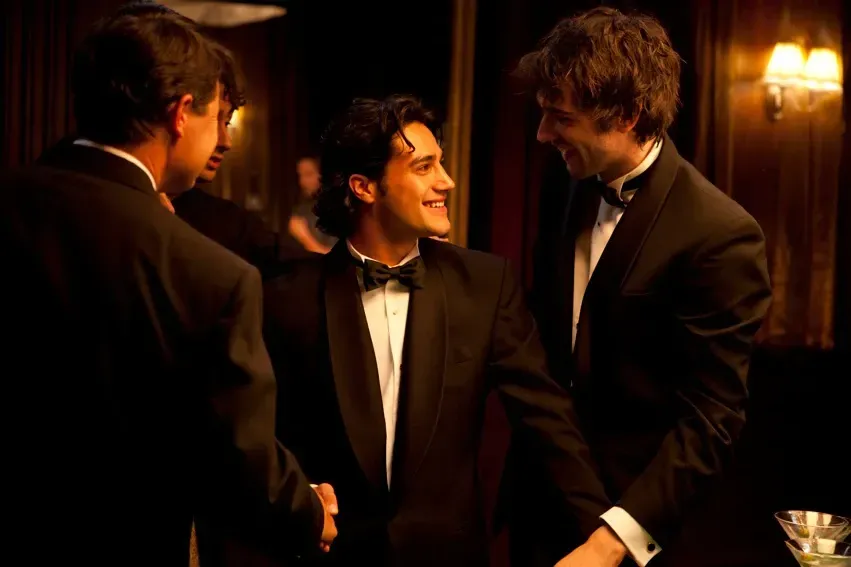
The Most Fun You Can Have Dying, the first feature from NZ filmmaker Kirstin Marcon, opens this week. The film examines what a young man does when he is diagnosed with life-threatening illness and gains access to money raised for his recovery.
Kirstin tells Renee Liang about the journey (including a long location list) to make the film.
* * *
How and why did you become a filmmaker?
I went to Hamilton Polytech after high school thinking I’d do a one-year media studies course and then figure out what I wanted to do with my life (I had a lot of vague but grand ideas). Serendipity struck and I fell in love with filmmaking.
We made a short film as a class called The Minute featuring that classic of film school creations: a shot of a ticking clock. From memory it was also an early sound design job for Dave Whitehead (Lord of the Rings, District 9, Pirates of the Caribbean, my own humble short films – a lot of good people come from Hamilton.) I was sold. I also remember making an extremely tortured documentary about a production of Hamlet and a horror film starring one of my best friends. All terrible, but good times. I stayed for three years and improved slightly.
Is your journey to becoming a film director an unusual one?
Not really. The story includes the usual highs and lows, the constant jobs in other industries (in the last few years I’ve worked as a graphic designer, a web designer, a professional education campaigner, a Shortland Street storyliner, a waitress, I’ve been unemployed, and now I’m teaching at Unitec). Some people possibly have a less twisted path than me, but it’s always a struggle. I don't think the universe really wants anyone to make a film. Don’t wait for permission – it won’t ever come.
What was it about Steven Gannaway's novel 'Seraphim Blues’ which made you want to make it into a film?
The main character Michael and the journey he went on. I saw an opportunity to make a film about the classic kiwi drifter O.E, but with extremely high stakes, a roller-coaster love-affair, and a redemptive tale of friendship. Many aspects of Steven’s novel really spoke to me. I felt that I profoundly understood his character Michael. When I began writing the screenplay I found it beautifully simple to channel Michael’s voice. He and Sylvie (Hope in the novel) feel to me like male and female sides of the same coin, and both are descended from the female character who’s been in all my short films. So it's a grafting of my own voice and obsessions onto Steven’s creation, and bought to life most exceptionally by Matt Whelan.
There’s no denying that adapting someone’s novel is a very strange thing to do. After seven years of working the film-version characters feel completely personal to me, but they are still rooted in Steven’s book where they continue to exist as he envisioned them. I look on it as a lovely continuity. Years ago I remember likening writing the first draft to being a fan. My first draft was love-filled, meandering, too-close to the book, but sweet and likeable. Then I went on the long road to create the film’s structure and through that bring Michael fully to life on the screen. After all this time I could argue that I’m the book’s biggest fan.
What draws you to anti-heroes?
I’m drawn to strong characters in tough situations and sometimes they turn out to be anti-heroes.
In the minds of the writer and actor an anti-hero is the hero anyway. You’re not judging, you only want to get inside their head. Sometimes you wish they wouldn’t do the things they do, yet they’re compelled by flaws that you gave them. You love them just the same.
In mainstream cinema anti-heroes do often seem to have more complex and compelling personalities. This could explain my teenage obsessions with Jareth (Labyrinth), Carrie (Carrie), Susan (Desperately Seeking Susan), and Steff (Pretty in Pink). Sigh.
What's your favourite scene in the film and why?
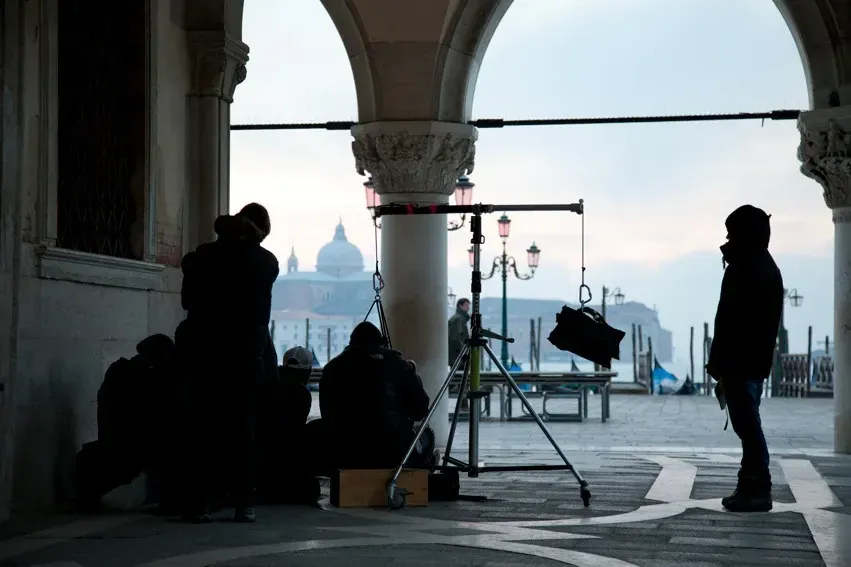
I have a few, and all for different reasons. The final scene is a favourite because we filmed it in Venice. I first went there in 1999 with my boyfriend who had a short film in competition at the fest. We had a glorious time. The festival put him up (and unknowingly, me) in the Grand Hotel des Bains on the Lido. We had some 8mm and shot all of it, running round in a fantasy world of old world glamour. I loved wandering through the interior of the hotel in the afternoons when it seemed deserted. The ballroom was full of shadows and sunlight, had beautiful wood panels lining the walls, and an old-fashioned chandelier. It seemed so mysterious. When I came home I read and watched Death in Venice and somehow the idea of filming in Venice must have got planted.
We shot on the waterfront just down from Piazza San Marco on a day that was by turns blue, pink and grey. We were away from all the tourists, in our own hazy world. It was a beautiful, quiet day. I’ll be lucky to ever have a day on set like that again.
There was another special day on location in Europe. We were in a tiny German village called Monreal. It was freezing cold and miserable, everything covered in snow and ice. We shot on a little stone bridge over a frozen river. It was a climactic scene in the relationship between Michael and Sylvie – a big scene. It was so cold that the actors couldn’t stay in position; we wrapped them into a van with its motor running and the heater on between every take.
I had to run backwards and forwards between the van and the location, and I was worried that it was actually too cold for Roxane and Matt to do the scene. (Once or twice in Europe the air temperature was so cold the makeup froze on their faces).
But in spite of the hardship they both came out and both nailed the scene. Roxane was absolutely stunning. It's a scene with almost no words, everything has to be read on their faces, and they both made it happen so beautifully. I remember us all being in tears in the van afterwards. I felt happy and ridiculous.
The New Zealand shoot was completely different but just as special. It’s hard to choose, but probably my favourite day here was shooting in the old Auckland railway station. We shot a couple of scenes there and the second was a scene set in a private gaming room. On the rekkie we had found a narrow wood-panelled room, and Bruce Everard the production designer saw how he could bring it to life. I was completely out of it that day on set, I had the flu and I was floating on codeine and coffee. Luckily the scene was intended to have a floating, out of it feel! I relied heavily on my lovely 1st AD Robyn Grace, as the mountain of cotton wool between me and the world made it hard to keep track of the action. Bruce did a fantastic job on the set, and we shot a series of shots following Michael round the darkly lit room. The opening shot of that scene is my favourite in the film I think, also due to the track written for it by composer Grayson Gilmour (No More Bets).
And the other is a quiet little scene I called the ‘Italian Maid Scene’. It’s just a tiny little scene late in the third act, but it's one I wrote as early as the first draft. It survived multiple changes and edits, and to me the final version is lovely. Watching Matt Whelan and Elena Bollino together in the little bare set was very moving. The work of our very talented makeup artist Deb Watson really shines in the scene.
What was the most challenging part of making this film?
Being away from my family for about five months, both in Auckland and Europe. My son was ten and I think it was especially hard on him. They did have a lot of fun without me though. My partner sold our couch as soon as I left, and for the remainder of their time in Wellington they had no furntiture and plenty of space to play a game they invented that mainly seemed to be about throwing stuff at each other. I missed them terribly, but at the same time being away meant I could focus completely on the job.
Your location list (Auckland, Hamilton, Cambridge, Raglan, London, Paris, Monreal, Mayen, Berlin, Munich, Nice, Monaco, Milan, Venice and Hong Kong) has me green with envy. What challenges did you face with going to such a wide range of locations?
The biggest challenge was in how fast we were moving I think. We shot all the time, even in between locations: on five different trains and one plane.
We’d often arrive somewhere and shoot the same day, for example we caught the Eurostar to Paris from London, jumped off, crossed the road and began shooting the entrance of the Gard du Nord. We were permitted to an extent, but constantly trying to stay under the radar. Even when we had full permits we had no crowd control beyond asking nicely. If we drew attention to ourselves then people would look straight at the camera and the shot was lost.
Some opportunities were incredible – for example we had permission to take over an empty train car in Berlin and shoot on it for three hours, six short journeys in each direction. Every second journey when the train reversed we’d all flip around so it wouldn’t show in the scene – it sounds stressful but it was actually fun. Because we were inside it was also the only day in Europe where we were warm instead of freezing.
To be honest there was another big challenge in having such an incredible list of locations. We spent a lot of our money on locations and the European shoot, and the price I paid for that was there was no money for pick-ups. But filmmakers always have tight boundaries of some sort, and I still can’t believe that we did what we did. The crew in both New Zealand and Europe deserve so much credit.
Is this a NZ film?
Yes, I think the film makes complete sense here with our deep culture of simultaneously loving New Zealand and wanting to escape. We spend two-thirds of the film overseas, but home is something Michael never forgets.
What would be your advice to someone who wanted to make their first feature film?
Unfortunately no matter how hard you work and how talented you are this industry is not fair. The difference between a film being made and not being made is everything to the people involved, and nothing to the prevailing climate of fashion, funding changes, global economy, financiers, and simple good and bad luck. The only guarantee is to self-fund or work extremely low budget, and no matter how it’s financed there’s no certainty your film will ever reach an audience.
I guess the best advice given all that is set out on the path only if you truly love it, and if you could never forgive yourself if you didn't try.
What's your next project?
I’m working on an adaptation of a great New Zealand novel, co-writing a rural horror film with writer Andrew Beattie, and I’ve got a drama idea that I’ve been working on for years that either has to become something or go away forever.
Leading up to the release I’m thinking more and more about how nice it would be if we lived in the future and I could book a short holiday inside someone else’s head!
- The Most Fun You Can Have Dying opens in cinemas on April 26.