Liaison of laughs
Written by
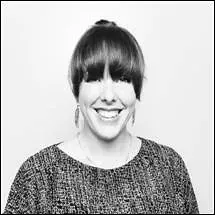
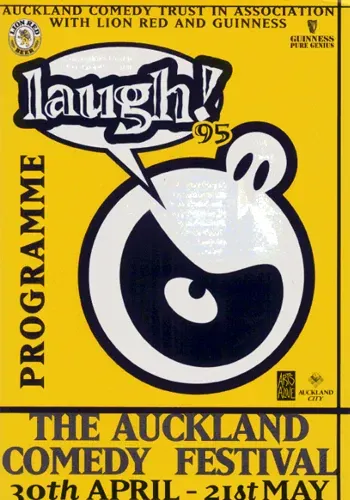
Kylie Aitchison was introduced to the comedy scene by her boyfriend, a technician at The Classic in Auckland. A decade later she’s married the boyfriend and is managing director of the NZ Comedy Trust.
As the Comedy Festival celebrates its 20th year, Kylie looks back – with some help from the co-founders – and forward to the growing comedy scene.
Win a comedy festival prize pack: What’s your most memorable comedy festival moment from the past 20 years? Use the comment box below.
Tell us about the beginnings of the festival 20 years ago?
I’ve asked Paul Horan and Margi Mellsop to answer this question…
From Paul Horan:
The very first festival came about as something of a mistake. The Watershed Theatre had been open a year or so and decided that Auckland should have a festival just like Melbourne's. In 1992 this was a rather brazen idea. There were two intermittent stand up nights, some groups like Funny Business, the Golden Holdens, Facial DBX and the Girls gotta Eat collective - but there was hardly a scene. The Topp Twins and Front Lawn were more theatre acts that were funny than purely comedic. But that was what the Watershed was about. Galvanising disparate groups and hoping like hell that something good would come out of it.
And it did. The audiences were small and they loved it! An audience, that was figuring how to react to Kiwis telling jokes. Similarly, the comedians were wrestling with this new, but exhilarating kind of performance. The reviews were good (probably far more generous than they should have been) and it spurned the first of the now annual articles in the papers addressing that fatuous idea of "Are we ready to laugh at ourselves?" It was more of a sketch and theatre based festival as stand up, the now predominant style of comedy, was very much in its infancy.
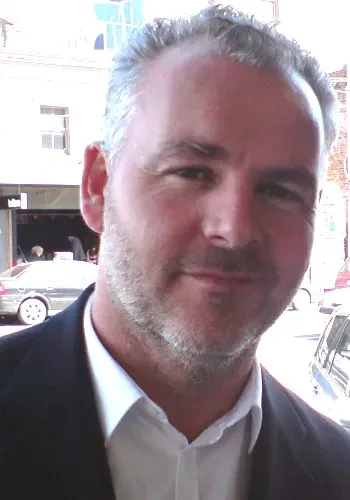
The next year, the Comedy Trust was formed as a stand alone entity by Margi Mellsop (the first director) and Paul Horan who had been involved in the Watershed festival. Then the long haul to making this the festival it is today - truly began. Central funding was very slow in coming partly because comedy was never seen as on par with 'proper' art. I remember sitting in Creative New Zealand's office and being told that comedy was not art, therefore I should go else where.
The recognition that the comedy festival produced a huge amount of professional and semi-professional new, New Zealand work; New Zealanders telling their own stories in their own words was a hard sell in the 90's. OK, they were New Zealand stories that did have toilet humour and stories of bad airline food, but it was about us. But in the end, as with comedy festivals everywhere in the world, developing outside the funding structures inbued a sense of community and a self-reliance.
This is the key to it becoming the huge institution it is today. Comedy is still an outsider in the arts scene but is so much the better for it. It responsiveness and popularity with its audience is unparalleled. But the most striking difference is that comedians in New Zealand have an ownership of their scene and festival because they have had to construct it largely by themselves. And it will continue to grow as a great festival because of this.
From Margi:
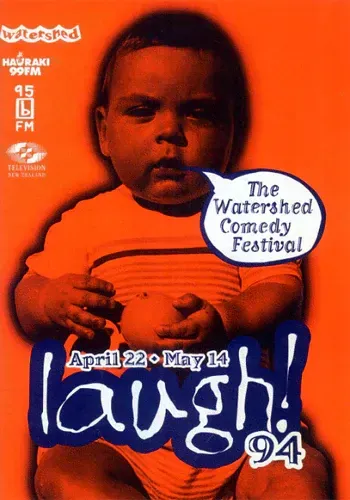
A bunch of us had started the Watershed Theatre, including the Front Lawn, with whom I was working at the time. When a gap came up in our programme I remembered the excellent, slightly booze hazed moments I'd had with The Lawn at the Edinburgh Festival, hanging with other funny smartasrses, and suggested we have a comedy festival. Simple. And who would have thought how the baby would grow. Actually, the first poster for the festival featured a crying baby. The festival ain't no baby now. And it sure isn't crying.
What was the state of the NZ comedy scene 20 years ago?
There wasn't one. But luckily some equally crazed guys with a passion for comedy, grown through their time together at Massey university of all places, had decided to start a club: Kitty O' Brians .. Those boys, and in particular Paul Horan and Scott Blanks, gave dinner table funny people the chance to be truly laughed at and most of them haven't looked back. They are passport certified Comedians.
What were you doing 20 years ago! What was your awareness of comedy in NZ?
20 years ago I was still at high school! And my awareness of New Zealand comedy in the early 1990’s was really just watching the occasional episode of Pulp Comedy and the annual Comedy Gala on TV.
How has the festival and comedy scene evolved since then?
Massively! The Festival has grown from a season at the Watershed Theatre in Auckland into a major nationwide event with a total attendance of over 100,000 across New Zealand each year. As well as the increase of growth in the Festival, comedy is now a viable career, with comedians featuring regularly on TV, radio, in print and online.
What have been some major milestones for the festival in the past 20 years?
In terms of the wider industry, when comedy started at Kitty O’Briens in 1994, and when The Classic opened in 1997 were important milestones for comedy in New Zealand.
Securing Bill Bailey to host the Gala in 2002 was pretty major for us, as he was the first international to host the Gala. This was also the first comedy show that I ever produced, so was a major milestone for me too!
The launch of Class Comedians way back in 2002 was key in bringing young talent through, and it’s fantastic to see previous Class Comedian graduates taking their place in industry and wider media. Such as Rhys Mathewson who won the Billy T Award in 2010, Rose Matafeo is a 2012 Billy T Award nominee and host of U Live, and Heidi O’Loughlin and Rose have just returned from a season at the Melbourne International Comedy Festival.
Launching the Creative Comedy Initiative was key in the journey for the Trust, and the development of creative comedy works that are beginning to tour throughout the world.
And last year was a really big year for us in terms of social media. We worked with Vicki Allpress Hill on the Optimise programme, and had a 90% growth in our online database, a massive 406% growth in facebook fans and 65% growth in Twitter followers.
When and why did you first become involved?
I was first introduced to comedy at The Classic through my boyfriend (now husband!) who was the technician at The Classic. I was in my final year studying design at AUT, so in the beginning it really was just a part time job to pay the bills. But it wasn’t long until I decided that the working in the comedy and events industry was where I wanted to be!
What do you like about comedy?
I love that comedy is entirely accessible artform. All audiences need to know is how to laugh! And that comedy is a social form of entertainment – audiences come out in groups, chat and talk, and have a genuinely enjoyment experience. Both the comedians and audiences come out of shows on a high, and that’s an exciting environment to be a part of. Seeing emerging talent develop, especially with young performers starting off in the Class Comedians programme and make their way into the comedy industry. It’s also great to be able to host international comedians to New Zealand, and as a result develop our local taste for comedy, and encourage discussion and colloborations between local and international comedians.
What did you do in your ‘gap’ years away from the fest?
When I first started working it was on short term contracts, so in between Comedy Festivals I freelanced within the events industry, which was a great way to experience a really wide variety of events. I started off Assistant Stage Managing, and through that ended up working on a bunch of events and Festivals over the years, including contracts with Auckland Festival, Tempo Dance Festival and working on the production team at Fashion Week. And I also headed over to Edinburgh each August to work at the Edinburgh Fringe Festival.
What drew you back in 2002 and how has your role evolved since then?
It really was the opportunity to work on the Comedy Festival here that drew me back to New Zealand. I started off working as the Artist Liaison & Festival Producer, and over the years my role evolved in to Associate Director, and then I was appointed Managing Director in 2009.
How have you professionally developed?
Over the years I’ve transitioned from the production side of events into an operational and management role. It’s very much been learning as a go, which has been incredibly challenging a times. I was very fortunate to be on the ART Venture programme last year, which was an incredible opportunity to focus on my personal professional development.
What are some of the initiatives you have introduced in your time as director?
Last year I Iaunched the Creative Comedy Initiative, and the idea was to work with comedians to develop and support comedy that pushes the boundaries of the traditional comedy genre. And I also launched the the Professional Development Programme, which is Master Class series for local comedians.
Tell us about this year’s Creative Comedy Initiative projects.
From hearing all the updates from the two shows throughout their development process, I’m super excited about finally getting to see these projects on stage in the Festival!
This year we’ve awarded two Creative Comedy Initiative grants. The first to Auckland comedians Irene Pink and Justine Smith for their show The Pitch, which is a multi-media, musical sketch show.
The second grant was awarded to Greg Ellis from Wellington, for Vance Fontaine – Command Performance, which features lounge singer Vance Fontaine and his band, in an improvised music spectacular.
What combination of people and resources are required to put on the festival?
Festivals are always a big task! They require an incredible amount of dedication and hard work. At the Festival we have a core team of three staff (myself, Lauren Whitney our Marketing & Sponsorship Manager, and Debs McKeen, our Festival & Event Producer) who work through out the year. We then start bolstering our team with additional staff from September. And of course creating partnerships with all our stakeholders is the key to a successful Festival. From working with comedians, engaging sponsors, marketing and media partners, to working with venue and operational suppliers, it really does take the involvement of a huge amount of people across Auckland and Wellington to put on a Festival.
What’s your big idea for 2012?
Being five days in to the 20th Festival, my Big Idea is to get to the end of the Festival, then start planning for our 21st!
* * * The Big Idea 10th Birthday Questions * * *
What does The Big Idea mean to you?
It’s a place where the creative industry can connect.
What changes have you noticed in comedy in the past 10 years?
Definitely the increased professionalism from the comedians. And the willingness of New Zealand audiences to laugh at ourselves. We’ve definitely lost the cultural cringe, and have embraced comedy as a regular part of our entertainment outings!
What are some of the opportunities and challenges for the next decade?
In terms of challenges, sponsorship and funding is really at the top of our list. It’s getting tougher out there each year!
* * * Comedy Festival 20th Birthday Questions * * *
What’s your most memorable comedy festival moment from the past 20 years?
There’s a ton of fantastic moments, but at the top of the list was the close of the 2002 Comedy Gala, when Bill Bailey sang Shihad’s Home Again with Barbara Sassy & The Riot Squad.
***
- What’s your most memorable comedy festival moment from the past 20 years? Use the comment box below.
The 2012 NZ International Comedy Festival takes place
-Auckland: 27 April – 20 May
-Wellington: 29 April – 20 May
-Comedy Convoy (nationwide): 14 – 26 May