Judi Dench in Madame de Sade
Written by
By James Hadley in London
In a previous blog, I wrote about Kenneth Branagh's performance in the Donmar Warehouse West End Season production of 'Ivanov' by Chekhov - it was unanimously praised as a stand-out performance of 2009 in London.
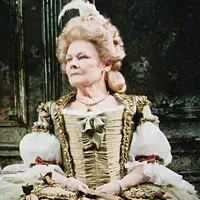
Unfortunately the same season's current production, publicised with a close up image of its leading lady Judi Dench, is nowhere near as good a vehicle for Dame Judi.
Both 'Ivanov' and the second show in this high profile season (Derek Jacobi starring in a production of 'Twelfth Night') have enjoyed rave reviews, so it must have come as some surprise to Michael Grandage, Artistic Director of the Donmar, when his production of Madame de Sade by Yukio Mishima received just two star reviews from almost everyone. You'd think that Judi Dench barely need cross the stage and that's three stars straight away, so what went wrong?
The Donmar's West End season is beautifully marketed on the strength of the four successive leading actors of the four productions (the fourth in the season is Jude Law playing Hamlet). Hence, most people booking for the little known 'Madame de Sade' are booking to see lovable Dame Judi Dench, not because they've been waiting for ages to see a top notch production of Mishima's work.
So naturally we're all a little underwhelmed to find that the 'star attraction' is not playing the eponymous Madame de Sade but her mother. As reviews have noted, Dame Judi's role means she's sadly under-utilised in the production. She drives some of the action, but is mostly the person reacting to the more extrovert characters around her. So on that count it's a bit disappointing.
Except that there's still that thrill of hearing one of the most recognisable English voices in the same room as you - and I have to add my own simile to the many that have been used to describe it: cornflakes being crunched through clear honey. Not glamorous, but to her credit, I don't think she's too fussed about being glamorous, and hence her modesty in taking what's very much a role in the team, rather than a showstopper.
It's Frances Barber who makes the biggest impact, because her role - a flamboyant courtesan infatuated with the Marquis de Sade - is the most engaging and entertaining. I was lucky enough to see her perform in the RSC productions of 'King Lear' and 'The Seagull' which toured to New Zealand in 2007. She was astounding then, so adept at playing the seductive villainess, and the same qualities work in this role. Somewhat surprisingly, Rosamund Pike, who plays Madam de Sade - long-suffering wife to the forefather of sadism - is not as engaging as you'd expect from her performances in TV and film. But she looks ravishing - as do all the cast - in piled high wigs and beautiful late 18th century dresses, with bodices covered in confectionaries of bows and huge skirts in grey-blue, bronze, or silvery green.
The whole production is dominated by a palette of metallic colours - the set a typical, panelled 18th century French interior, but entirely made of tarnished mirrors. This coolness of tone is there in the writing too - although Mishima is a twentieth century Japanese writer, he's clearly emulating 19th century French dramatists. Characters have huge set piece monologues which build to emotional climaxes of poetic imagery and are usually delivered standing still, so that all the emphasis is on the language and the emotional intensity. Sometimes these are accentuated with subtle projections or lighting changes. But even though monologues describe the intensity of feelings these women have experienced as a result of contact with the Marquis de Sade's sexual experimentation, there is a formality about things which mean we stay down the cool end of the colour spectrum.
It's an interesting enough play. When you consider the playwright was gay and somewhat curious about sado-masochism within his own life, the play's themes - including sexual repression, and sadism as a path towards subversive spiritual enlightenment - feels more relevant to contemporary concerns. Beneath the formality and period drama prettiness, this is essentially a work which challenges concepts of sexual morality - with much in common with confrontational performance art and experimental theatre such as are showing currently in the SPILL Festival.