Jonathan Mane-Wheoki new Director of Art and Visual Culture
Written by
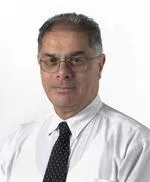
Te Papa's Chief Executive, Dr Seddon Bennington, today announced the appointment of Jonathan Mane-Wheoki as Director of Art and Visual Culture. This is a new position responsible for leading the research, curatorial, and collection management functions of Te Papa's Art and Visual Culture teams.Te Papa's Chief Executive, Dr Seddon Bennington, today announced the appointment of Jonathan Mane-Wheoki as Director of Art and Visual Culture. This is a new position responsible for leading the research, curatorial, and collection management functions of Te Papa's Art and Visual Culture teams.
Dr Bennington said today that Jonathan Mane-Wheoki brings a wealth of expertise to the role not only with his impressive academic background but also through his strong art gallery associations.
"Jonathan will work closely with the directors of other collection areas in Te Papa on joint initiatives - including exhibitions - to enhance the strengths of the different collections and to showcase Te Papa's art collection", said Dr Bennington. "Jonathan's role in developing relationships with art galleries internationally will be important to Te Papa 's ability to participate in major exhibition tours."
Of Ngapuhi and English descent, Jonathan Mane-Wheoki was educated in Auckland and at the University of Canterbury and the Courtauld Institute of Art in London. He is a graduate in Fine Arts, English Language and Literature and Art History. He is also an Associate of Trinity College of Music, London.
As Kaitiaki Maori (Honorary Curator of Maori Art) at the Christchurch Art Gallery Te Puna O Waiwhetu since 1992, he has been active in developing exhibitions and presenting lectures, seminars and floor talks on art, museum, heritage and cultural topics throughout New Zealand and internationally.
Jonathan Mane-Wheoki has served on a number of national and international bodies, including Te Waka Toi (the Maori Arts Board), the Arts Council of Creative New Zealand, the International Council of the Centre Culture Jean-Marie Tjibaou in Noumea, and was a member of the selection panel for New Zealand's participation in the 2001 Venice Biennale. Mr Mane-Wheoki is currently the Humanities representative on the Marsden Fund Council, convenor of the Humanities panel, a governor of the Arts Foundation of New Zealand, President of the Humanities Society of New Zealand, and a member of Te Papa's National Services Museum Peer Review Team.
Jonathan Mane-Wheoki was most recently the Dean of Visual and Performing Arts at Canterbury University and a member of the University's Senior Management team.
As an academic art historian, he has specialised in nineteenth and early twentieth century European art and architecture, British colonial and imperial architecture, modern and contemporary New Zealand painting and, more recently, the contemporary Maori art movement.
***************************************
Book review: How to retain a cultural identity
Venkat Raman
The Arts in Education
Edited by Elizabeth Grierson and Janet Mansfield
Dunmore Press, $44.95
"University of Canterbury music and fine arts dean Jonathan Mane-Wheoki, in a chapter on "Culturalisms and the arts curriculum," says it does not recognise pakeha arts as a localised, acculturated entity.
"This is regrettable but hardly surprising and it is actually quite serious.
"The lack of a fundamental pakeha groundedness in pakeha identity, history and culture is a far greater problem for the shaping of our 'distinctive, evolving national identity,' than the Maori, Pacific Islands and Asian component of that identity because pakeha either lack an awareness of their cultural distinctiveness or their culture is presumed to be so self-evident as to render analysis superfluous.
Either way, the lack creates a knowledge vacuum, a learning vacuum, about which art educators should be very concerned."
The authors have selected issues that confront not just art educators but should be of concern to the entire country, if New Zealand is to maintain its distinct European identity. Celebrating cultural diversity is one thing but losing the core identity is quire another.
The book recognises the importance of various aspects of arts including music and drama.
"To avoid a merely pedestrian outlook in music, visual art, dance and drama education in a tertiary setting of teacher education, we will need to offer beginning teachers a well-researched phil-
osophical and critical framework for the arts in education. It is unethical not to do so."
I was surprised the authors had missed the importance of the various royal academies that deal in arts and the need to maintain and promote New Zealand's links with them.
But as a book that focuses attention on critical issues that may affect the country's future, it is worth reading.