Jazz! Girls! Power Stations!
Written by
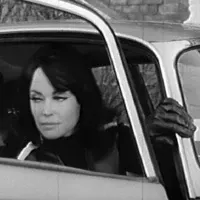
In an era of sex, drugs and rock 'n' roll, the opening of a cement works or a railway bridge was hardly the kind of material young film makers were looking to get their teeth into. But what if that was the assignment?
Pictorial Parade - New Zealand on Film 1965-71, currently screening at Wellington's Film Archive, shows the lengths film makers of the time went to to liven these news items up. Bring on the dancing girls!In an era of sex, drugs and rock 'n' roll, the opening of a cement works or a railway bridge was hardly the kind of material young film makers were looking to get their teeth into. But what if that was the assignment?
Pictorial Parade - New Zealand on Film 1965-71, currently screening at Wellington's Film Archive, shows the lengths film makers of the time went to to liven these news items up. Bring on the dancing girls!In February 1965, John King was a director/editor at the National Film Unit. The Unit was a government operation and since 1952 had produced news items about public works, visiting heads of state and mildly amusing slices of New Zealand life under the title Pictorial Parade.
By the mid-1960s film makers and audiences had begun to groan audibly at the Government's medicine. When the March edition of the Parade came up an item short, King seized the opportunity to plug the gap with a more dynamic project.
City Rhythm (1965) followed a group of young female gymnasts dancing to a jazz soundtrack in front of building sites, scaffolding and a quarry. As the voice-over proclaimed, "They project themselves into the music, their world - the world of concrete, steel and glass."
City Rhythm was fun, playful and modern. It was also a personal vision, and others would soon put their authorial stamp on Pictorial Parade.
In Through the Fire (1969) David Jordan captured the white hot intensity of life in a glass foundry by matching rapid editing to a dark, ominous score. Learning to Live (1967) was shot from a child's point of view on a busy city street. Wool Gathering (1966) began with images of pasture and sheep, only to suddenly transform into slow motion tableaux inspired by avant garde classic Last Year at Marienbad (1961).
Elsewhere, the Parade staff mixed cinematic flair with a dry sense of humour.
Hugh Macdonald's A Great Day to Go (1971) took the unusual step of promoting water safety via an opening montage of floating corpses. In Margans Musical Move (1971) Arthur Everard captured the drama of classical music by filming tanks firing shells. Many Parade staff appeared in semi-dramatic roles as frustrated hotel guests, wool buyers or victims of drowning.
There were also subjects for a new generation: Vietnam, the 'battle of the sexes' and the place of Maori culture in post-colonial society. As John King said: "Everyone was jumping out of their skins with ideas."
From 1965 to the Parade's conclusion in 1971 National Film Unit producer Geoffrey Scott maintained a successful balancing act between Government policy and the restless ambitions of his film makers. The Pictorial Parade continued to paint a broad, prosperous image of New Zealand, but as Hugh Macdonald said - "we wanted to have fun doing it".
€” Mark Williams, Curator, 2006
Pictorial Parade - New Zealand on Film 1965-71
Where: The Film Archive's mediagallery, Wellington
When: 30 November 2006 to February 2007