Isaac Davison interviews Hone Kouka
Written by
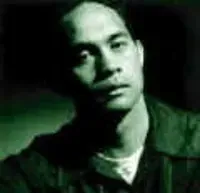
Hone Kouka, one of New Zealand's leading playwrights, is currently working on the script and screenplay for the film adaptation of Witi Ihimaera's prize-winning novel Bulibasha. Titled Mahana, the film is expected to be shot from February next year. Kouka balances his entry into the world of film with his continued success in theatre: his play Nga Tangata Toa is revisited in Wellington in October, and The Prophet is being performed in Hawaii, also in October.
Isaac Davison, recent graduate with an MA in English from Auckland University, interviews Hone Kouka .....
Hone Kouka, one of New Zealand's leading playwrights, is currently working on the script and screenplay for the film adaptation of Witi Ihimaera's prize-winning novel Bulibasha. Titled Mahana, the film is expected to be shot from February next year. Kouka balances his entry into the world of film with his continued success in theatre: his play Nga Tangata Toa is revisited in Wellington in October, and The Prophet is being performed in Hawaii, also in October.
Isaac Davison, recent graduate with an MA in English from Auckland University, interviews Hone Kouka .....
Isaac Davison: Firstly, what gave you the confidence to become a playwright - to place your own thinking on paper and onto the stage?
Hone Kouka: While training at drama school there were very few korero, or roles for my generation. So as soon as I graduated I began writing. I was lucky to get help from many people, including Apirana Taylor. I had a big enough ego to think 'I've got something to say and you've got to hear it'. That is the premise I continue to write with.
Isaac Davison: How do you find the shift to writing for film, after writing for theatre?
Hone Kouka: Writing for film is hugely different, in particular the very different technical elements of screenplay. But I was very lucky to spend 5 months in Amsterdam recently at a film writer's institute. We were invited to take a project, and I took Mahana (The film takes the name Mahana instead of Bulibasha because the production team wanted a Maori, not Romanian title). I admitted I was a 'virgin', that I had never written for screenplay. So it was a great learning process.
Isaac Davison: How did you become involved in the film adaptation of Bulibasha, and what attracted you to the story?
Hone Kouka: I was involved in one of Witi Ihimaera's first plays, and was very privileged to be asked to work on the screenplay for Bulibasha. I am attracted to it because it is a big, rollicking, beautiful korero, full of colour.
Isaac Davison: I am interested in what you, and the production team, wanted to draw from the Bulibasha story. Films often have more narrative constraints than novels, so what did you truly want to shine through in the film?
Hone Kouka: We have refined the focus to the young boy Simeon. We have made him older - 18 years old and on the verge of manhood. At the heart of the our adaptation is the comparison between Simeon's yearnings for education and Grandfather Tamihana's contempt for education, and his emphasis on the business world. The central dynamic in the film is between Simeon, Tamihana, and Grandmother Ramona.
The novel is episodic, divided into the competitions between rival families - the rugby and hockey matches, and the kapa haka and shearing competitions. But amongst the set pieces we thought 'there's a more resonant story than this'. If we showed all the set pieces it would become a Disney picture. So, the film highlights a story about a young boy who wants the best for his family. It is very much about love. The element of competition remains, but it is distilled to a rivalry between Simeon and one of the young Poata boys.
Isaac Davison: What are the advantages, if any, of making a film out of a classic novel? Are there any scenes which you felt were made for film? Or even improved by the addition of a visual aspect?
Hone Kouka: As in River Queen, the landscape is a character in this film. It is a period set, based in the 1950s, which makes the film expensive but attractive. The 1950s storyline, of a boy struggling with his family, is intertwined with his return to this family 30 years later, after time in the city.
One scene sold the film for me, and that is when Simeon is in the courthouse. It sums up the story for me - a young man pushed into leadership, and having to become a decision-maker.
Isaac Davison:Witi Ihimaera has a definite agenda in his fiction: to highlight the political and social reality of Maori. Do you echo this agenda in your work, and in this film?
Hone Kouka: Definitely. I have acknowledged, and drawn out the darker side of the novel. I have provided a dark edge by accentuating tensions amongst the whanau, and emphasizing the resistance of the Grandfather to education and Simeon's departure from the family. But the sense of the story as a 'Maori Western' is not diluted. The humour is crucial to the story. We had a young Maori reading the script who said 'this is just like the Soprano's' and that's exactly what it is.
ENDS