Interview with Australian indy director Rowan Woods on Little Fish
Written by
Courtesy of TAKE 41 - the magazine of the Screen Directors Guild of New Zealand
This new issue of TAKE includes a rare interview with Peter Jackson, Vincent Ward on River Queen and also checks out Ant Timpson The 48 Hours Man. Read on for the interview with Australian director Rowan Woods whose film Little Fish starring Cate Blanchett and set in the Little Saigon of Western Sydney has received very positive reviews. The film also co stars New Zealand actors Martin Henderson, Sam Neil and Joel Tobeck.
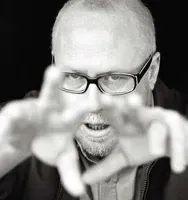
Image: Rowan Woods made around 50 non-narrative experimental films before he made Little Fish.
Courtesy of TAKE 41 - the magazine of the Screen Directors Guild of New Zealand
This new issue of TAKE includes a rare interview with Peter Jackson, Vincent Ward on River Queen and also checks out Ant Timpson The 48 Hours Man. Read on for the interview with Australian director Rowan Woods whose film Little Fish starring Cate Blanchett and set in the Little Saigon of Western Sydney has received very positive reviews. The film also co stars New Zealand actors Martin Henderson, Sam Neil and Joel Tobeck.
Image: Rowan Woods made around 50 non-narrative experimental films before he made Little Fish.
Interview Rowan Woods
By Sarah Runcie
The new Australian film Little Fish explores a side of Sydney not often seen on screen - a world inhabited by Vietnamese immigrants, ex-junkies, small-time criminals and Mr Bigs. Director Rowan Woods talks to Sarah Runcie
A tale of two cities
Rowan Woods, director of the edgy, complex feature Little Fish and the searing story The Boys, is cooking chicken schnitzel. Or at least, he is supposed to be cooking dinner for himself and his family. But he is in the middle of yet another press interview and is having to take recipe instructions in-between discussions about narrative structure and character development.
There has been a lot of media attention given to Little Fish, not least because of the casting of well-known actress Cate Blanchett in the lead role of Tracy Heart, a thirty-something ex-junkie managing a video store in the centre of a suburb that is 'Little Saigon'. The film, however, manages to avoid the well-worn narrative path of trial and redemption. This is due in part to film's array of unusual characters and its social milieu - an Australian suburb densely populated with mainly Vietnamese immigrants. Indeed, what the film does draw attention to is the fact that Australian feature cinema has not dealt with this rich and contradictory world before.
When I ask Rowan Woods what drew him to this particular story, he replies: "Well, I am connected to that world. From a personal standpoint, I'm interested and excited in this world because since I was a little boy I have has a history with the community of south-west Sydney [where the Australian-Vietnamese population are largely based]. I was taught to swim by a Vietnamese man and my parents were both teachers of English as a second language in that part of Sydney. We have life-long friends in the Thai, Vietnamese and Lao communities. There's something that excites me in cinema as a filmgoer, when you see a film that shows you a piece of the world or your own backyard that you have never seen before."
It was an aspect of the script that also excited Cate Blanchett, who became involved in the project at script development stage, as well as attracting the rest of the stellar cast, including Hugo Weaving, Noni Hazlehurst and New Zealand's Sam Neill, Martin Henderson and Joel Tobeck. It is a testament to Rowan Woods' skill as a director, as well as the inherent talent of his cast, that he is able to bring together such big-screen heavyweights, cast them against type and make it work. However, as Woods points out, frustratingly this strategy has meant that, with some Australian critical responses at least, there has been a certain amount of "emotional baggage". He attributes this 'baggage' to an endemic lack of sophistication, a literalness, an insecurity in cultural identity with the Australian community - which is perhaps the reason why the reality of the multicultural suburban environment has not often been depicted in Australian cinema. This insecurity is also perhaps the reason that Australians are the first to knock their own cinema. Despite this, Little Fish has enjoyed significant box-office and critical praise, both nationally and internationally.
The film was something of a family project: TV writer/producer Jacqueline Perske is the screenwriter and also Woods' wife. He admits the prospect of working with his wife on the project was "terrifying" but also "surprisingly easy". The advantage was that they knew each other's parameters, both professionally and personally. The main challenge, maintain Woods, was to set a structure to the creative dialogue.
"I have a very traditional relationship with my writers. I maintain a proper distance and come in as a script editor and then leave the writer alone. I don't consider myself at all to be a writer. That's not to say that I'm not tough and over the shoulder, particularly at the end stages of the script development. But separate to that, I have a process of research, which is peculiar to me and involves my going away. First, I research all the main subjects of the script. For example, in Little Fish this meant looking into drug rehabilitation from heroin, refugees, amputee-ism and the life of aging footballers - the script's four big subjects. I do very academic, old-fashioned homework on the subjects that are central to the script and this then forms a small library of material, which is accessible for all. But then beyond that, I start to get a little bit more particular about the characters and I try to find their real-life equivalents in the real world."
Woods is keen to point out that the script was written independently of his own research, which happens in parallel with the final stages of the script writing. However, this exhaustive research ethic did form the basis of a lot of the creative discussion with his DOP, Danny Ruhlmann, production designer, Luigi Pittorino, and costume designer, Melinda Doring, as well as with the cast, who, for months before coming together for a four-week rehearsal process, reviewed DVDs with 'in the field' interviews of their character 'equivalents'.
Another aspect of Rowan's process is his approach to 'scoring' the film, both visually and aurally, without storyboarding. "I got the idea from reading Lumet on Lumet. In the book, Sidney Lumet describes his process in the seminal courtroom drama Twelve Angry Men. In this movie, Lumet tightens the lens width and gets more and more claustrophobic until the judge declares his verdict at the climax. He then opens out to wide lenses where you can see everything in sharp relief and breathe.
Rowan takes Lumet's mapping strategy further across several parameters. He widens and tightens the lens, jumps on and off the tripod, and shifts the colour palette and adjusts the degree of flare entering the lens as a way of underscoring the tensions and shifting characters' point of views in the script. The latter technique - flares - is a particularly interesting element to the visual style of the film and Woods cites the surprising influence of 1970s horror flicks like The Texas Chainsaw Massacre as its stylistic source. Using the lenses that were stripped of their modern protective coatings, to prevent in-lens flare, and made for Spielberg in shooting Schindler's List, DOP Danny Ruhlmann switched lenses in moments of heightened dramatic tension in the film. For example, when Tracy Heart is about to score after four years of being straight and is stopped in her tracks by the ethereal, odd, poignant singing of a local school choir.
Wood's approach to storytelling has evolved over a long and paradoxical career development. After dabbling in film as an adolescent, there followed many years of non-narrative, experimental films (he has made approximately fifty). He was knocked back from the Australian Film Television and Radio School, but finally managed to cheat his way in, which was, by his own admission, a "mercenary act". It was at film school that he made his first, more conventional narrative film, Tran The Man (1994), which - as with Little Fish - explores a character in conflict on the cusp of a criminal underworld in an Asian-populated outer-suburb. Within a year of graduating from film school, Woods landed a TV directing gig and then made, with Robert Connolly producing, the dark and uncompromising The Boys in 1998.
Little Fish has come at a time when the Australian public has been looking for a fresh vision with stories that have a ring of truth. In a strong and varied field of Australian films that have been released this year, and in a highly competitive market, Little Fish is a stand out achievement.