Instruments of war
Written by
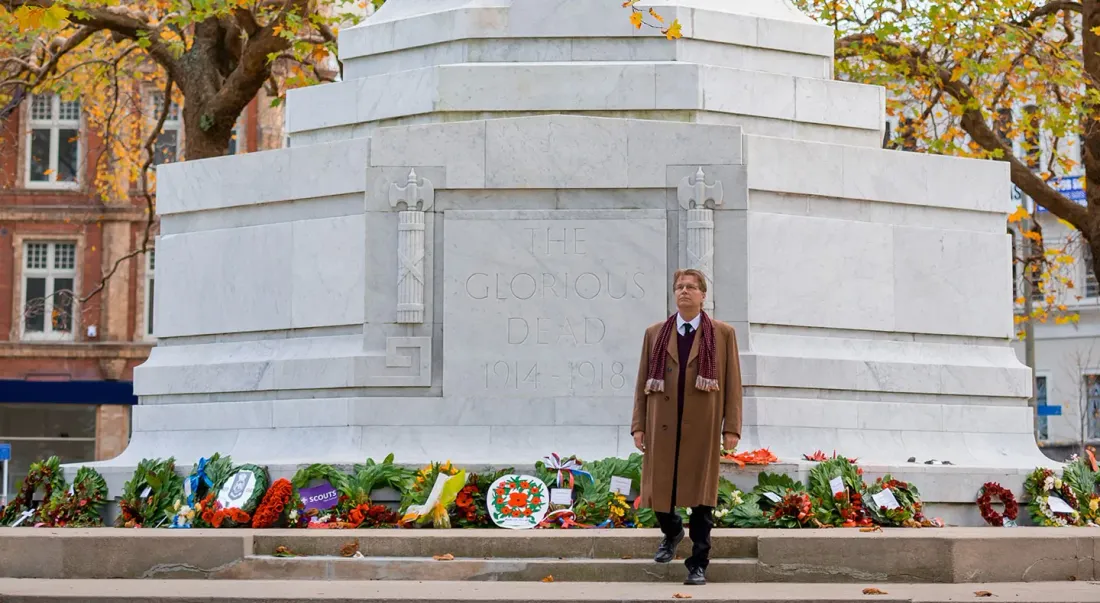
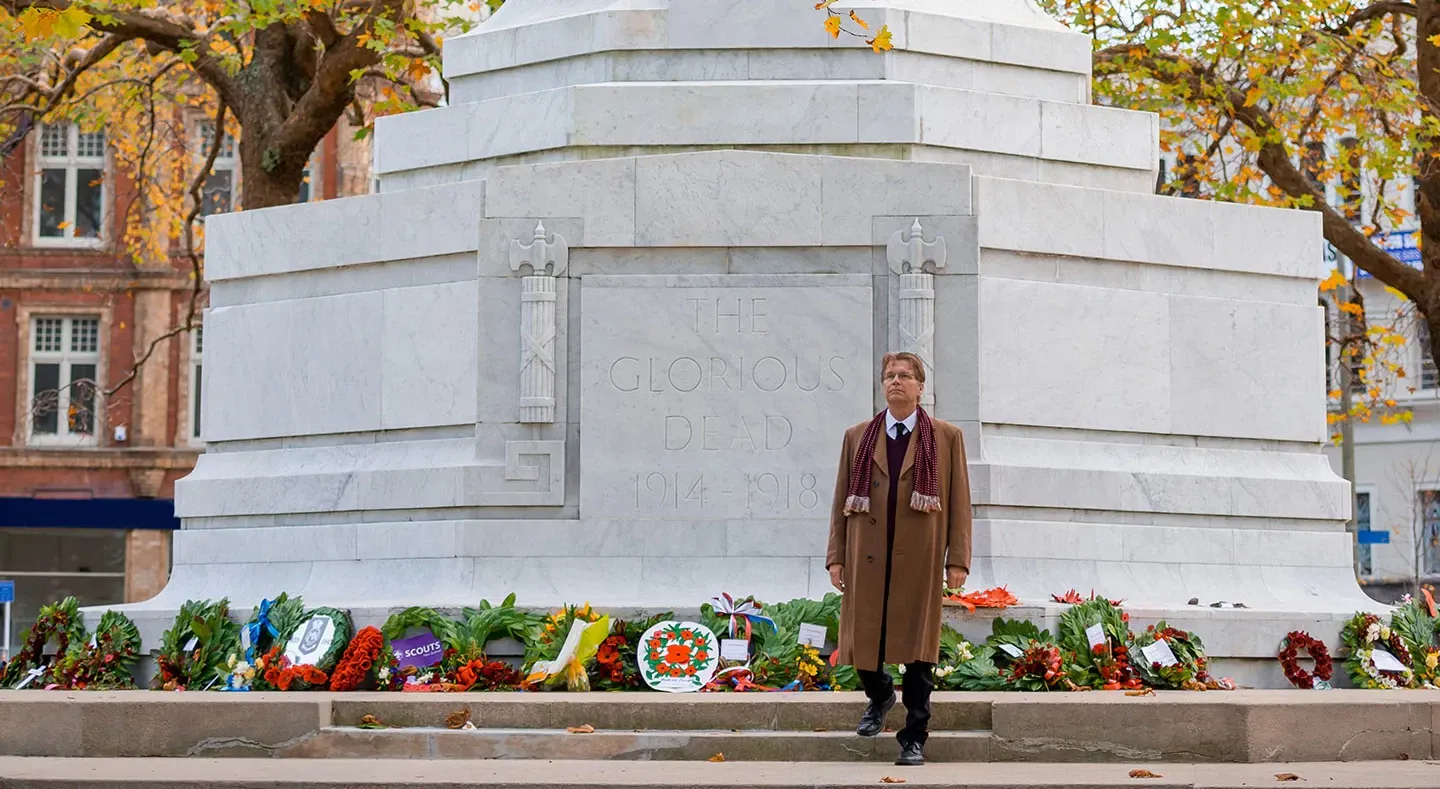
Gallipoli to the Somme, which takes its title from Alexander Aitken’s book about his war experiences in the Otago Battalion, premieres at Arts Festival Dunedin in October.
Dunedin based composer Anthony Ritchie shares how it’s hard to respond artistically to the war, so he personalised it through an individual’s lense.
“I wanted some of his experiences to be the glue that holds my composition together. And the sound of the solo violin also adds another dimension.”
What aspect of your creative practice gives you the biggest thrill?
There are two aspects: first, the excitement of being drawn into a new piece as it is being created…the feeling that I simply have to get back to it. Second, there is the thrill of hearing the piece for the first time in rehearsal and working with the performers on it.
Tell us a bit about your creative background and connection with Dunedin.
I grew up in Christchurch in a musical family – my father was a composer and my mother a singer. Composing music didn’t seem a strange activity, and I started young, going on to study composition at Canterbury University. I came to Dunedin as Mozart Fellow at Otago University in 1988-89 and ended up staying, freelancing through the 1990s. Dunedin is a good place for a creative person. From about 2000 on I started working at the university.
Why do you think you are recognised as one of NZ’s most prolific and approachable composers?
Well, I’ve composed a lot of pieces! My latest composition is opus 193. I think it is because my music is relatively approachable that I have written a lot, because I generally find performers and audiences enjoy my music, and consequently I’ve had a lot of commissions.
It’s Dunedin Symphony Orchestra’s 50th anniversary. What is your connection with the Orchestra over the years?
My first commission for the orchestra was in 1989, and since then I’ve written about 13 pieces for them. I love composing for people I know and admire, and the orchestra would have to be my favourite medium, so I am grateful we have a good relationship.
Who is involved in your latest work Gallipoli to the Somme, premiering at Arts Festival Dunedin?
The City of Dunedin Choir, DSO and solo singers Anna Leese and Martin Snell, with conductor Simon Over from the UK. The plan is to perform the work in London later in 2017 as well, with The Southbank Sinfonia (which Simon conducts) and the British Parliament Choir.
It is based on Alexander Aitken’s book written about his war experiences in the Otago Battalion, and how he took his violin with him to war. Tell us more about this story and why it resonated with you.
World War I was such an epic event, it’s hard to know how to respond artistically. I wanted to personalise it, to look through an individual’s lense. I found Aitken’s book a wonderful mixture of acute, intelligent observation and sensitive response to awful situations. I wanted some of his experiences to be the glue that holds my composition together. And the sound of the solo violin also adds another dimension to the sound.
Tell us a bit about the work, from inception to conception.
My idea was to make a humanist statement about ordinary peoples’ experiences of World War I. Soldiers, nurses, lovers, children etc from different nationalities are represented in this work, through diary entries, poems, traditional texts. The whole piece is conceived like an oratorio, but is more continuous. The music is simple and direct, to get across the terrifying, nightmarish experiences without being too ‘artful’.
Tell us about your other recent and upcoming projects.
I have just completed a clarinet work for Anna McGregor, who is based in Sweden. She is organising a concert of my work there in November, when I will be over in Sweden on a composer’s residency. I have also just finished a piece for Heleen Du Plessis’ Cellos of Aotearoa concert in the Dunedin Festival, and am writing a new piece for the NZ Trio.
What's your number one business tip for surviving (and thriving) in the creative sector?
Be proactive in arranging to meet and work with people and don’t be scared to put your work ‘out there’.
What’s your big idea for 2016/17?
A new symphony (No.5) that explores simplicity, naivety, and the idea of revealing one’s true face.
About Anthony Ritchie
Anthony Ritchie studied composition at Canterbury University, and the Liszt Academy in Hungary. He was Mozart Fellow at Otago University, and later was Composer-in-Residence with the Southern Sinfonia. Since 2005 he has had ten CDs of his composition released, including Remember Parihaka featuring smaller orchestral works, and Octopus, featuring chamber works. His CD A Bugle Will Do: Symphony No.3 and Other Symphonic Works, recorded by the NZSO, was awarded classical album of the year by The Listener, and was a finalist at the NZ Music Awards. His Symphony No.4 Stations was released by Atoll Records in 2014. His work is increasingly known overseas; in 2014 A Bugle Will Do was recorded for radio by the BBC Symphony Orchestra, and in 2015 it was performed by The Ulster Orchestra. His Salaam was premiered by the Belgium choir Aquarius, who have recently recorded a CD of his choral works. He has also written six operas, including the recently premiered This Other Eden. He is currently an Associate Professor in The Music Department.
- Gallipoli to the Somme premières on October 1. It is part of Arts Festival Dunedin, on from September 30 to October 9 2016.