Holmes on Michael King - Author who didn't tangle the prose
Written by
Courtesy of TVNZ
From Holmes Wednesday 31st March 2004
Paul Holmes: There was shock around the country when we learned who was in that car that burst into flames when it crashed yesterday. It was Dr Michael King and his wife Maria.
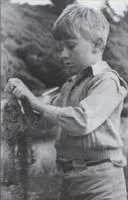
Photo: Michael King as a child in Plimmerton.Courtesy of TVNZ
From Holmes Wednesday 31st March 2004
Paul Holmes: There was shock around the country when we learned who was in that car that burst into flames when it crashed yesterday. It was Dr Michael King and his wife Maria.
Photo: Michael King as a child in Plimmerton.Dr Michael King was one of our best loved literary figures. He was perhaps our most accessible, most readable historian. More than any other historian he helped New Zealanders understand New Zealanders and he seemed to be admired by everyone who met him and disliked by nobody. He was brilliant, Michael King, and he was kind and sadly his death comes just as he appeared to be beating back that throat cancer. He wrote lauded works on Te Puea and Dame Whina Cooper. He immersed himself in Maori culture and history. He wrote the major biography of Janet Frame and he was determined that New Zealand understood its heroes were not simply the sports people, the rugby players. With us are two men who knew Dr Michael King well - his publisher and friend, Geoff Walker, who met him in university, and Patu Hohepa, Maori language commissioner, who met Dr King back in the early 1970s. He crossed the divide didn't he Patu?
Patu Hohepa (Maori Language Commissioner): He did, yes.
Presenter: He was respected in Maoridom?
Hohepa: He was very respected.
Presenter: Knowledgeable?
Hohepa: Very knowledgeable. He was one of those that I think was showing the hallmarks of becoming a bicultural person. He loved both worlds and he revelled in it.
Presenter: Were you shocked when you heard the news?
Hohepa: Yes I was. My whole day was spent trying to find out the details and then also where he would be resting so that I can go along to the funeral services.
Presenter: You were a very good friend of his as well as his publisher? You met him at Vic in the late sixties early seventies?
Geoff Walker (friend and publisher of Dr Michael King): Yes we were students together at Vic in the mid-to-late 60s, yes.
Presenter: How did he discover that Maori world? Where did his fascination for that come from?
Walker: Well it's really interesting, following University he went to Hamilton, lived in Hamilton with his wife and two new children, and joined the staff of the Waikato Times and was assigned, pretty unusual for a Pakeha, was assigned the Maori Affairs role and very quickly he entered into rural Waikato a world of Rangatira and marae and hui. And it's very interesting that for the mainstream Pakeha culture these are words and processes that we now take for granted but in the 1970s he was very much an odd man out.
Presenter: Do you agree with that?
Hohepa: I agree with that. He was also very approachable. He came down to Wellington when I was there with Matt Rata and he would telephone "Would you like to come round for dinner? Are you on your own tonight?" Now it was that kind of approach that I liked so much and he also advised me on many things Maori which I took to heart. He was that kind.
Presenter: In vigorous discussions no doubt?
Hohepa: Very vigorous.
Presenter: When he was doing that though and discovering the Maori world of marae and hui and Rangatira I mean this was almost like a rediscovery for Pakeha wasn't it, when he started to write about it and seriously get into scholarship about it?
Walker: I think it was a discovery, Paul, not a rediscovery. For many many Pakeha, reading Michael King's books was their first introduction to some inkling of the Maori world.
Presenter: He seemed to have no agendas with people do you know what I mean? He seemed to have no bitchiness about him. He seemed to - he wasn't bothered by any of that was he - rivalries, professional rivalries? Is that right? Is that a correct assessment of him?
Walker: Yeah I think I'd agree. He was from academia but not of academia. He didn't come from history departments. He wasn't competitive with other historians. I would certainly agree with that. Would you Patu?
Hohepa: I'd agree. He loved the country, he loved the people and he preferred to spend time out talking to people and writing rather than intense academic discussions. He was that kind.
Presenter: Do you agree with what he was saying that Pakeha are really a second indigenous people here?
Hohepa: It's becoming that way and I dropped a problem on him that had him worried for quite a while - a kitten born in a banana box is not a banana.
Walker: My own feelings about where I stand in the culture were heavily affected by Michael and his suggestion that white skinned New Zealanders, Pakeha New Zealanders, are a completely different social and political and cultural animal, person from those who came here 150 years ago. We've been affected by Maori, we've been affected by the landscape and so a whole lot of aspects of Pakeha culture are something you can actually write down.
Presenter: Because he wasn't just interested in our history too. He loved our people of letters didn't he?
Walker: Well when Michael turned away from writing about Maori he -
Presenter: And why did he do so?
Walker: He felt uncomfortable at the suggestion from some Maori that these were their stories and he should butt out. It was a painful process for him to reassess where he was as an historian but he did move along and one of the benefits is that he produced some superb works of literary biography with the Janet Frame one being the main one of course.
Hohepa: Yes, yes.
Presenter: Where do you put him in our history pack, Patu?
Hohepa: At the top. At the top. A very modest writer. He wrote clearly, lucidly. He didn't go for big words. He didn't go for deep theories. He just wrote as he thought and I think that's -
Presenter: He didn't tangle the prose.
Hohepa: No he did not, he did not, and so that's why a lot of people just well enjoy, love reading his works.
Presenter: And I mean he was modest too. He was private wasn't he, deeply private. You had to really go into the wilds of Coromandel to find him didn't you? I mean he didn't seek publicity. He did his book tours when he had to but -
Walker: He did his book tours when his publishers forced him to but he was happiest when he was sitting in his little kiwi dinghy on the waters of the estuary doing some fishing.
Presenter: And tell us a little bit about Maria can you please?
Walker: Maria is of Polish extraction. Her mother still lives in Auckland. Her father is dead. They came from Britain in the 1950s and her father is - her parents were in business in New Zealand. Maria has strong connections with the Polish community and she has been a book editor and I don't know the details but I suspect that's where they met.
Presenter: Sad day, very sad.
Hohepa: It's a sad day and also sad for New Zealand culture and heritage. He had just been awarded the Prime Minister's award, three of them, at the beginning of this year and to go like that I think is a sad day for New Zealand.
Presenter: And just very quickly what did he want for New Zealand?
Walker: Oh he wanted tolerance and he wanted a middle way and he wanted people to talk and understand each other and his work was devoted to that.
Presenter: Maori Language Commissioner, Patu Hohepa, thank you for coming in and Geoff Walker sympathies and commiserations and thank you very much for coming in.
Walker: Thanks Paul.
Presenter: And Friday night here on one we'll repeat Kim Hill's interview with Michael King. That will be on at 10.15pm on Friday night on a repeat of Face to Face.