Growing the screen industry
Written by
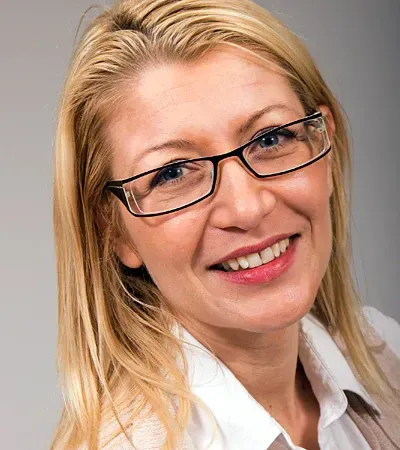
Ande Schurr interviews Melanie Langlotz, a leader in the screen industry and general manager of post house Images & Sound. She shares why a filmmaker must think like a business person, and why we must market our screen industry together.
* * *
In the rich freelance tapestry that makes up our screen industry, the natural tendency is to become individualistic and focused on one’s own career. I hasten to say that I’m of the opinion that this internal focus is essential to building one’s career. However after some years of working in such a way, the door of service beckons. It’s not strictly altruistic, let’s not delude ourselves, however the focus is on the industry and not ourselves, increasing business en mass so we all benefit.
German born Melanie Langlotz sounds the note of 'growing together'. She is a woman intimately involved on boards, committees, and businesses across the New Zealand screen industry. She brings ideas, personality and candour to benefit our industry and this interview shows exactly this.
As a board member of Film Auckland, Creative Digital Content, Women in Film and TV (WIFT), the general manager of Images and Sound and enrolled in post-graduate studies, what do you preach or stand for?
I love empowering people and I love getting people to break through barriers.
In my twenties, I became a visual effects software trainer. It was 1992 and people were coming from analogue technology so I was helping them to step their career up into a completely different area and break into the digital era. This was the time when all the big visual effects movies started to come out. People had new ideas of what could be done in a movie and I was amazed by the determination, imagination and vision that surrounded me everywhere.
I met some inspirational business people and software developers who seemed to be able to see the future in a different way to everyone else. They seized the opportunity that was there at the time in regards to new emerging technology.
Twenty years on and technology is moving even faster. More opportunities are created every day because someone has another new idea how we can enjoy storytelling, movies, games or be entertained. Businesses have to reinvent themselves now every two years because everything moves faster.
No matter what you - if you are a freelancer, a contractor or run your own business - you need to have a vision, a goal that is your compass and tells you where you are going. You need to readjust your course every now and then due to new emerging technology and new demands. It is vital that you stay flexible and are open to adapt to the change that's required.
So you may have a vision of where you're going and what you want to achieve but what holds you back is the fear of failing and the risk involved. It seems all far too hard and the success is really made for others but not for you.
Well, you won't know if all of that is true unless you try. Doubting yourself is a human phenomenon. As an entrepreneur you can't pay too much attention to self-doubt. Otherwise nothing would ever get off the ground. As an entrepreneur you need to be able to shut up negative self-talk, doubts and fear and be able to step past it - like Richard Branson. God knows how many times he doubts himself - I have the feeling that there is not much room for doubt in his life looking at all the things he makes happen. So it is all about taking on the challenge of how much potential do I have and how much of that potential in my life do I live? If I strip all of that fear away and I only listen to thoughts that propel me forward - then it is more likely that I achieve my dreams and move towards my vision and my goal.
I had a tutor who was teaching me about concrete sculpting. We came into the class and she gave us each a wet block of concrete that hadn't set yet. She said to us "I want you to realise that you can’t do anything to that block of concrete that will make it more ugly. What ever you do to it will only make it look more interesting!"
She said to us "You may not know yet what this block of concrete is going to be, but as you start stripping away layer by layer it will take shape and form. All of a sudden you will know and the vision in your head will become clearer as you go."
So I started to see sculpting as a metaphor for everybody’s life. You’ve got your block of concrete and here’s your life. As you start to strip things away that you fear, beliefs that don't serve you and hold you back, what’s left is pure potential. So what could you achieve if you were 100% potential with no self-doubts and a clear vision of where you want to go?
Film makers have vision and they have determination otherwise no movie would ever get done. The rules of funding have changed and everyone needs to adapt to the new model of funding. Innovative ideas are required and a grasp of not only how the market has changed but also how the market will be changing from here on. We need people with a big, new vision to help progress things forward and help unleash potential.
- Marketing our industry together
That brings me to the next question, initiative. You might say that initiative is reserved for those who are in a creative kind of role. A producer will take initiative to get their projects up and running. But what about for crew, how can we take more initiative in our careers?
For someone to take initiative you need vision and you need purpose. Sometimes nothing happens until the crisis is big enough and the pain hits the maximum threshold before anyone rises to take on a leadership role. Leadership can also only happen if there is change. So my question is immediately what do we need to change and what is our vision so we can look at options for initiative.
If I am a contractor or freelancer and I want more work, I can have the vision of being the best in my field of work. I can set my goal to be highly skilled, flexible to client needs and adapt easily to change. I can also take initiative and find out what my clients love about my work and want me to do more of and what they don't like about how I am doing my job and why they may prefer to hire someone else instead of me. In this case my action steps to achieve my goal of being the best there is and I get contracted to do more work requires courage. I may have to look at what I could be doing better and proactively look for feedback.
There is only so much work to go round in this country and so we do need to look at being attractive as a country to overseas productions.
I think the term ‘crew’ stands for team. A team has got far more power than just one individual. A team can make things happen collectively. Could the various organisations in Auckland, or in New Zealand for that matter, help create a showreel that sells our Film expertise and talent to overseas potential productions so they feel confident they can come here and we can make it happen. Could we all assist in creating fresh footage every quarter maybe that can be used to market Auckland not only as a Film destination but would also show off our crew talent? What would that look like and who would be the person with initiative to take it on? Can organisations or even a group of individuals put something together and lead the way.
Is there a way how we all could collaborate more and showcase our talent collectively rather than individually?
When you put a "Think Tank" together with a purpose and a common goal, the team can come up with some amazing ideas that no one had thought about before.
So you’re saying that initiative comes when we understand that we’re working as a team?
As a team you certainly gain a stronger momentum more easily. However you still need someone to lead the team, maintain the vision and keep everyone else motivated and enrolled in it just like on a film set really.
So looking at the film industry and entertainment industry in general, I think there are enough people out there who would ask what can I do? Some of them may feel it's not their place to come up with an idea or a solution and others may find the realisation of a vision too daunting and see themselves as too small to matter or make a difference.
I guess within this conversation I would like to encourage anyone and everyone to keep wondering, keep thinking what could be a solution if there is not enough film work around. Bring curiosity to the question and try to look at it as if you never had looked at it before. Admittedly that's really hard to do when you are financially hurting or worried, but good ideas and solutions come out often from a pain that needs to be resolved and collectively we could come up with some amazing ideas.
Script to Screen had put a nice Think Tank together after the Big Screen Symposium and initiatives like that will help get ideas started but then require a leader to keep momentum and make it happen.
I guess we’re used to having the government give us the big picture and while that is of course so essential to providing that level of trust and security that the big overseas productions need to come here, knowing the government’s on their side, it needs to be a user centred vision too.
If you look at it from a general New Zealand business perspective, the majority of business owners struggle to think globally. Most business owners think only as far as the edges of New Zealand as their customer base. They struggle seeing themselves as a global brand. They struggle to really embrace the concept of creating IP, intellectual property. There is this lovely term, ‘New Zealand Inc.’. So what is our brand as a film industry in New Zealand? What are we selling? Again we’re selling the talent, we’re selling the skills, and we’re selling the landscape. You’re right. You can’t always rely on the government to make everything happen. The government will try to foster relationships with overseas production companies and big distribution agencies but we are ultimately the one's that have to take responsibility of selling ourselves in the market. We will know better than anyone else what our difference is in comparison with overseas talent, with overseas skills.
What do you think makes our difference in comparison to other countries?
I’ve no idea. I have not been in other film industries in the world. I hear that we’re pretty good here in New Zealand, but I know South Africa is also very popular and various South American countries have gained momentum. So can you tell me?
First of all I would ask people that come from overseas to work in our industry, what do you like about us and why do you come here? Because there is your marketing opportunity to collect the difference, the reasons, and put them in a marketing proposals to other countries or to other production companies overseas.
We are an extremely innovative culture. We are quite happy to jump in and do whatever is required. We’re not strictly down to job description saying ‘I will only do this’. We do whatever is necessary to see a job or production through. So in that regards we have a great attitude when it comes to getting things done. I sometimes wonder whether we are culturally aware enough to understand how we have to adapt to other cultures when they come over here and shoot because they will bring their culture with them. And they will expect us to, in a way, adapt to their ways.
I learned a little while ago that in America apparently they have a hierarchy on set. So they don’t appreciate having a gaffer or anyone else pitching in and making suggestions to the director as to what they should consider versus in other countries it seems that is absolutely welcome.
I would love to start a survey and find out what overseas productions struggle with when they come here. What are their issues and expectations of how things should be in their mind when they come and shoot here. Cultural awareness often helps forming better relationships and it is something often overlooked. Instead we tend to focus on the differences that we don't like and we struggle with.
Obviously you’ve got to pick your battle and pick your behaviour as to the culture. It might be good if you have somebody who runs the crew for that particular shoot to give them a little bit of advice as to ‘this is the culture we’re dealing with’. This is what they’re used to, let’s adapt. The overseas production has to agree to our Health and Safety Standards, and other rules and laws. So there’s obviously a limit in what we should adapt to. Anything that’s a rule and a procedure they have to agree to. But there is this whole interpersonal space. How do you deal with each other? How do you talk to each other? Our strength is definitely to come up with ideas and make things work. I do think we go beyond and above of what people expect. We do try really hard to please. I think in general we’re very easy to work with. We’re not very confrontational. We’re very agreeable We’re very adaptable and we’re very laid back. So I think that is a nice culture for people to come to work with. But we can fine-tune our knowledge and understanding of other cultures and be more aware of subtleties.
Now in terms of skills, I can’t tell you how good we are in comparison to other countries. I don’t know whether for instance our skills are way above and beyond for instance a German production company. I wouldn’t know. But I do think that is something that you can find out from productions that have been here. Basically, find somebody who is willing to interview them and ask how we are doing. Why did you come here as a production company in the first place and what was your experience? And then basically find the key points that you can learn from and categorise it almost by culture.
Then you can say okay, so here we’ve had five German productions. We’ve had five American productions here. We’ve had five Indian productions here. Let’s just collect feedback and interview the various people about their experience and find out what worked and what didn't work for them. In a lot of cultures it may be perceived to be rude to give constructive feedback. So you have to frame it in a way the person sees it as doing you a favour and feels safe to talk about what we could do better. It's just like collecting customer feedback in a business really. So we need to collect information from our different productions and then compare notes. Then take the feedback and pass it on to the crew. It can be passed on in events or in forums as education that helps everybody understand. For example, ‘today we’re dealing with an Asian production. This is how they do production at home. Let’s make them feel relaxed and welcome’.
That’s an excellent idea.
Just give them a feeling that we understand their culture and we welcome them. I'm sure a lot of that is something people already do and have experience with. I think it would be a good event topic though to create more social awareness.
In terms of the international market, do you have any comment on that in terms of New Zealand attracting offshore productions?
We need an Auckland show reel and we need a New Zealand wide show reel. Everybody is aware of that and we’ve talked about it for a long time. There are a lot of people at the moment trying to put something together and make it happen. This does not mean that the various skill groups can’t put something together. It would become an additional marketing tool that Film New Zealand or Film Auckland can fall back on. Do you know what I mean?
I do. That reminds me of some TVC line production companies who have a section about NZ on their website so it’s like we have to take our industry’s marketing into our own hands.
And a lot of them do - that’s the thing - a lot of them actually do try to communicate really closely with Film New Zealand and Film Auckland. They do ask what else can we do? But then you also need to look at what is happening overseas in terms of productions? What technology are they using and where are we lacking? So for instance, at the moment there is a huge stereoscopic movement happening in Asia.
- Educating People
Please explain, stereoscopic is of course the 3D technology?
Yes it’s watching a movie with 3D glasses - or not glasses - because now we have auto-stereoscopic technology without glasses. You have one single vision which creates a single viewer sweet spot and therefore you don’t need glasses.
That’s a relief.
The key is that markets are opening and developing overseas. We have to stay in touch, observe the trends and get ready for it. With the internet we had a huge globalisation movement and it has made the world smaller. The new emerging technologies, - like for instance mobile entertainment -, will be something we can prepare for quite easily. We can look to bigger countries and at what their audience wants? It’s about trying to be ready for it, and catering for it. I think this is where teams can form and come together and up-skill themselves. I know that the organisations are trying to do their level best to bring in overseas speakers to educate people and help to stay on top of what is happening in other parts of the world.
But if the organisations don’t get funding but they want to bring in an overseas speaker and it’s going to cost them two-three thousand dollars, where is that money going to come from? Could people form a group and pitch in to take education in their own hands?
At the same time I do think we have talented knowledgeable people in the country and we have a lot of people passing through as well where it’s just a matter of asking them whether they are willing to do a talk for us?
Maybe the organisations need to work closer together. I don't think there is an Auckland wide events calendar for the Film industry. At least I don't know of one. Could we collaborate on some events better and therefore have more people attending?
- A Filmmaker must think like a business person
I think the worst thing is to feel isolated in your own industry and I think the more of these sorts of social learning events we have the better.
Yes. It’s all about learning and trying to find out from those people that travel a lot what is the next big thing that’s going to come and where can we get in? At the Big Screen Symposium, the American producer, Ted Hope, thought that the market was more and more moving towards low budget films. He had some very intriguing ideas as to how people in America got their features off the ground and made some money off it.
So today’s filmmakers must think like a businessperson. They have to understand marketing on a deeper level. They have to understand how financing works. I think filmmaking in a way has become more demanding in terms of the skill-set because it is no longer about just telling a story. It is now about running a business and seeing the film or the project that you do as a business. How do you fund it? How do you finance it? Where’s the money going to come back from? I don’t really want to see any filmmakers mortgaging their house in order to tell the story. I would much rather like to have innovative filmmakers having new ideas of how to get the funding. I think we need more general business education events to help people think like a business and develop new strategies of income and funding.
This is going to be a really tough mindset shift for a few. For a lot of people it is a shift that has already started to happen where they have to go from a creative arts person to becoming a businessperson and combining both. How long have we had the conversation of combining the creative and the business aspects. How much the creatives are struggling to sell their creativity. This has been a topic that has happened in other categories like in any creative business, whether you’re a painter or whether you make jewellery or whether you’re a fashion designer or whatever. The creatives always struggle to sell themselves, sell their own ideas, and sell their art.
So this is not a new topic as such. Filmmakers who want to tell a story, have to become business people now in order to understand how to market their film. How do I see the story, the IP as a brand? How do I sell the brand? How do I get people enrolled in the funding? How do I make all of that happen and still make a living, still earn money?
That’s the real difference from the normal entrepreneur that has the business idea and gets a business off the ground and then it runs and it grows and it gets bigger and it gets bigger and it sells more and therefore they make more money ideally. Obviously not always but that’s the goal. But with a film it’s not like that. You raise the funds, you get the movie made hopefully and then it’s done and then it sells and you’re onto the next project. It’s almost like you’re closing down the business in a way every time the movie has been released and you move onto the next project. Do you know what I mean? As a filmmaker now you have to become a serial entrepreneur and you have to figure out how to franchise your brand. That is where Transmedia comes in which has become such a buzz word. However I wonder how many filmmakers out there truly understand how to use it effectively to help grow their brand, their audience and therefore their income.
If I could make an assumption, filmmakers might not take too well to someone telling them what to do in this respect. Their work is so personal that this kind of business thinking may come only after facing desperate financial circumstances. Like they’re racking their brains asking, how do I make a living from this filming I’m doing?
The business filmmakers out there know what categories make money. If you look at any kids’ TV series it’s never the TV series that makes the money. It’s the toys. Everybody knows that by now. So all of a sudden a kids’ TV series becomes a 30 minute long commercial and so it’s not the TV series any more that makes the money. It’s the merchandise products that are at the back of it.
As for instance a documentary filmmaker you need to think about marketing in a different way. Before you go out and shoot or even write your script, you need to start thinking about what is my IP product in there? What is the brand that I want to sell and how can I sell it? And that is where it gets all much, much bigger than the story. It goes way beyond the story. It becomes a movement. Do you know what I mean? It becomes ideally a global movement. You are creating a brand that people can identify with.
Say more about that because documentary is the very area where filmmakers struggle the most to make an income because it’s more for the festival circuit than the pocket!
Well, there are obviously documentary channels out there and I would like them to continue doing, buying, funding well-researched documentaries.
We need to figure out a better way to crowd fund or to get the audience to fund the topic. Maybe the audience can fund a documentary channel rather than going through a Kickstarter listing for instance. It's become pretty clear that the audience is becoming more powerful in their say of what is being produced. It will be easier to get a topic made if it is of global interest.
However, in terms of business and creativity, I think the gamers are ahead of us - they have a much better understanding of business than a lot of traditional film people.
That makes sense given that they make games for the retail shops to sell. There’s a direct end product.
It’s interesting though because now the gamers are learning from the film people about story telling. So we’re all learning from each other and I would encourage anyone who is in the film industry to try and learn as much as possible about how gaming and how the business works. So you may not necessarily see the ultimate correlation there straight away but as you learn about it ideas will take shape. It always pays off to be curious about other successful models and pick the bits that work for you. I also think that if you are a filmmaker who is a great storyteller, and fantastic with pictures or fantastic with doing the research and everything else, can you find somebody who has the business knowledge and who is passionate about the subject just as you are and just team up.
Can those people put their hands up please!
There are plenty of very smart business people out there but it’s a tough role as an executive producer, to get the money together, because it takes relationships and it takes networking. I would like to encourage more people to think about developing the skills to become a successful international executive producer. That would certainly make a difference to the New Zealand film industry because we only have so many co-production savvy international producers. It would be nice to have double the amount who are able to build strong international relationships.
I hear a lot of people saying that the only way that you can build up international relationships and get productions off the ground is by travelling and that costs money. Can we overcome the distance with social media? Is there a way that we can trick the system so to speak and become bonding experts by using social media? Is there a way that we can set up a speed date co-production Skype meeting where you say right, here’s your American group and here’s your New Zealand group. I don’t know, I’m just thinking out loud. One of the things that I tend to do is I come up with crazy ideas and then somebody tells me, yeah but that doesn’t work because... And that’s okay so I just keep coming up with more crazy ideas because one of them is bound to work eventually.
Thanks Melanie, just to summarise, you’re saying that our filmmakers need to become a lot more business savvy. They need to keep on finding ways to really make their product and their film profitable. Do you have any final words?
The best way to overcome challenges is by being curious. Be curious about the problem, not frustrated. As you are curious about the problem and the challenge you will find a different way of looking at it. And that’s the way out.