Gone to Belau for the Pacific art event of the year
Written by
Courtesy of National Radio - 16th July 2004
Presenter (Lynn Freeman): Nina Nawalowalo's evocative Pacific Island play 'Vula' is one of the New Zealand arts and cultural events going on show at the Ninth Pacific Arts Festival at a cost of around half a million Creative New Zealand dollars. More than a hundred artists and officials leave New Zealand on Tuesday for the Micronesian Republic of Belau, among them Nina, Te Papa curator Megan Tamati-Quennell, and from Creative New Zealand, Moerangi Vercoe and Aroha Rangi. I asked Aroha about the logistics of bringing this all together.
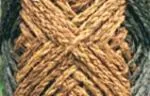
Image: Filipe Tohi (Tonga), New Plymouth 'Lalava', 2000, Sinnet (kafa)
Courtesy of National Radio - 16th July 2004
Presenter (Lynn Freeman): Nina Nawalowalo's evocative Pacific Island play 'Vula' is one of the New Zealand arts and cultural events going on show at the Ninth Pacific Arts Festival at a cost of around half a million Creative New Zealand dollars. More than a hundred artists and officials leave New Zealand on Tuesday for the Micronesian Republic of Belau, among them Nina, Te Papa curator Megan Tamati-Quennell, and from Creative New Zealand, Moerangi Vercoe and Aroha Rangi. I asked Aroha about the logistics of bringing this all together.
Image: Filipe Tohi (Tonga), New Plymouth 'Lalava', 2000, Sinnet (kafa)
Aroha Rangi (Creative New Zealand): It's quite large, yeah. No, there's lots of little bits and pieces to think about because we're the only one of the 27 nations going over that is actually looking after our own kai, the well-being of our artists. We've said to Belau that we'll support them by feeding our own delegation, taking our own delegation doctor, so everything that goes with all of those things we've had to organise. So freight; we've freighted over most of our dry produce and we're just organising the fresh produce and things like that, so all the customs requirements and the contracts for the cooks and the contracts for the doctor and the customs things to get in our drugs because we've got drugs that, you know, could be used for other purposes... And needles and things like that. So we've got to do special customs things for those and it's been very interesting.
Presenter: So as well as the staff, how many people altogether are going over from New Zealand?
Rangi: There is 126 I think now. We've got around 90 - 93 artists and an official party and staff that are going over.
Presenter: Moerangi, altogether Belau is going to have a massive population explosion isn't it?
Moerangi Vercoe (Creative New Zealand): Yes, Belau has a population normally of 20,000 people but for the festival they're expecting about 5000 visitors and that's a mixture of artists and participants in the festival and people that are just coming to watch. So that's the - that's like a million people suddenly coming to New Zealand so they've had a lot to think about. It's pretty hard from New Zealand to get a good steer on what the telecommunications are going to be like and whether we're going to be able to email photos back to New Zealand so people over here can see what we're doing.
Rangi: We are taking a range of artists from across all of the genres so we've got traditional art forms; carving, weaving, moko, and contemporary artists, new emerging artists like Reuben Paterson, Amorangi Hikuroa in clay, so it's a time to - for our senior artists to also pass on knowledge and for younger artists to have an experience of the festival. We've got theatre practitioners musicians, contemporary musicians and traditional. We're taking a full kapa haka group as well. That's in partnership with Te Matatini formerly known as the traditional Performing Maori Arts Society.
Presenter: Why has Creative New Zealand said it's so important to go, because you're investing an awful lot in it in terms of manpower and money - it's not inexpensive in logistics - why do we need to be there?
Rangi: Because it's a festival that supports the prevention of the loss of our traditional culture and arts, and it's a forum where all of the Pacific communities can come together and talk and meet and discuss, you know, what it is about our cultures that's important.
Vercoe: It's so rare to have something that's sort of got an indigenous focus really, and a Pacific focus within the visual arts that I work in anyway. You have the Sydney Biennale, you have the Venice Biennale but often there's no representation at all, so to have something like the Pacific Arts Festival where it's a coming together ofindigenous people, I think is a fantastic opportunity particularly to showcase things within that particular context.
Presenter: And Nina, I know you're very excited not only about taking a theatre piece there, but also about the chance to see other work from other Pacific Island nations?
Nina Nawalowalo, playwright: Yeah, it's so fantastic. It's very empowering for all Pacific people to go. I'm so excited about the next works that will come from all of the artists that go, what will be absorbed and is seen in that way, so I'm so inspired by this, you know, the possibility of the cultural exchange between people.
Presenter: And the work you're taking, 'Vula' is very much of the Pacific?
Nawalowalo: Yeah, I mean it's just going to be a great - you know, it's going to be a great experience because we're all New Zealand-born Pacific Island women and we use traditional images and contemporary images and so you know, it's a great - it will be great for us to put those images in front of our own people, Samoan and Fijian, you know, people, and see how it's taken.
Presenter: Megan, in terms of the show that you have curated, what were you looking for in the artists that you wanted to showcase there?
Megan Tamati-Quennell (curator Te Papa ): It's an exhibition that has been co-curated by myself and Ngahiraka Mason - contemporary Maori curator at the Auckland Art Gallery. We've called the exhibition 'He Pounamu Onamata - an exhibition of 21st century body adornment practices'. The title translates as "Your greenstone is awesome" and it comes from a tradition which is the concept of the show because we wanted to do it within a Pacific context too, that people could relate to in terms of body adornment and the concept of how often body adornment, or taonga is gifted and can mark different periods in peoples' lives. You know, it might be the birth of a child or it might be a wedding or it might be different things given to do with cultural gifts, so that's basically the concept that we worked with.
Then we gave a brief to eight artists, and we paired them actually. People like Areta Wilkinson and Rangi Kipa will work together because their work both looks at customary and contemporary Maori body adornment. His much more probably rigid in the customary because he comes from a carving background so often he uses forms like the hei tiki or manaia forms or matau or - but made out of sort of contemporary materials, and Areta's work is - she locates herself much more as a jeweller and contemporary Maori jeweller. We placed Reuben Paterson and Ani O'Neill together and again looked at their work in terms of Ani O'Neil is a contemporary visual artist who uses traditional craft technique that she's been taught by her nanny, very domestic, so crocheting and te whaiwhai, sewing etc and all those sorts of things. And Reuben Paterson, the younger artist who is just coming through and works with glitter like 70s fabric, so his is sort of quite light.
Suzanne Tamaki and Moana Nepia we've put together, mostly because of their relationship with feathers. The two of them both work with feathers. He's done quite beautiful feather paintings and Suzanne often does stuff to do with body adornment, necklaces, everything - I think she's making a g-string with teeth. Those two have decided they're going to talk about sexuality. But also we're hoping that our artists will be sharing their skills and experience with artists from other countries and I know the moko artists in particular, have already got a plan whereby they're passing on some of their skills and knowledge to the local people in Belau.
Aroha Rangi: The same with our clay artists. Wi Taepa is taking over low-tech clay skills. Clay was an art form that was once a traditional Belauan art form but in the colonisation process they've lost a lot of there traditional art forms, they've lost their moko, they've lost their clay art. They've still got their beautiful bi and they've still got their language which is wonderful, when I went for the site visit, they were really interested in meeting with our artists and having their artists work alongside ours to be able to pump up the scene a bit and to encourage and support, and learn new skills. So a lot of our delegation is actually going over with that mindset of teaching and sharing and learning as well.
Presenter: And you heard there from some of the New Zealand delegation to the Pacific Arts Festival in Palau or Belau, either correct by the way, starting next week. We hope to have reports from artists and the festival depending on those phone lines.