Giant Steps
How do you grow a company from a small community, activate youth and public spaces, and what makes a good collaboration?
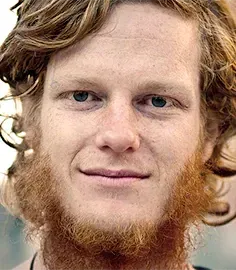
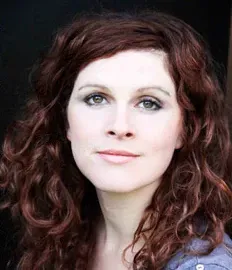
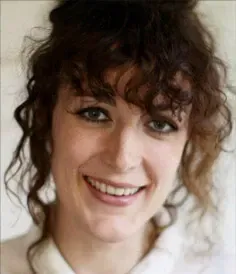
Renee Liang interviews Ash Holwell and Laurel Devenie from Whangarei-based Company of Giants about their work and their latest piece, Rangitahua.
How did Company of Giants start?
Laurel Devenie: We were born out of collaborations with Northland Youth Theatre (NYT), a clown love affair at The John Bolton Theatre School in 2011 and a fateful hitch-hiking meeting near the old railway station in Whangarei. I had been continuously drifting back up north to work with this particular group of teenagers through NYT and then they started growing up - we kept devising and growing work in different ways, Katy Maudlin had come up north after we had trained together for four months with John Bolton and joined the madness and Ash turned up the following summer on a two-story bike. After we made Odyssey together with NYT (the 4th production I had directed for NYT) we had a pretty strong inkling we really liked working together and wanted to lay down a pathway to continue to do so - so we came up with a name (this took a while) and it has kind of carried on.
What was your intention for starting it and how has it evolved?
Laurel: All through drama school I had wanted to be part of a company - when you are an actor you get to be in a company for short periods - you experience that sense of ensemble and shared goal and then it finishes and you move on to the next one. I spent hours pouring over pictures and interviews with Forced Entertainment and Complicite etc and dreaming of going and trying to join them. And then I realised that those kind of collaborations can’t really be controlled and you can’t just jump onto them - you have to look around at who is collaborating with you and build from there - they are born out of a desire to keep working with a group that you like - and in a way you can’t choose who that will be. I had no idea it would be the bunch that Company of Giants has become. I think we all believe in longevity and staying together and so that was the intention at first - cashing in on the epic processes we had committed to each other till then - you sweat and laugh and cry together so much when you are making a piece of work and to watch it all then just disappear has always felt hard.
Ash Holwell: Over the past few years what’s really shifted is the diversity of roles we’re playing within Whangarei. Our theatre focus has shifted to a wider appreciation of how our practices can be valuable in other ways to our community. This is currently manifested in our work on a former church and youth space that has been a defunct and unused building in the centre of our city for sometime. Near the end of 2014 we were allowed by the council, who own it, to utilise it for a two week workshop with John Bolton. The council had decided to sell it, by the time that process began in February 2015, the space was becoming alive again and we felt it would be a shame to lose it as a communally owned resource. Defending it from being sold to Wendy’s and other private interests, we’ve worked with the council to begin to transform it once again into a place of sharing for our people.
You have developed a reputation for engaging, authentic work with youth - what are your top tips?
Laurel: Listen. Listen hard and listen soft - to the group, the individuals, to the town, to the empty spaces - to the stories, the jokes, the songs. I guess I always try and focus on what really wants to come out of each person and how to ask the right questions, play the right games, create the process where people involved lead the way somehow - and can reinvent the form and make it relevant, useful, cool, exciting. That age old thing of trying to come from a place of not knowing. Gah! I think that is key when working with young people. Which doesn’t seem to get any easier! We are always looking for new games to play, to trick the gold out of us all. Big crazy costumes are useful!
Ash: Reciprocal and mutual vulnerability. It’s the key to so many of our processes - there’s no point being there unless you set up the possibility for the young people to influence you as much as you might influence them.
How has working with a small community in Northland influenced your practice?
Laurel: It is a completely different experience making work up here for me. Here, I feel like our job is to be instigators, rebels, tricksters and leaders. There’s something about getting to know the individuals in your community really well - so you can expect to know eighty percent of the audience that might come to a show or an event.
There is the potential to speak directly to things that are of this place, physical places or things that are challenges within the city and the community. It is exciting what role artists, musicians and theatre makers can play in really contributing to dealing with some of the big problems we are consistently told about in Whangarei - empty buildings, lack of youth engagement, little job opportunities etc - artists can do things councils don’t have the skills to do and businesses aren’t able to.
We have really tried to work with a kaupapa of inclusion and saying yes - to offers, to ideas, trying to respond to gaps.
Ash: I’ve always kind of thought that anyone can move to Berlin and do something cool and boundary-pushing, yet working in a small place like Whangarei has the potential to make things even cooler and push boundaries further. The challenging context and consistent necessity of working with a diverse group of needs and people that can have such a critical influence on developing a unique way of working. I think this is incredibly important in a wider context of being able to have a cultural landscape that is openly creating unique forms and practices, has an ability to experiment in relation to direct contexts, and thus, as a whole, we are developing a more resilient, diverse and tailored set of cultural rituals for society to practice.
You're now moving to working in larger centres - Auckland and Wellington. Has your practice evolved?
Laurel: I think the kaupapa stays the same. Each piece has been born in an entirely different way and has a few new people involved that have informed the creation of the piece. It feels different coming to bigger centres because I suppose on some level the stakes change, the competition changes, the audience we are presenting it to changes - but with Rangitahua we are bringing a motley crew of 16 - a cast that is diverse in age, background and experience. It is a pretty eclectic bunch. There is strength in this. It feels like the work we make is strange and different and is seeking to involve all sorts of people, objects and spaces so we are not really trying to compete anymore. I think I used to worry a lot about not being the same as other people’s work. Haha. I still worry (constantly) but not about that.
How do you push and collapse the borders of theatre?
Ash: I’m not sure if we have any real desire to explicitly challenge the borders of theatre - there are performance artists and theatre makers who have done much more border-pushing works than we might ever do. However, given that I really had no contact with theatre up until a few years ago, I am still acutely unaware of many of the rules that theatre has established for itself. Given that I am surrounded by such gifted theatre makers, this has ended up being good thing, and I think rules need to be understood as always in flux, and treated respectively in terms of developing a happy relationship with breaking or remaking them.
One thing that we’ve found is that crossing disciplinary or sector borders has huge immediate impact. We’ve only dabbled in this slightly, and there are other practices in the country that are far ahead of us in their work in this area, though whenever we’ve been invited into a non-theatre context, our skills have been highly valued. We would love to do more of this work, and see that theatre making processes centred around sharing, co-creation and openness could be key to huge shifts in how we organise ourselves as humans.
Your works seem very diverse in subject matter and style. How do you choose a topic?
Laurel: There are no rules! It could come to someone in the night like a short sharp nightmare that needs to be made into something or it might just be a character that has turned up before but never made it into a show. Ash knows the spaces in Whangarei more and more and that has been a big part of our interest - how to reactivate spaces here - and also responding to offers of collaboration like the Whangarei Art Museum, NYT, The Quarry Arts Centre. We are an amorphous group, so people are always coming and going from the centre of things so it is also often a case of who is around, what do they want to do.
At the same time as having a very clear sense of its ideals and kaupapa, Company of Giants is also like water, which I think is how we want it to stay - or at least how it needs to stay to keep alive. We want it to be able to last for a long time so decisions also need to be based on what is sustainable for us to do at this point? A tiny project with a mandolin and a horse mask or a giant community piece in an empty super-market? We are slowly learning to look after ourselves a bit more in these choices.
Ash: We’ve had this huge energy in our formative state which we never really knew what we were doing and still don’t really, that has allowed us to just keep saying yes to things that have come up. Laurel and Katy put a huge amount of work into getting Odyssey sailing out of Whangarei to Auckland and Hamilton, and that was a real launching pad for us to know that we could make and tour work. This has evolved to a point of producing work ourselves and now developing a venue. In some ways this is where our name comes from - we aren’t very big people though the things we get ourselves into seem to often keep growing and escalating. One of our guiding quotes is from a Tim Etchells work, stating “The future will be confusing.” We’re finding that our own version of this is “The future is exponential.”
Tell me about your latest work, Rangitahua: The Stopping Off Place. Why did you make this work?
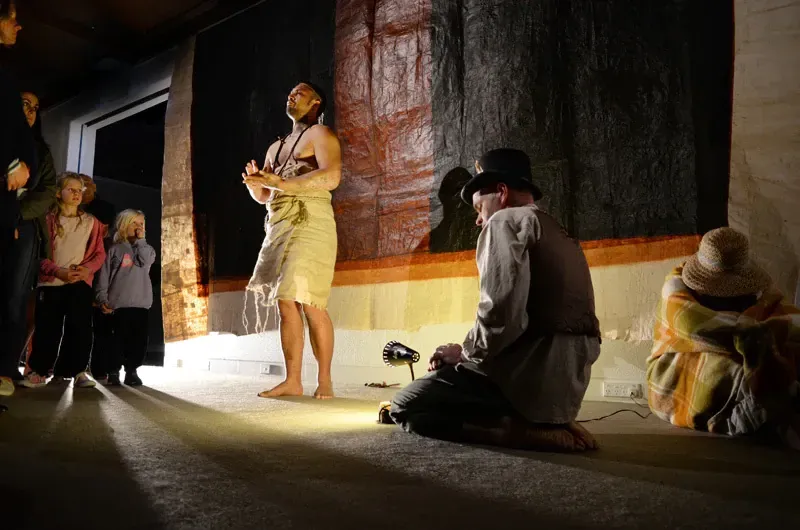
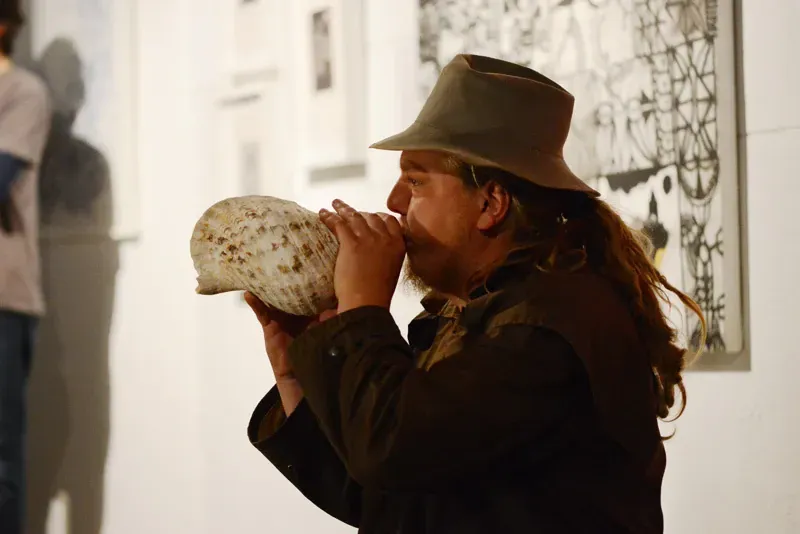
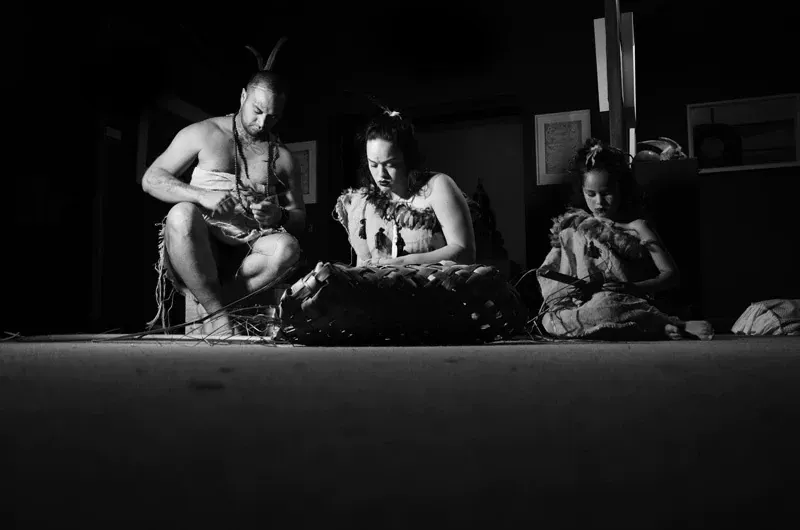
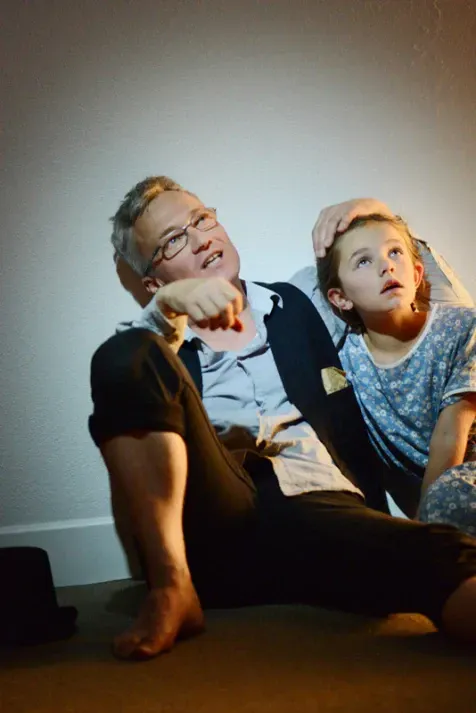
Laurel: The Whangarei Art Museum approached us to help bring in some more people into the gallery and they came up with the idea of us creating a theatrical response to an exhibition. The exhibition at the time was the Kermadec: Lines in the Ocean. It was quite a last minute turn of events and we found ourselves gathering a group and trying to learn as much about the Kermadec Islands as we could. We played in the gallery experimenting with walking people around and using the art works to kick start scenes, songs, sounds. We were really experimenting with how to make a theatre experience that enhanced and extended on the experience of being in a gallery. None of us knew anything about these islands. At first I was worried we wouldn’t find anything to create story from but we soon all became enthralled in learning about the chapters of life on Rangitahua or Raoul island which is the only island where people have really landed and settled over the centuries. We read books, trawled the internet, hunted for songs, learned how to use Phil Dadson’s instruments, asked Tokelaun friends about their history and ended up with what is now Rangitahua: The Stopping Off Place. None of us expected it would be a project we would do again but it has proved to be a really special one that has brought a really diverse group of us together and taken us to Gisborne and now Wellington.
Tell me about your collaborators.
Laurel: This has been a really special one in that it has created so many new connections for us. In a strange way the biggest silent collaborators have been the artists - what a cool thing it has been to be faced with the prospect of working to bring the art of Phil Dadson, Bruce Foster, Fiona Hill, Gregory O’Brien, Jason O’Hara, John Pule, John Reynolds, Elizabeth Thomson and Robin White to life. That has been a very new and interesting collaboration so far. The Whangarei crew of performers are wonderful - with an age range of 8 to nearly 60 the group feels like a circus troop, everyone bringing very different gifts and perspectives to share in the creation of this work. And I suppose the Kermadecs themselves are in a way a huge part of the collaboration as we’ve tried to dig up the stories and people of the past and include tiny snippets of what we’ve discovered about them in the experience - like holograms of the past.
What are you working on next?
Laurel: Our biggest project is creating this community run arts centre in the middle of town - the project and space is called OneOneSix and I think it is turning out to be bigger than any of us imagined it would be and also a really exciting and interesting experiment. I am also working on Shortland Street at the moment and really enjoying the absolute gear shift.
Ash: I help run the space Wood Common which houses the community bike workshop Whare Bike, a Wholefood HUb, and the Northland Natural Food Co-op, so I’m continuing to focus on developing that space, and currently we’re rebuilding our bike workshop. The ONEONESIX project will continue to be an evolving journey in which we hope to really focus intently on the long term resilience of the space continuing to be a valuable and loved community asset long into the future, and how we can merge some of our theatre practices with other organisational innovation friends within the Enspiral Network are working on. We’ve also just opened up Beanstalk Coffee + Milkshake Bar in the space which has been totally fun thing for us to design and we’re pretty stoked to be serving locally roasted Ovenbird coffee and milkshakes invented by young people who use our space.
Critically for us as a collective at this point we are coming to terms with our evolving position within the community, and are in the middle of a period in which we are diversifying the relationships we have within Whangarei. Working with organisations such as Manaia PHO, Ngati Hine Health, Te Ora Hou, the Papermill, and others are where we are finding fertile ground contributing to our community and developing our practices.