Ghosts in the Machine - Ben Cauchi photography
Written by
Courtesy of Dominion Post - 29th October 2004
Ghosts in the Machine
By Mark Amery
French philosopher Roland Barthes memorably described the experience of having his photograph taken as, at its truest like a 'micro-death'. A point when, Barthes writes, "I am truly becoming a spectre."
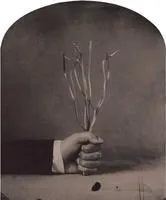
Image: Ben Cauchi, Untitled, 2004, unique ambrotype.Courtesy of Dominion Post - 29th October 2004
Ghosts in the Machine
By Mark Amery
French philosopher Roland Barthes memorably described the experience of having his photograph taken as, at its truest like a 'micro-death'. A point when, Barthes writes, "I am truly becoming a spectre."
Image: Ben Cauchi, Untitled, 2004, unique ambrotype.In such a fine portrait he feels he is neither the photographer's subject or the photograph's object, but rather a subject who is becoming an object. A ghost caught in-between.
Great photography can often seem to exist in the space between things: life and death, or truth and fabrication. It's a space you can see explored in the role-playing of contemporary art photographers' self-portraiture, from emergent artists like Yvonne Todd, currently showing at Peter McLeavey Gallery, to established artists like Janet Bayly, currently showing at One Eye Gallery, Paekakariki.
In Ben Cauchi's exhibition Ghosting (Christopher Moore Gallery, until November 6) the photographer appears like some colonial conductor of experiments in this space between life and death, subject and object. A graduate of Massey University in 2000, over only five years Cauchi has held thirteen solo exhibitions, determinedly developing his own distinctive photographic vocabulary from traditional and contemporary sources.
Cauchi uses the mid 19th century photographic format of the ambrotype, a glass negative placed on a black velvet backing in a small black wooden box. Like magic, the negative placed on a black background produces a positive image. And like some magician touting his skills, before his camera Cauchi plays at performing disappearing acts, catching ghosts and shadows, and testing out the electrical charge in the air.
Within a few decades of photography's introduction in the mid 19th century it was being claimed the camera could capture those things that occurred in the spirit world between life and death. It's easy to forget now how easy it must have been to believe that this astonishing new medium could trap more than just likenesses. That while a subject sat for a sustained period in the studio, the spirits in the surround might be captured by the long exposure, and that in the photograph's surface imperfections something more mysterious lay. Out of general use within decades of its invention, the ambrotype came into common use at about the same time as spirit photography started to become popular. In some celebrated cases subjects were duped through tricks involving shrouded dummies, camera assistants and double exposures into believing a photographic session could be as much seance as a sitting.
With these meticulously produced works, Cauchi plays with our own continued wonder at the mystery of photographic process and, in his evocation of a past time, the ability for photography to exist outside current space and time. While there are physical tricks like hovering shrouds and making a plume of smoke turn into a skull (I can't tell you how he does it), the blotches and imperfections on the glass may also be mistaken as the imprint of things beyond ourselves. Even in this digital age, ghosting, or the effect of a second, shadowy image, when an image is only partially recorded, is still common in photography.
Good art revels in the space between things, and in Ghosting there is a rather clever, elegant game going on with the viewer's perceptions. A cloth hovers, but the strings from which it hangs are deliberately, delicately apparent. Backcloths fall away from walls and hanging cloths sag, making us conscious of the staged nature of it all. Cauchi knows we know these are tricks, but he's also aware that we're still enamoured with the mystery of it all, leaving us wanting to believe.
There's a streak of Gothic wit here. Cauchi himself in these images projects the stiff, grave image of an undertaker or perhaps even, staring out through the glass darkly, a man who has sold his soul to exist on the other side. It's easier for us to see Cauchi as just some ardent devotee of antique photographic processes, faithfully recreating a 19th century language, or even serious in his spiritual quest, but there's a constant play with our perceptions that disturbs any easy readings.
As if in some existential experiment, Cauchi in these photographs appears out to prove as photographer he is able to cross between the two worlds. Like the magician, he presents himself as all there, photographing himself front, side and back, before then in other images proving he can disappear - providing an empty cuff and a headless suit. Can we prove this is just an empty suit, rather than the photographer able to render himself invisible? Could he have photoshopped himself out? The glass negative in the box says otherwise. In the first image in the exhibition he presents us with an antique camera (pointed directly at us). It seems presented as the camera that is taking the photograph, but clearly in this case it is not. What then is taking the photograph? Our trust of photography and taking what we see as read is deliberately challenged; these fine images ask us to question the things we take for granted.