Getting out there
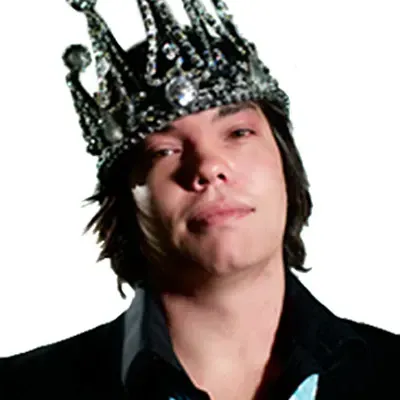
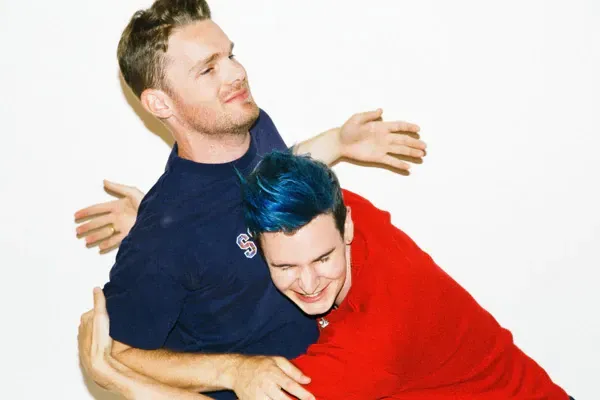

Writer and producer Sam Brooks has recently been everywhere, opening plays two at a time, touring shows to Wellington and winning awards and accolades for his emotionally raw works. Renee Liang asked Sam just how he does it.
* * *
To date, Sam has produced five of his plays at The Basement (Goddess, Mab’s Room, And I Was Like, Queen, Another Dead Fag), has won Playmarket’s Playwrights b4 25 two years in a row, and is currently working on a commission for the 2014 Playwrights’ Initiative by the Young and Hungry Trust (The 21st Narcissus.)
His play Riding in Cars with (Mostly Straight) Boys was on at the NZ Fringe Festival in Wellington and is in Auckland, along with his play Queen, as part of the Auckland Pride Festival.
How did you start writing?
I’ve always written in some shape or form, but I started writing plays when I studied at Unitec and I haven’t ever really looked back since. I had some really inspiring tutors and people around me, which spurred me on to not only write, but write good stuff, and I’ve had those around me since then.
Do you only write plays?
I don’t, though plays are definitely what I spend most of my time writing. I’ve done some screen stuff, short films and TV, and I do some article writing for a fairly eclectic range of publications (Express to an Australian music blog to a journal for The Wireless) every now and then. I also have a blog which I used to do daily but when things get busy, it falls to the wayside.
Do you have any writing habits - a special place, or time?
I’d like to say no to this one and maintain the image that I write anywhere at any time, but I generally write at the end of day, pumping either trashy pop music or an obscure-ish film score (I’m really into the score from Take Shelter at the moment) when I’ve done all the stuff I need to do and can focus on that. But sometimes you get the urge to write at the weirdest moments; I vividly remember writing one of the pieces in Queen in its entirety while waiting at a Newmarket train station and it’s virtually unchanged since then. Those moments are totally magical, and I wish I had more of them at 11.59pm when I’m sitting in my bed, staring at the laptop and listening to Jennifer Lopez.
Who are your writing heroes?
I have a ridiculous amount of respect for Gary Henderson. Not only as a writer, but as a tutor, supporter and friend; he’s just one of the best dudes out there. I also saw Fantail last year, which I think is the bravest, most personal film to come out of New Zealand in years, and I have so much admiration for Sophie Henderson as a writer (and also being one of the most nurturing people in this industry).
Overseas, I have a really huge amount of respect for Edward Albee, Tracy Letts and Katori Hall; brave voices telling really authentic stories in interesting ways.
Many of your plays address universal themes using gay characters. Would you be able to write the same plays with straight characters?
I feel like if you asked me a year ago, I would say yes, but after having produced four different plays with gay characters in that year, I realise that that’s not the case at all. In And I Was Like, which is a rom-com that goes terribly terribly wrong, a character spits in his partner’s face at a crucial moment. It’s horrible and my favourite moment in the play. If you change the relationship to a straight one, as a writer you’re immediately engaging in the gender politics of that action, it’s either a man spitting in a woman’s face or a woman spitting in a man’s face. It turns it into a play about something else entirely, whereas in this instance with two men it relieves the action of that kind of political/gender baggage and allows the focus to be on this particular moment, this particular relationship and these two individuals.
I think the beauty of writing about universal stuff with gay characters is that it gives an audience another insight into their own experiences. Riding in Cars with (Mostly Straight) Boys is about a gay guy who falls in love with straight guys, but it’s really about the security of wanting what you can’t have, which is an experience that I feel every person has had. Again, if you do that with straight characters, it’s just a standard rom-com, but with this play and these characters it’s really encouraging an audience to take a step outside of themselves to look within.
So to round up a very long answer, I don’t think I could write these play with straight characters. Which isn’t to say that I wouldn’t or don’t write straight characters, they’re usually in plays on my laptop that are three hours long that I’m waiting for some company to fall in love with and put on, but I feel the things I want to discuss are more interestingly explored with gay characters.
With Queen, you talk about what it's like to be a young gay guy in today's society. How much can a play change society's attitudes? (and are you speaking from hope, or personal experience?)
Oh gosh. In an ideal world, it would change them a lot. In reality, most of the time you’re speaking to the converted. It’s not like Queen is the half-time show at a Sevens game; it’s a show that’s on during the Auckland Pride Festival. I think the power in Queen is less trying to change society and more trying to show an audience, specifically a queer audience, themselves.
For me, the play discusses things that I haven’t ever seen discussed on a stage, on a screen or even with a person. Sitting in the audiences for Queen last year, which I did almost every night, I really experienced a sense of community that I hadn’t ever really felt before, I felt like I was a sharing an entire group of people’s stories. Not necessarily just queer people either; there are moments in the play which I feel cut as deep to the bone for a straight person as they do for a queer person.
I think a single play can’t change society’s attitudes, but a movement can. There are new, exciting queer voices bubbling up in this country not just in theatre, but in comedy and onscreen, and I can’t wait to see what somebody else has to say about things I’m feeling.
Why did you decide to do Riding In Cars With (Mostly Straight) Boys as a site-specific piece?
Because I’ve been at The Basement so much that they won’t let me on the premises anymore and I needed to think of a way around that.
I always wanted to do this play somewhere that wasn’t a theatre. My original idea was just two chairs in a lounge, which was vetoed because this isn’t a devised piece in a Year 12 Drama class, then I asked my beautiful genius techie friends Amber Molloy and Sam Mence how viable it would be to do in a car and everything spooled out from there. An idea at one point was to have me power the car via exercise bike, which was phased out slowly, and I’m sure the techies went through many, many ideas I never heard about until we settled on the one we have: Rig the car up with speakers and a few lights.
I’m constantly surprised that it’s a thing that is working. We’ve had a huge amount of support from both Unitec, my alma-mater who have always been really supportive of me ever since graduating, and from The Wallace Arts Trust, who have also been really supportive of me since leaving, to make this a thing that can happen, and also to get us to and from Wellington. We’re also relying on the immense generosity of everybody involved, especially the cast and crew, who have put in a tremendous amount of time and effort for a cute little show that has suddenly become this huge endeavour.
But we’ve got a show. And it’s going to be on in a car outside. We open in a week and I’m still waking up in the morning and wondering how we’re doing it.
You also produce your own plays (with a prodigious output over the last couple of years). How do you find your collaborators, and have you got any tips for other writers who want to get their plays out there?
When I started out, I met everybody I worked with at Unitec, which is a great place to snag some emerging talent. If I could spend my days there looking for new techies to lure into my shows, I would. The first thing I put on was a double bill and only one of the people I worked with wasn’t from there, and even he was a friend of the director. I feel like that first show gets the ball rolling, and more or less everybody I’ve worked with has already been a friend to some extent.
My main tip for writers who want to get their plays out there is to produce them yourself, funding or not. I got a copy of Playmarket’s 20 New Zealand Playwrights, which is a thing that every playwright should read, and it was stunning how many of these playwrights, largely a generation or two older than me, were reluctant to produce their work. One of them had even turned to TV because she couldn’t get funding to put on her award-winning play. I produced two shows less than a year out of uni and I wasn’t rich, but I made it and it got the ball rolling for me. It’s not easy, but the best and maybe the only way to get your plays out there is to produce them yourself.
There are people out there who will give you advice, myself included, and people want to hear new voices onstage. The Basement is a great place to not only put on a cool weird show with your friends, but a great place to fail gracefully; it’s a place that wants to help you put your work on. I wouldn’t be where I am without that place, and it’s just getting better and better every year.
You've worked in the NZ theatre and TV industry in your day jobs - does this help with the writing or producing?
The main way it helps is rent.
The other way it helps is that it gets me out of my own head. Last year I worked on ATC’s Like There’s No Tomorrow for three months, and although it was an awesome show and I got to work with really cool, talented people, the best thing it did for me is get me out of my own head for a big chunk of time. The thing that nobody tells you about producing your own work is that the most draining part of it is hearing your own words thrown back at you over and over again, except with somebody else’s voice. It’s amazing, beautiful, magical and all of those things, but depending on how close the work is to you, it’s also incredibly draining. I went from a rehearsal of Riding in Cars to a readthrough of Queen a few weeks ago and when I got home I basically slept immediately. So it’s honestly just nice to spend time directing your energy somewhere that isn’t an extension of yourself.
What are you working on next?
I really want to play all three Mass Effect games back-to-back, but it keeps being put off by real life. I’ve got a commission I need to finish (start) not too long after both shows close. If Riding in Cars with (Mostly Straight) Boys goes gangbusters, then there’s plans to do a much more extensive (read: expensive) tour in Spring. I’ve also just submitted an application to Creative New Zealand to research, write and develop a play about stuttering, which I am crossing all my limbs for. There’s also vague plans to mount a new production of Mab’s Room, potentially in both Auckland and Wellington, and I want to do a monthly event where comedians/actors read out dumb things from the internet like YouTube comments and strip club reviews on Yelp.
But the big thing (like all these other things are so small) I’ve been planning recently is a big huge show with actresses. For the first month of this year I’ve basically been working exclusively with guys, who I love (obviously) and who are amazing, but my first love is actresses and I’ve yet to pitch this to my already beleaguered technical crew or anybody really, but my plan is to get fifty actresses in a monologue show over two weeks.
Directly next, though? Mass Effect. Real life can take a break.