Generator Q&A: Justin Lewis
Written by
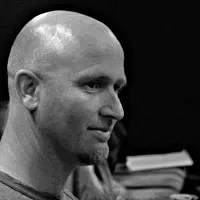
Justin Lewis’ entrepreneurial spirit first emerged when he was six-years-old and sold second-hand newspapers outside his local shop.
“I didn’t really know what I was doing but I guess the cute factor got me some sales.”
It required courage and risk, key traits shared by artists and entrepreneurs.
Today Justin is a writer/director and founding partner of Indian Ink Theatre Company. In this Generator QnA he talks about 'thinking like an artist and working like an entrepreneur'.
“I want to make theatre that adds value to people’s lives and I try to maximise the impact of that work by thinking about the business of the art.”
Justin collaborates with Jacob Rajan to create the company’s works and has managed numerous national and international tours. His productions have won two Production of the Year Awards and two Edinburgh Fringe Firsts. The new play from Indian Ink (The Guru of Chai) has just been nominated for five Chapman Tripp Theatre Awards.
Justin founded and is on the board of Q Theatre. He received an award by the Kaupapa Oranga Trust for his services to theatre. He has BA in History and Italian and is a graduate of the John Bolton Theatre School in Melbourne.
Tell us a little bit about your background.
My first entrepreneurial activity was selling second hand newspapers outside my local shops at the age of 6. I didn’t really know what I was doing but I guess the cute factor got me some sales. My father was an architect and I see myself as kind of story / theatre architect. I love to make things that work for people.
What does the term ‘creative entrepreneur’ mean to you and what you do?
Risk and courage are key elements of both creativity and entrepreneurialism. I think most entrepreneurs are creative and most creatives are entrepreneurial.
I want to make theatre that adds value to people’s lives and I try to maximise the impact of that work by thinking about the business of the art. I think this means I need a high degree of stamina and belief in what I do.
Why is it important to maintain a balance between your creativity as a practitioner/producer and the more business-like aspects of what you do?
Without the art there is no business. Without the business I can’t sustain my art.
What are some of the strategies you’ve put in place to help you achieve that balance?
Theatre is a collaborative art. When I am with other people working on a show I just have to leave the business behind. I am a planner and aim to have most of the business / producing done well in advance of the periods of rehearsal.
I absolutely rely on having good people supporting me; I don’t do this on my own I am part of a team of people who work on the business and the art.
Has the balance ever got out of kilter? What happened and what did you do?
It regularly gets out of kilter and almost always it is the creative side that gets neglected. When this happens we are in real trouble because without a good product we don’t have a business.
It is a constant struggle to hold things in balance but the things I have learned are:
1. Create space for the creative work
2. Get a good team around me
3. Tune in to my passion / what I care about because this is the source of my energy.
When you were studying History and Italian at University, did you have any inkling that you’d be touring the world as Indian Ink?
I started studying Italian language because there was paper on Italian film and you could watch films and get marks for it. I fell in love with the language and the culture. History is storytelling, which I have always loved so while I never dreamed I’d be doing what I am now I am living my dream (getting paid for making theatre and telling stories).
Collaboration plays a big role in your enterprise. What advice would you give about creative collaboration?
I think the best collaborations come naturally, you can’t hunt them down and force them. But once you are in a collaboration the partnership needs care and attention from time to time so the relationship can grow and deepen.
What advice would you give about business collaboration?
Choose your partners as carefully as you choose your lovers.
How do you maintain flexibility and sustainability in your business?
Flexibility is key to our sustainability and longevity. We are a very small company we have to adapt and be nimble. But these are the very qualities that have enabled us to perhaps think a bit differently and to survive.
To date, you’ve created five productions and won numerous awards. What legacy are you growing with your creative enterprise?
I leave the analysis of the legacy to others. I’m thinking about the present and what is next. If I and all the people who work with Indian Ink can earn a good living and make work that moves people then I will be very happy.
What advice would you give to others about thinking like an artist and working like an entrepreneur?
Think about the two as parts of a whole. Not as conflicting things but as like spokes and a rim – together they make a wheel. Make it a wheel of fortune!