futureNOW - all ready?
Written by
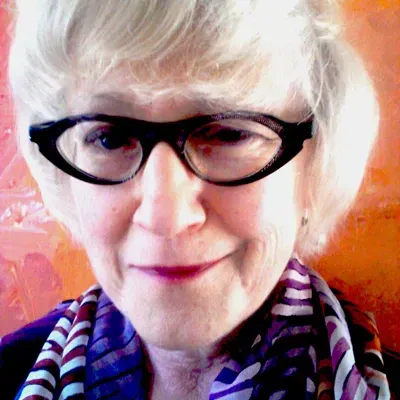
So it's the future already - all ready? Marianne Doczi returns to creative conference Survive & Thrive this year to stimulate futureNOW thinking, crucial to resilience and sustainable success.
So it's the future already - all ready? Marianne Doczi returns to creative conference Survive & Thrive this year to stimulate futureNOW thinking, crucial to resilience and sustainable success.
"I stay 'ready' by tuning into weak signals and data, and being prepared to be 'surprised'. By being flexible and adaptive. I know that despite understanding the futureNOW, I can't assume longevity about what I know at the moment."
Marianne is one of 22 local and international speakers and artists at Survive & Thrive on 13-14 September who will share, inspire and exchange ideas and action for living and working within disruptive, fast-paced change.
Tell us a bit about what you do and what drives you?
In my thinking work, I draw together threads of how the future is happening already, to try and help people understand the nature of the change around us. What is the zeitgeist (the spirit of the times) telling us is going to move from the margins to the mainstream? What are trends that have the power to consolidate what might seem to be isolated thoughts/behaviours? I’m especially interested in how culture, commerce and connectivity (technical and social) are interconnected and how these interconnections are transforming what were once quite static roles: Idea generator/creative/funder/marketer/ consumer.
I’m driven by both a need to better understand the world around us, and to help people improve wellbeing.
In my personal creative space, I’m exploring small scale sculpture using found objectives, such as old tools and kitchen utensils. The focus is on ‘conversations’ and relationships, which the viewers are encouraged to interpret themselves.
Tell us about your recent or upcoming projects?
I am back part-time at Newcastle Art School doing sculpture. I am creating a series of ‘conversation piece’ sculptures that will ask the viewer to share their interpretation: a reflection of the collaborative economy we’re now in. I am also researching how to represent issues around food, health and sustainability. I want to convey the complexity of our relationship with food - production and consumption - in ways that will be a catalyst for positive change in our economic, health and environmental practices.
In relation to my zeitgeist work, I’m continuing to explore the themes of futureNOW KnowHow I spoke about last year in my keynote. Two distinct issues, which I think are of increasing importance, are the rise of “one screen”, that is, consuming and creating cultural expression irrespective of the actual device/hardware. And how creative artistic expression can be used more effectively, through partnerships, to try and resolve public policy issues ranging from health to crime.
Do you like to look at the big picture or focus on the details?
Today, ‘details’, seemingly disconnected, are the big picture. I think the pace and interconnectedness of change, and people’s ability to share and connect, means that the big picture is increasingly being created through millions of small actions. So I’m a big picture person who sees the emergence of the future through the synthesis of lots of detail.
Having said that the big picture, or the context in which we’re operating, is heavily influenced by digital disruption, the sharing economy, generational shifts, climate change and China’s economy.
What's your number one business tip for surviving (and thriving) in the creative industries?
Stop thinking about your audience as being ‘out there’. Understand that they are potential partners/collaborators throughout all elements of what was the traditional value chain.
‘So it’s the future already, all ready?’ What does this mean for you and what you do? Are you ready?
People are using mobile technology to create, distribute and consume in a more spontaneous way. The notion of a fixed time and place for consumption is fading. This creates opportunities to deliver new products and experiences; be more personally connected with consumers and collaborators; and adjust offerings quickly.
The democratisation of technology has created the ME/WEconomy - products, services and experiences shared peer-to-peer. Millions of people who were once passive audience/fans are now acknowledged creatives, playing in spaces previously restricted to professionals. AND available to be co-creatives, market researchers, funders, critics, reviewers, promotors, learners.
Opportunities to help resolve social and economic problems. Creative practitioners’ 'tool kits' of story telling, humour, images, sound, light, and movement etc, are right for partnerships to improve wellbeing.
I stay 'ready' by tuning into weak signals and data, and being prepared to be 'surprised'. By being flexible and adaptive. I know that despite understanding the futureNOW, I can't assume longevity about what I know at the moment.
Do you think people realise they are in the future and are prepared for that reality?
Some are, others think the futureNOW is a small variation on what has been. I think people who understand the changing nature of the consumer/audience relationship are getting prepared, as are people who are using mobile to connect with the above.
Around us are many big industries, such as travel, publishing, banking and retail, which have been massively affected by the futureNOW. Some elements responded openly, and experiment: others were in denial. It’s certainly not easy to be prepared for the futureNOW.
What are you doing now (in business or practice) that you couldn’t imagine doing a year or two ago?
Being ready to invite the viewer to be part of the creative decision making.
The rate and pace of change is constantly increasing. What challenges and opportunities does this present for creatives?
Understanding more deeply what it is that matters for their audience/market, and how to tune in one’s value proposition to meet an essential need; Understanding the move to a mobile/time shifting economy; Being innovative about how/where a service is conceptualised and located; identifying partnerships outside of the conventional.
With all the information and noise, how do you scan and decide what is important to you?
I remain eclectic in what I look at/consume. I blend weak signals with data, and pay attention to when research/analysis identifies that a conventional assumption is no longer true.
It’s been a rocky few years, how have you rolled with the punches (in business or practice)?
I’m reorienting my focus to a particular issue rather than looking so broadly.
We’re talking about resilience at Survive & Thrive, what’s your top tip for staying on top of things or bouncing back?
Taking time to reflect, strong self-talk, and having a supportive partner.
What’s your top tip for balancing work and life?
Not sure I’m competent to give advice here!!
What excites you about the opportunity to be in NZ at Survive & Thrive?
Continuing the discussions from last year, and hearing how people now view the ideas/information I raised. Is it making sense for people? What do they see as being the futureNOW? Helping consolidation a greater understanding about how to respond to opportunities.
What’s your big idea for 2014?
Being of service. I think creative practitioners have immense opportunities to help individuals/communities/governments deal with the many problems we face in a resource constrained world where the volatility and volume of change, plus the effects of poor practices in the past, are creating stresses. The old ways of thinking about both problems and solutions are inadequate/irrelevant. Creative practitioners can re-frame both and earn income and respect from their services in ways that will vary from the past, incrementally and radically.
- Survive & Thrive is brought to you by The Big Idea and Arts Regional Trust.
Video: Marianne Doczi at last year's Survive & Thrive. She returns this year for the creative conference at AUT University on 13-14 September 2013.