Future Sight - Amit Tripuraneni's digital feature debuts
Written by
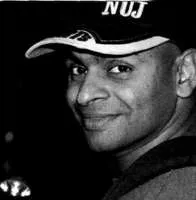
Courtesy of Take 40 - The quarterly magazine of the Screen Directors Guild of New Zealand
Future Sight
Memories of Tomorrow is the digital feature debut of 27-year-old writer/director Amit Tripuraneni. Premiered at this year's Asia Film Festival, it is a psychological thriller about a man who can't remember his past and is living a fake new life. The film has since gone on to screen at several international festivals including the Microcinema Festival, Chicago, where it won three awards (Best Director, Best Actress and Best Editing). It has also been picked up for US distribution and will be available on DVD in the States and in New Zealand from October.
Image: Amit Tripuraneni came to New Zealand to make films from India and has just made his first digital feature Memories of Tomorrow.Courtesy of Take 40 - The quarterly magazine of the Screen Directors Guild of New Zealand
Future Sight
Memories of Tomorrow is the digital feature debut of 27-year-old writer/director Amit Tripuraneni. Premiered at this year's Asia Film Festival, it is a psychological thriller about a man who can't remember his past and is living a fake new life. The film has since gone on to screen at several international festivals including the Microcinema Festival, Chicago, where it won three awards (Best Director, Best Actress and Best Editing). It has also been picked up for US distribution and will be available on DVD in the States and in New Zealand from October.
Image: Amit Tripuraneni came to New Zealand to make films from India and has just made his first digital feature Memories of Tomorrow.Like many new directors, Tripuraneni has embraced the relative ease and low cost of digital technology to make his films. He discusses his route from film school to feature directing with Rebecca Russell.
Rebecca Russell: How did you get into directing?
Amit Tripuraneni: I'm a late starter:
Memories is my first feature and was made during 2004 and my first short film in 2003. Before filmmaking, I was an MBA graduate with a well paid IT job in India. I found that the monotony of the routine was grinding away my thought processes so I left my job and sat at home for a week doing nothing. My parents were shocked - family in India really does play a huge part in shaping careers and lives.
I rang up a friend's dad, a scriptwriter/producer, to see about how getting into the film industry. To my surprise I found myself working for him the next day on scripts. I also started helping out on documentaries. After one TV documentary, I realised I wanted to work in film and that I needed technical training. I looked at several film schools - in India and abroad - and decided on South Seas Film and TV School [in Auckland]. I arrived in New Zealand a stranger with no friends or family.
I started out making short films with fellow student Lance Wordsworth [DOP and co-producer on Memories]. By the end of the course we had made seven short films and a music video. Memories began as a New Year resolution for 2004. I wanted to do a feature project and make directing my career.
Do you consider the film school route the best way to learn filmmaking?
Oh no, the perennial discussion about film school or not. I made the choice to go to a film school after working in the industry for two years. It's hard for me to be objective because I teach at a film school [South Seas], but the year as a student taught me what would have taken at least three or four years of work experience. Personally, I feel that film school gives you a sense of what the industry is about - the bigger picture. What you then do with that knowledge depends on your own attitude and aptitude.
How did you find working with digital film? Would you prefer to work with 35mm?
We shot on a Panasonic DVX100a - which is a fantastic little camera that captures nice looking images. One of the primary reasons for shooting on the DVX is that it captures images differently due to the cine-gamma technology. Also the motion does not look digital because of the progressive technology. We used around 90 per cent natural lighting, which meant we utilised whatever lighting we had on location and used extra lighting only to fill up the scene or for night scenes. As a result we weren't burdened by equipment and didn't have to spend ages trying to light a scene. This wasn't about being lazy but about trying to play with the idea of capturing the mood and energy of each location.
For audio, we borrowed equipment from South Seas - a Shure FP31 field mixer with a boom pole. We also used the Sony wireless mics (which saved a lot of time).
We were a small team shooting on the bare minimum of equipment. Shooting on digital was great because we could film heaps without worrying about the cost. A 60-minute $15 tape allows room to be more creative. You don't have to wait for the film to be developed to preview the footage, so you can do instantaneous playback and improve on performances or shots. The money muscle of Hollywood would be nice, but I guess we have to make our own movie-making model. HD will play a huge part in telling stories on smaller budgets, with final prints being blown up to film. But I would love to shoot on film if someone gave me the money.
The script for Memories was a collaborative process - how did you find this? Memories didn't have much of a script. It was a concept and baseline on which I wanted everyone to build. There are two reasons for this. First, my dialogue sucked (I could blame this on English as a second language, or on being a first-time script writer), and I wanted the actors to get the gist of what the scene meant and make the dialogue their own. Second, I wanted to give everyone creative freedom so that they could take ownership of the project. We all wanted to do a feature film and have fun doing it. So long as the general parameters for the movie were set, everyone was free to explore within the boundaries. This meant a lot of improvisation, which was was challenging but it also got the best out of the actors.
Some stories need tight scripts and some don't and - you can shoot me for saying this - Memories did not. We had no budget for a script editor, so everyone did this job - -even the editor: as late as post-production we were still playing around with the story (like, insanely, not having an ending and finding it in post-production).
What about casting and directing the actors?
Casting was a new experience because up till now I have used friends and classmates. But when the script shaped up, I knew that none of my friends, besides Rachel Gilchrist [the female lead], would look or feel the part. Maggie Tarver came on board as casting director, which took the pressure off since I could tell her what I envisioned from a particular character and she did the search.
I sent the script and my short films to several agents and Kathryn Rawlings liked what we were trying to do and pushed the script to actors on her books. We didn't hold auditions - most of the actors were cast on the basis of my talks with them. How could I cast someone without a screen test? I trust my instincts and what I don't want is actors putting up a front. It is important that I see how comfortable they are with me and if they trust me to push them from the right side of the cliff. We were embarking on a journey and I didn't want to work with someone who would have problems adjusting to a crew that was young and relatively inexperienced. Luckily, everyone blended into the project.
Directing actors was fun because all I had to do was see their creative juices flow as they improvised and only tow them in if they weren't going in the direction I wanted or if they misinterpreted the scene (which was rare).
How much did Memories cost and how did you get funding?
By the time of the first DVD pressings we had spent about NZ$15,000 and this doesn't include the cost of submitting to festivals, postage charges and publicity costs (which is at least another NZ$1,000). It wasn't an expensive film, but then everyone worked on it without any upfront fees in exchange for equity points. However, on a personal level it was expensive because it was privately funded and that kind of money means a lot - I could easily have repaid off my student loan instead of making a film.
Funding bodies or organisations wouldn't have given even a hundred bucks towards the film because I was an unknown and most of the people working on the movie were not names. To prove ourselves, we had to do this on our own.
The capital needed to kick-start the movie came from an uncle. I agreed to write off a bet he owed me if he doubled the amount and invested it in the film. In return, he gets a 25 per cent share of any profit. As the movie progressed, Lance and I put in another $7,000 to make sure we stayed on track and did not lose momentum. That amount just about allowed us to finish the project within the set deadline (one year and two months from script to finished movie).
How important is marketing?
I have a marketing background and I knew that making the movie alone would not be enough. We had to hard sell it at the beginning because we were unknown. I created a website as a platform to share our efforts with both a local and an international audience. The website worked like a charm: the number of hits has grown from 200 a month for the first three months to an average of 1,750 over the past two months. The web is a fantastic marketing tool.
I also contacted local newspapers, magazines, websites and several international movie review sites to see if they would review the film. In the main, the response has been positive. It was heartening to get two good reviews from international websites as well as a small amount of coverage from local media.
The word of mouth has been good - both from the industry screenings and from the trailers. I am trying to get the film seen further than just Auckland. It is an unconventional NZ film and I would like as many people as possible to see it. The publicity drive has also resulted in talks with four US distributors. All this on the basis of the website and two positive reviews on international review sites.
Is there any thing you would have done differently?
No. Every project is an experience and I loved it so much that I would probably like to relive it again. It would be good if we had a little more money for the next film to make it a tad more comfortable. Ultimately, a movie is a process and I love the process - no matter what the outcome.
Memories of Tomorrow is available to rent on DVD from 19 October
Also in this issue of TAKE:
Scott Boswell on Tyrannical Love
Roger Donaldson on The Fastest Indian
Leanne Pooley on documentary making
Anna Cahill on the art of contract negotiation
Grant Lahood, director of Kombi Nation on what he values on set,
Simon Raby on HDV handicam
The NZ Screen Awards
and more....
Only $6.95 at Magazzino