Future and Fortune
Written by
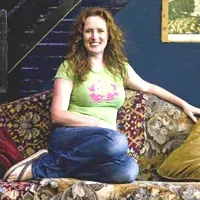
As the first artistic director at Fortune Theatre in Dunedin for eight years, Lara Macgregor is not wasting time. With a new ‘contemporary’ 2011 season launched this week, the first subscription season in decades, it’s just the beginning of her vision for the future of Fortune.
* * *
When did you join Fortune Theatre and how’s it going so far?
Dec’10, and hit the ground running. The new general manager, Jeremy Smith, began a month before me and along with the wonderful staff of designers, technicians and admin we have inherited, the excitement for 2011 is abound. There has already been a positive shift in local perception, imagery and programming content.
You’re the first permanent artistic director at Fortune Theatre since 2002. Why has there been such a big gap and how has the artistic direction been set in the past eight years?
At the time of the departure of the former artistic director, the Board decided to run with a Theatre Manager model where that person would run the theatre “business” like a Producer and a range of Directors would be employed on a play by play basis. The rationale was varied and the hope was it would open opportunity to a range of directors, provide more work to local directors and the Fortune would benefit from this artistic range.
Why appoint an artistic director now? Why do you think it’s important to have one?
There has been a shift in the Board, enabling fresh leadership and with this, comes a passionate desire to strengthen the Fortune’s artistic credentials. The producer model could have worked with the right person but over time the standard at the Fortune was variable and a lack of cohesion developed. The desire bred by the current Board and the need to ensure the theatre is run successfully has enabled the position of a permanent Artistic Director to be borne.
Having an Artistic Director ensures that consistent quality is met at all times with any artistic endeavour undertaken under the umbrella of the theatre. It provides security to technical and artistic staff in aligning all productions to a unified vision, provides a voice for the theatre on a local, national and international scale and, ultimately, savings, as the expectation is for the AD to direct at least five productions a year.
Why were you interested in the job and working at Fortune Theatre?
This seemed a serendipitous move to make. I set a personal goal four years ago to work toward steering the artistic vision of a company such as the Fortune. On my way back to NZ, after a decade in the U.S. acting, I finished a Post Grad Diploma in Directing at the National Institute of Dramatic Art in Sydney. On my return to NZ, I secured a CNZ Artistic Direction Internship at the Court Theatre in Christchurch and stayed on for two more years as Associate Artistic Director. The position presented itself and I applied.
Tell us a bit about your personal journey - as an actor, director and drama coach in NZ and internationally – and why you came back to NZ?
I had a strong passion to act from a very early age. At the time I was looking to train, the only school available to do so was the NZ Drama School, now Toi Whakaari, and you could not major in theatre at any university at that time. The Drama School only took ten students per year and much to my teenage dismay at the time, I was not to be one of them. Rebelliously, I jumped on a plane to New York City to study independently with Uta Hagen and Anthony Abeson. It was from there I secured a green card, an Actors’ Equity card and began my professional acting career.
After a decade of acting I segued into directing and, as is common in this lovely life, came to a cross roads with myself and decided I’d like to be back home, closer to family and apply the skills I had developed in my time away back into New Zealand’s performing arts.
How did the CNZ Artistic Direction Internship and your most recent role as associate artistic director at The Court Theatre in Christchurch prepare you for your current role?
Both experiences have been absolutely invaluable. That learning has eliminated much of figuring stuff out the hard way ON the job. The Internship provided a broad overview of all departments and their health and function together as a whole. The Associate AD role enabled me to immediately instigate this new learning on a day to day basis both on a business and an artistic front. All the while I was stretched internally to manage my time, health and spiritual practice in better ways in order to find balance within an all-encompassing environment.
What’s your big picture vision for Fortune Theatre?
To align our practices with the best professional theatres in the world and to provide a consistent high level quality of productions and educational activities aimed to excite and inspire Otago and Southland districts.
What are some of the micro details you are working on?
In no particular order…continually raising our local and national profile, upgrading all our imagery, advertising and website, producing a season brochure, officially launching our season, introducing a subscription season, reconnecting with our supporters, caring, maintaining and developing community relationships, working on funding applications, creating professional development opportunities for staff, caring for our Members, reading plays, seeing plays, nurturing playwrights, holding open auditions, casting shows, employing directors, designing, directing…the list of micro details is MACRO.
Who are you planning on working with – in your region and throughout NZ – and why is this important?
We tour to Otago and Southland districts once a year at this stage. I’d like to see us reaching two tours a year. We plan to create professional development opportunities within those areas too. This is vitally important as it is not always possible for people in more remote regions to travel to Dunedin. Why should they miss out? It also widens the perspective and informs the artists that are lucky enough to travel to those towns.
Nationwide it is imperative we collaborate with other professional companies where and when we can. This year the Fortune Theatre is making use of the strong relationship that comes inherently with me with The Court Theatre. We will be collaborating on Five Women Wearing the Same Dress by Alan Ball. Fortune designer Peter King will design The Court production, I’ll direct, and after a five week season in Christchurch the show will transfer directly to the Fortune.
Not only is this a wonderful way for our artists to gain professional development opportunities at other theatres but it is a small step toward sustainability within the field of performing arts.
You are introducing a more contemporary feel for the 2011 season – tell us a bit about it?
The programming process is usually a long and involved one that requires a huge amount of reading, viewing, researching and putting a plan together and pulling it apart again. As I came on so late in the game, at the end of 2010, the season had to be complied in much shorter time than usual. I’m really excited about our outcome. Dunedin can look forward a great mix of the best plays written in the last ten years. Three New Zealand plays and four international. Our biggest and most ambitious probably Avenue Q – the musical. In addition there will be two delightful children’s plays (one a newly devised piece) and a host of top visiting productions.
What other changes are you introducing and why – including a subscription season, education programme and more NZ works?
The Fortune has only had one subscription season in its 38 year history, so really the question is – why not? What have we got to lose? The more opportunity we provide our audiences to make their theatre going experience easier the better. My hope is the subscription offer will see a steady growth over its first three years and this in turn will help inform us of certain trends toward certain shows.
On the education front, this year we are working in conjunction with Interact to develop a month long mentorship programme for young people run by young people, education packs are to be aligned with each show as a necessary resource for all teachers, and we are working closely with Otago University Theatre Studies to provide intern opportunities and professional development for students.
How do you balance the new ideas whilst maintaining existing audiences and tastes?
As this year progresses I’ll fast become aware of what is working and what is not. It is my hope that I have provided a most enjoyable and balanced year of theatre – a year of contemporary, fresh and fun stories with an emphasis on raising the New Zealand content of work. We are excited to be producing the world premiere of local writer Simon Cunliffe’s play The Truth Game. This face paced drama is set in the editing office of a top newspaper. Otago daily Times have generously become the show sponsor and it is alongside them we celebrate their 150th Anniversary.
How will you measure success?
A great question, but not always easily answered. The most obvious response would be more bums on seats, therefore more box office return.
What I want is the Otago and Southland community to have the Fortune on their ‘must do’ list. I want them to be proud of their theatre, to be thoroughly entertained by the highest level of artistry, to enjoy and support the theatre’s presence within the community. I want to see the smiles on the faces of the children, parents and grandparents and in turn their friends and hear what a great time they had, or how moved they were, or how an artist influenced them.
If we are successful in achieving this then a natural alignment with box office should be a direct reflection of that. It’s hard to measure that success unless you’re here – so come visit.
What’s your big idea for 2011?
It’s brewing.