From the page to the stage
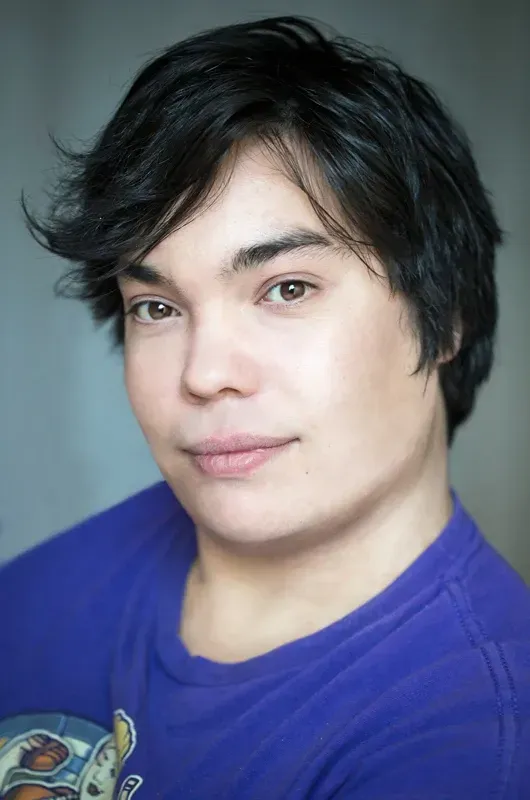
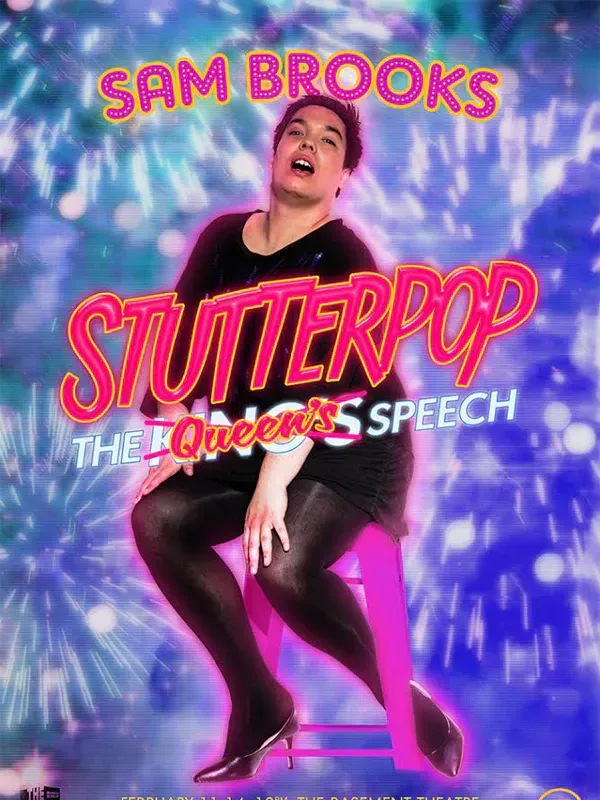
Sam Brooks, writer, producer, reviewer and now actor is launching his eighth (!) play in two years at his 'second home' The Basement Theatre.
Stutterpop is, like all of Sam's plays, a profoundly personal take - this time focusing on his speech impediment and identity as a young gay male, "a lip-sync-and-dance journey through the flaws and fears that make him (and us all) human".
Renee Liang asks him the hard questions.
* * *
Why theatre?
It’s sort of what I fell into. I wrote some truly terrible screenplays in high school, and decided that’s what I want to study, but when I got to uni I started to get really into theatre and I got taken down that road.
As for why I’ve continued with it, I really love the collaboration that theatre not only invites, but needs. I’m a social beast, so I really love the opportunity of throwing a script to a group of creatives, usually my friends, and tearing it apart to make it better. It’s hard work, but it’s a lot of fun. There’s other forms of writing that I’m keen to expand into, but I’ll never leave theatre behind entirely for that reason.
You've taken the Auckland theatre scene by storm - eight shows at The Basement in two years, and a swathe of awards. What are your tips and tricks for success?
1. Find out what’s important to you and then write that. The first part should take much, much longer than the second. I count myself lucky that I’m a quite centred person who has never had difficulty discarding what isn’t important and distilling what is important to me, and I think that’s why my work speaks to people, if it does.
2. Know your craft and work on it. So many people think they can write a play, and power to them, but there’s thousands of years of theatre to draw on. If you write a play just because, without knowing the history of the form, without having read a play or seen a play, then you’re doing yourself an incredible disservice. You wouldn’t run a marathon without running a mile first.
3. Don’t be a dick. This world, and especially this industry, is so hilariously, upsettingly small. If you pull out of a show, if you act unprofessionally or are generally unpleasant, people will be more than happy to tell other people not to work with you and there’s enough people in this industry that there’s no reason to work with the difficult ones.
That’s honestly it. The rest of it, the networking, the schmoozing and the ‘being seen’ of it doesn’t matter. If you’re good, people will come to you.
What's your writing space like?
I honestly really love writing in public, and with distractions. My current space is at the kitchen bench, standing up and listening to loud music. It must drive my flatmates completely nuts.
Last year, I would write at Q and then when Q transitioned from cafe-to-bar in the evening, I went to The Basement. I was distracted by about five or ten people a day, but I really loved it. It was like other people were imposing breaks in between really fierce bursts of writing.
This is your first time as an actor - and you've chosen to do a solo show! What led to this decision?
What’s the worst that can happen? I would never act normally, there’s enough of them already and they’re better at it than I am, and even this solo show is less acting and more me just being myself onstage. I also think Stutterpop is a rather unique story, or set of stories, that it would be awkward to have another actor perform it. It just makes sense.
And on another level, I wanted to get an idea of what it’s like on the other side. As writers I think there’s a tendency to stick to our computers, but I think the more we get an idea of all the things that go into theatre; directing, producing, design, acting, the more we get an idea of what we’re asking people to do and we can put ourselves in their shoes.
Is a show about stuttering an extreme form of exposure therapy for you?
I honestly hadn’t thought of it like that until you brought it up. I don’t think people are aware of the psychology behind stuttering, and the mental processes that go on when you’re a person who stutters trying to operate in the world like everybody else. The King’s Speech is a nice film, but it’s not about a person who stutters, it’s about a king who happened to have a stutter. This is my second show about stuttering, the first show I wrote is still being worked on (read: rewritten), and it’s the first one where I’m explicitly talking about my own stutter.
In short: Yes.
Tell me about your partnership with Zinnie Selwyn. What do you look for in a director?
Zinnie and I worked together on Another Dead Fag about a year and a half ago now and it happened mostly by accident. A few other directors had fallen through and then my friend Morgan recommended Zinnie. We just clicked immediately; we have similar sensibilities and a wide knowledge of what’s available to us as creatives. He made sense for Stutterpop because he knows what the text needs and what I need to do as a performer, and he’s more than willing to tell me that bluntly.
In a director I’m looking for somebody who will bring their vision to the play that’s been written. I think the worst productions I’ve seen in the past few years have been the result of directors not being honest with the text that they’re dealing with. I’m not talking about reinterpreting a play, which I think you can do spectacularly, but about a director throwing on flourishes until you can’t even hear the play underneath the style. When somebody has an actual vision that aligns with the play I’ve written, it’s tremendously exciting because it’s something actually meeting your creativity with theirs, rather than beating your creativity into shape with theirs.
Does being a theatre reviewer help, or hinder your writing and producing?
In an ideal world, they would be entirely separate and I often try an act as though they are entirely simply. But over the past two years I’ve developed a voice as a reviewer, I can be very critical but I think I’m always fair, and there’ve been occasions where people have been really offended by that, and I’ve been defriended on Facebook by at least one person. I don’t think it’s hindered my writing or producing personally, but I’d be lying if I didn’t walk softly around some people because of a review I’d written.
Honestly, I think it helps me. It gets me writing constantly, I was often doing two reviews a week last year which keeps the writing muscles moving, and it’s a way to think critically about your artform which can’t help but inform your own writing. Reading criticism is one of my favourite things to do, and I just hope I’m putting something out there that stands up against some of my favourite critics.
I love this that you said in an interview about being a gay writer: "I think audiences, straight and gay, are ready to see gay characters whose issues are not wrapped up in being gay, but are allowed issues, problems, and lives outside of their sexualities." (I've had parallel issues with being a writer of Chinese descent.) And yet, as a writer, we're often expected to 'represent' the issues, by audiences or presenters. How do you deal with these expectations?
I don’t think about them anymore. I struggled for a while about being representative of ‘my community’, such as it is, and then realised that there would be no way to do that. I’m a mixed-race gay stutterer who plays video games and listens to every kind of music from Japanese rock to Dutch symphonic metal to Top 40 pop. I can’t represent anybody but myself and shouldn’t be expected to.
In saying that, I’m very careful about my language around this subject. Minority communities of any kind, whether it’s defined by race, culture, gender or sexuality, can be sensitive and justifiably so. A criticism of any label, gay writer for example, can be misconstrued as a rejection of that community when nothing could be further from the truth. The sad fact is that there’s still so few creatives of any minority getting major press that it’s important to keep producing content, and if I have to put on a label to do it, I’ll wear it uncomfortably until I no longer have to.
Over the last few years, gay culture has become more and more 'mainstream', or at least that's my perception. Has the audience you're writing for changed?
I think so. When I got out of uni, my audience was basically my friends and maybe the community of avid queer theatregoers, but as I’ve kept writing I’ve expanded past that into a more mainstream audience.
Ultimately though, I think gay audiences are always going to come to my plays because they’re who I write about. We want to see ourselves represented, it’s a basic human desire, whether it’s in our politicians, in who we see onscreen or what we see onstage. Whether the actual characters in my play are gay or whether the issues just resonate with a gay audience, there’s no question that the themes of getting older and not knowing what to do with your life in Wine Lips would’ve resonated with a gay audience as much as a straight audience if not more-so, I think that what I write reaches out to a gay audience and probably always will.
What are you working on next?
I’m doing a show in the Comedy Festival called The Girl and The Gay, which I’ve described as ‘Will and Grace meets Girls’. I really love comedy, I think the American sitcom is one of the great modern artforms, and I’ve never written one before so I wanted to give myself another challenge. I’ve also done a piece for Young and Hungry called The 21st Narcissus that should be going up this year!
Otherwise, I might take Stutterpop to Wellington if it goes well. There’s also another solo piece I’m writing with an actor that experiments with second person voice that I’m really excited on beginning when I get time.
Oh, and because I love being busy, I’m doing a Post-Grad Diploma in Journalism this year!
- Stutterpop is on February 11-14 at The Basement as part of Auckland Fringe.