Fresh off the Boat
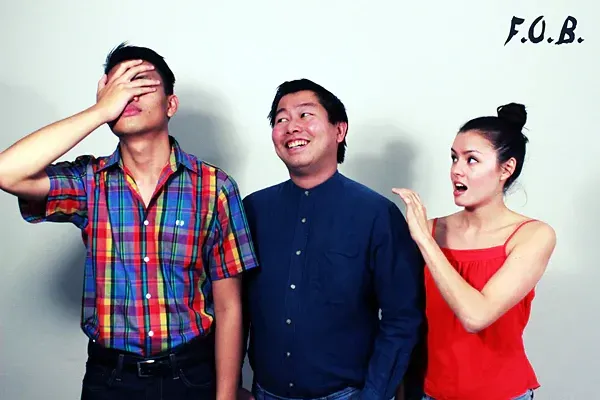
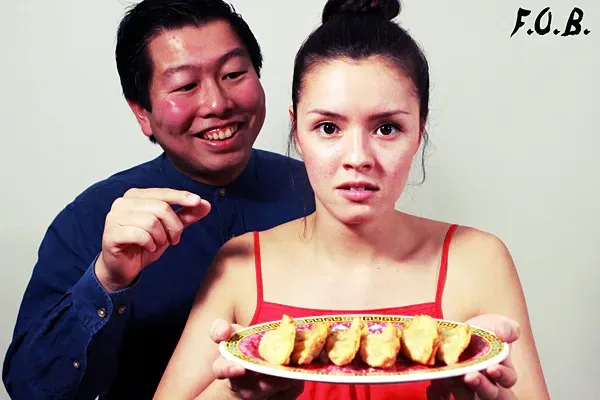
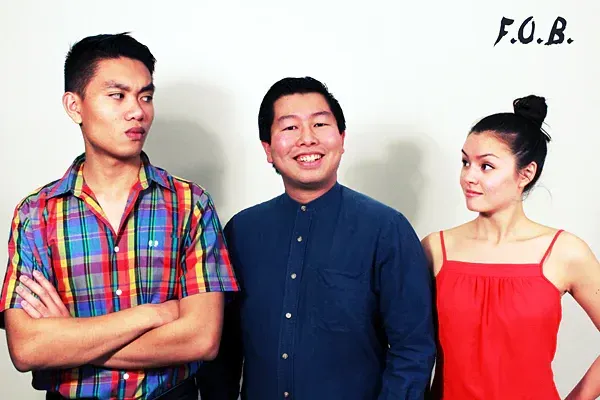

FOB, a play by Asian-American playwright David Henry Hwang, opens this week in Auckland. Blending modern reality and myth, the play examines the experience of the migrant and their often confused search for identity.
Renee Liang talks to actors James Roque and Chye-Ling Huang.
* * *
FOB or Fresh off the Boat – in NZ, it’s a term most often associated with Pacific Island migrants. But award-winning Asian-American playwright David Henry Hwang’s early play takes us inside the world of America's first and second generation Chinese immigrants, living in L.A in the late seventies. PAT Theatre company brings this play to Auckland for the first time. I asked actors James Roque and Chye-Ling Huang why this play spoke to them.
What drew you to the script?
Chye-Ling: I researched David Henry Hwang as part of a presentation for my third year at Unitec, whilst completing the 3 year acting degree. I wanted to delve into someone relevant to my ethnic background, and I found a monologue from FOB that I really liked. After the presentation, James Roque, also in my year at Drama school, came to me and we had the idea of putting it on in the following year. The monologue, and subsequently, the script, spoke to me as a Chinese-New Zealander - that someone was putting my thoughts about Asian/European identity into words, into a play, and giving Chinese immigrants a voice. I could identify a lot with the character, Grace, and we realized how few Asian works we'd seen on stage in NZ. This inspired James and I to bring the story of FOB's to an NZ stage.
James: I was really fascinated with the way the play blurred the line between reality and myth. Towards the end of the play, the line is almost non-existent and these legendary characters – Fa Mulan and Gwan Gung – really come to life.
I was also drawn to the text because I have never done anything onstage to do with my Asian background before, which is something I wanted to explore more.
Tell me about your new production company.
Chye-Ling: PAT Theatre Company was created by myself and James Roque after leaving Drama school. We wanted a starting point to present and create more Asian themed works. "Pretty Asian Theatre" is what describes our aims for our work - not strictly traditional or only for Asian audiences, but with definite Asian focus.
James: Chye-Ling and I formed the company in order to create more work for us and other Asian actors. Being Asian, it is much harder to find roles in the industry as Asian characters in plays and shows are often scarce. This is us really being pro-active and taking the bull by the horns instead of waiting to be cast. We also wanted to explore our heritage more by delving in texts or devising shows with an Asian theme.
With that said however, PAT isn’t exclusive to Asian works. We like to play around with the meaning of the acronym. For the moment it’s Pretty Asian Theatre, but in the future it might mean things like Pretty Awesome Theatre!
How do you know each other?
James: Most of the people involved in the project are 2013 graduates of the Unitec Performing and Screen Arts degree. Chye-Ling and I graduated from the acting course, while our director Adam graduated from Screen Arts as a director. Being lucky enough to have this background means that we have three year head start in that we are really comfortable with each other and trust each other’s decisions. We are also really lucky to be joined by Ben Teh who we cast as Steve after auditions. He’s brought a great fresh energy to the ensemble piece and we’re glad to have him on board.
Chye-Ling: And producer Tayla Pitt was in my acting class with James Roque and Amanda Tito.
Who do you play - can you introduce them ?
James: I play the role of Dale. Dale is an interesting character. His father emigrated to America from Hong Kong from a wealthy family. However their family went bankrupt before he was born and his father had to work in America to survive. He is an ABC – American Born Chinese.
He was bullied a lot as a kid for being Chinese and because of this; Dale is ashamed of his Chinese heritage and shuns his parents. He looks down upon new immigrants from China because he doesn’t want to be associated with FOBs. But his world is flipped on his head when the culture he’s tried to get away from all his life comes to life right in front of his eyes.
Dale is a fascinating character to play being on a base level he is quite a cruel and mean person. But what I’ve found as an actor is that it’s important not to judge your character and instead to find out why he believes what he does. There’s more to someone that meets the eye.
Chye-Ling: Grace is a strong willed and kind-hearted young woman. Having come to the US from Taiwan at age 10, she's had to go through a lot to be happy with who she is now. Grace struggled a lot with her identity, something we can all relate to, she also has a sharp tongue and can be pretty kick ass!
I gather rehearsals have been pretty intensive - what have been some of the revelations?
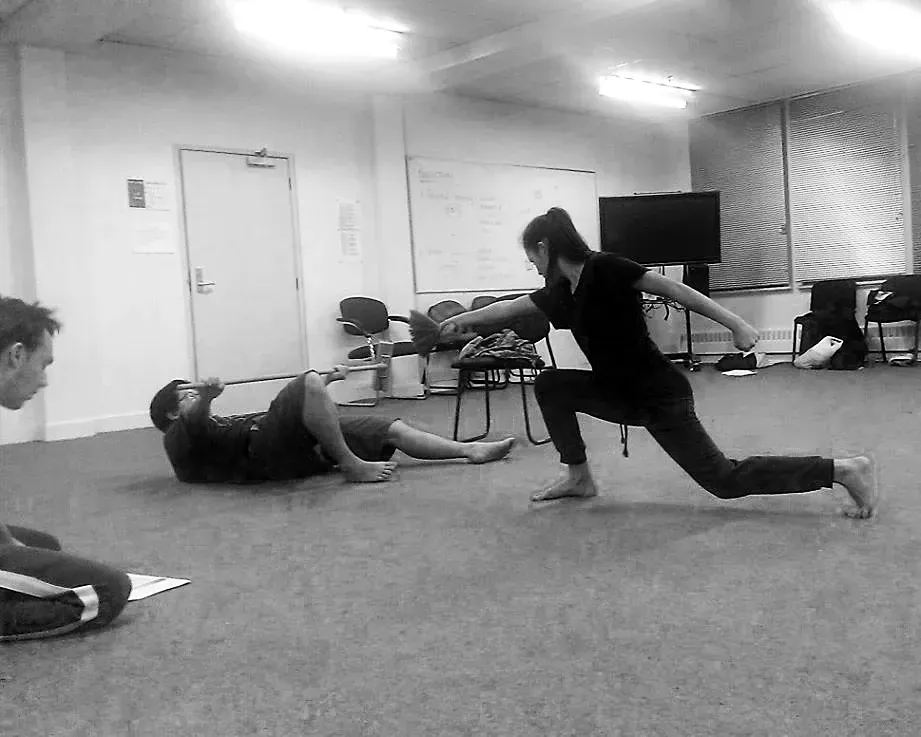
James: We’ve had to make really clear choices when it comes to Fa Mulan and Gwan Gung. When are they Steve and Grace and when are they the warriors? Once we establish those lines, I think the play started to find its feet more. It was also important finding the rhythm of the piece and the difference between when it was grounded in reality and when we were in a mythical land. Finding that balance meant that it meant a lot more when we unhinged the boundaries at the end.
Chye-Ling: I think I finally understanding the reality of the immigrant situation and how it actually feels to be in that position. It struck me how much I've been taking for granted, being lucky enough to grow up in NZ and being grateful for what my Dad went through to give us a life and opportunities here. I thought of my family in Kuala Lumpur a lot. I definitely have a new respect and admiration for what they have gone through.
Did you draw on your own immigration experiences for this role?
Chye-Ling: I was born and raised in NZ, but my Dad immigrated from Malaysia (we are Chinese) when he was 18. I have struggled with identity and where I fit in, being half Chinese, half Pakeha. Mostly it was something I never paid attention to, it was just there in the background. I have been ashamed, proud, confused and everything in between. I look at this play (on a personal level) as a kind of love letter to my heritage, paying respects doing what I love and sharing their stories with the world.
James: Yeah, I really did. I empathise with all three characters in the piece on way or another, actually. With Steve because I was an immigrant here at one point and I know exactly what it’s like to have a different accent to everyone else’s and to not know a thing about the place you live in. To have to struggle to fit in. With Grace because like her, I also immigrated at a young age and spent most of my life here. Grace struggles with wanting to be American and embracing her Chinese culture and I can identify with that crisis personally. With Dale, I can relate as I have had moments when I’ve tried to shy away from my Filipino culture. There were times when I treated new Filipino immigrants differently and in hindsight regretted my actions. This was all due to my confusion of my own cultural identity. This play really hits home for me.
How does having a non-Chinese director work out?
Chye-Ling: It's great. Our company aims for inclusion regardless of race, and the universal heart of the play being identity, the treatment of others different to you, inclusion and finding yourself, are all human quandaries regardless of being Chinese or not. It's important to approach a work from different angles, we are in New Zealand and it made a lot of sense for us to go with Adam Moorhead due to his openness, flexibility and creative style.
James: Really great, actually. It’s a learning experience for both parties. Having a non-Chinese director meant that we had to really research and discover the world of the play more in order to delve in it. Adam also brought in a new set of eyes when it came to making choices.
What was great about it too was that Adam had never heard of the term FOB until he came on board for the project, so it was a learning experience for him too.
The play is about the experience of Chinese-Americans - does this equate well to the NZ situation?
Chye-Ling: We have found that FOB has many universal themes that translate particularly well for New Zealand, especially Auckland, with its large number of Asian immigrants and communities.
James: I think so. While our racial tensions don’t quite equate to that of L.A. in the 1980’s, I think it’s still safe to say that it exists. New Zealand likes to pride itself on its multiculturalism when I know personally that it is not rainbows and happiness for all immigrants here. Racial tension is not a thing of the past and I think this play is universal in the way that it makes you question your own morals when it comes to immigrants.
How have you approached the staging of the play - anything fun or innovative?
James: The text has a lot of Chinese Opera influences in it. So we’ve really tried to draw on that. We’ve made masks inspired by Chinese Opera to differentiate between characters, used colours that symbolise character attributes and even brought in live instruments to make it feel like an opera. It’s been really fun.