Francis Upritchard wins the 2006 Walters Prize
Written by
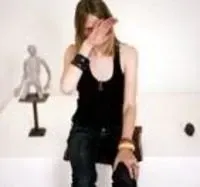
Francis Upritchard has won the 2006 Walters Prize, New Zealand's richest and most prestigious art award. The London-based artist wins $50,000 and an all expenses paid trip to New York to exhibit her work at Saatchi and Saatchi's world headquarters.
International judge Carolyn Christov-Bakargiev says the past and future seem to collide in Upritchard's Doomed, Doomed, All Doomed. Francis Upritchard has won the 2006 Walters Prize, New Zealand's richest and most prestigious art award. The London-based artist wins $50,000 and an all expenses paid trip to New York to exhibit her work at Saatchi and Saatchi's world headquarters.
International judge Carolyn Christov-Bakargiev says the past and future seem to collide in Upritchard's Doomed, Doomed, All Doomed. "I found I was being looked at by a whole range of secret beings, people and animals looking at me from bodies that were lampshades or hockey sticks.
"Upritchard celebrates the hand-made. Her "poor technology" seems to me increasingly topical in today's hightech digital age."
The prize was accepted on Upritchard's behalf by her NZ art dealer Ivan Anthony. She is currently in London preparing for the Frieze Art Fair and an exhibition in Amsterdam.
Upritchard says; "I feel honoured to receive this award. It was a real privilege to be shown alongside Phil, Peter and Stella. Living abroad as I do, it means a lot to me to be recognised here, since my identity as a New Zealand artist informs everything I do. In some ways identity becomes all the more important the further away you are from home."
Born in New Plymouth, the 30-year-old artist grew up in Christchurch, where she graduated from Ilam School of Fine Arts in 1997.
Since leaving New Zealand, Upritchard has made waves internationally. She has featured in articles in The Guardian, The Independent, The Observer, Time Out London, New York Magazine, i-D Magazine, Vogue, Frieze and Dazed and Confused.
************************************************
Walters Prize 2006 Judge's Statement -
Carolyn Christov-Bakargiev
I will mention the artists in order of their appearance in the exhibition galleries. Upon entering the building, one encounters Stella Brennan's project Wet Social Sculpture. The first most noticeable element of the piece is a blue mat which crosses the entire entrance hallway, connecting a room to the right with an area probably not often open to the public, at the far back, near a row of blue bath robes. You are invited to shower and then to enter a hot tub in the room across from the ticket counter at the entrance. I did so, immersing myself in the water, chatting with another person who was also there, and watching the psychedelic videos projected onto the walls of the hot tub room. The strongest feeling I got was that of a reversal of the 1960s and 70s utopias: the water was highly sanitized, smelled of chlorine, and I had just showered. Instead of drugs, I was offered a video of what I may have seen, had there been drugs. Around the corner, after the bath, I noticed a shelf with pool chemicals, the same that sanitized the tub water, I presumed. Brennan's project expresses a knowledge of the history of participatory art, as well as of relational aesthetics of more recent years, connecting Beuys' idea that the artwork lies in the sculpture of people themselves with a more recent 1990s aesthetic of event-based participatory art. Brennan is fascinated by the utopias of the past, yet her universe is sanitized, artificial and controlled - aware that our times are perhaps more based on the fear of bodily contact than on a relaxed communal relationship. Upstairs, a furry and thin anthropomorphic and anorexic-looking animal lies on its back on the cold grey floor of a large gallery space. Four long arms reach up, towards no-one, with no branches to hang onto. Artist Francis Upritchard, perhaps the youngest in the exhibition, made it. The paws, or hands, are made of old leather gloves, and two fingers wear old rings with red garnet-like stones, that you don't notice at first. I thought of Surrealism, of Meret Oppenheim's furry teacup, of the spidery long and thin anthropomorphic parts of some of Louise Bourgeois' works, and yet this furry monstrous little being was different. The eyes and face made me think of Marisa Merz' little heads, with slits in the place of eyes, of Giacometti, and also of indigenous ceremonial objects. I turned around in the almost empty space to find that I was being looked at by a whole range of other secret beings, people and animals looking at me from their bodies that were lampshades or hockey sticks. The temporalities suggested by the work are vertiginous and fascinating, as past and future seem to collide. Upritchard's sculpture and environments suggest a gaze from a distant future onto our tomorrow of genetic transformations gone awry, on their ruins, on a tomorrow constituted as a rare past, collected, misunderstood, cherished by archeologists of the distant future, who fail in their associations and readings - thinking that old cigarette butts from that previous civilization might have been parts of a necklace.
I then encountered Peter Robinson's colorful and grotesque organic sculptures in the next gallery. To be phlegmatic is to be calm and relaxed, not hyperactive and tense. And phlegma in Greek is one of The Humours, or secretions and fluids, of the body. Perhaps a good circulation of bodily fluids makes you phlegmatic. So Peter Robinson's work in this exhibition is also about the body, as are the other three finalists' (the body in a tub and immersed in Brennan's work, the body in a harsh natural windy environment in Dadson's, the body re-imagined and recreated though anthropomorphic transformations in Upritchard's). The liquids produced by our bodies, the phallic sperm, and the organs which exude, eject or expel it, the paint and materials that expand, grow and ooze, are all part of the universe of these sculptures. One of them suggests vomit and all the elements within it recall, on a smaller scale, the other three larger sculptures. Robinson's are funny objects, abject productions, meteorites, bacteria that has grown, physical incarnations of the subconscious impulses (Das Es is one of his titles), huge logos gone mad, metaphoric perhaps also of our excessive, consumer market-driven society, but also of the pleasures of radical useless form-making. Someone has called it "Plop art", as the sculptures seem to reflect our desires and projections onto material objects in world and specifically in the art world. These works both cater to, and critique that art world and the general superficiality of our universe. As I wandered through the spaces of Upritchard and Robinson, I heard background noises that seemed distant and yet familiar, alien and primordial. They were produced by the renowned intermedia, sound, video and performance artist Phil Dadson for his two-room presentation of Polar Projects, created in 2004 after a residency in Antarctica, camping and recording for a week in the Dry Valleys. This multimedia project is an articulated, fragmented universe composed of various noises and rumbling sounds, some seemingly machine-made or caused by the wind on recording apparatus, others more like stones being thrown in between the yelling of human voices. The sculptural usage of sound is created also by the presence of video images of white icy or grey rocky barren areas that are displayed in different ways: on a double-sided screen, on flat screens on the walls or the floor, and projected low from the floor. This environment suggests a rough experience of a rugged and harsh place for humans to be, a fragmented universe with no central point of view. The sounds and images (grey and white) are stony, as if the artist wanted to hear what stones sound like. A video where various people walk in different directions, each alone and seemingly intent on his or her purpose, their voices echoing off the glacier's wall, was a poignant metaphor of human activity in general (Echo Logo). The space is not at all silent, and I enjoyed sitting in one place and feeling the invisible shaping and sculpting of the soundscape, literally a physical shaping of it, although invisible, through references and echoes of walking, 40 km/hour wind, ships, machines, or melting ice and the cracks and drips of water. A panning image of communications apparatus is meditative and suggests the efforts of humans to connect (Aerial Farm). In this landscape, it is the wind that moves all and organizes all, as well as the suggestion of bells and their reverberation, that creates the atmosphere.
All selections are subjective, and I am sorry to think that choosing one means excluding others. Selecting a winner was however almost immediate for me, and I have chosen to select the work of Francis Upritchard.
Why? Let me run through them all again briefly.
I believe the most successful aspect of Brennan's work was the contact that was triggered with the gallery guides, with whom I discussed whether it was right or wrong to ask people to not swim naked, as well as the pleasure of going behind the scenes, into areas not normally open to the public as viewing galleries, where I was asked to shower before bathing. But the piece was also very complicated and constructed, in ways that made it an experience, to my mind, illustrative of a body of ideas rather than provocative. I also felt rather uncomfortably directed into doing things, urged to do things, such as shower, change, immerse myself, look at videos, etc. and thus I question the authoritarian nature of the piece, and I am not sure the artist intended this to be a part of the work. Phil Dadson's work was impressive, especially in its soundscape. I kept thinking that this was not a prize given to a career, but a prize given for one work, or body of work, and that I must choose only on this basis. Although Dadson has certainly been a pioneer in this field of multimedia, the sheer number of multi-channeled video installations in dark rooms made in recent years, as well as the fact that what I saw in the images of Antarctica seemed not too dissimilar from what I might have expected to see, made the work - in having to choose, my second choice. Again, needing to select only on the basis of this one presentation, Peter Robinson's gallery of four sculptures was engaging, but the rather traditional presentation of the works as four separate sculptures in the space, related to each other, but nonetheless autonomous and on display, made me less interested in the work. I saw another body of work by Robinson today at ARTSPACE and found it fantastic, however. Evaluating the work on display for the Walters Prize only, I am not sure that questions of the abject, of the bodily humours and their relations with basic sexuality and impulses and consumerism are what interests me most right now. Again, this is a very personal perspective.
Thus I have selected Francis Upritchard for this prize. There is a mysterious conjuncture between the found materials and the "made" parts of her work, as materials are transformed. Her works are not assemblages, nor collages. Rather, she transitions and recycles found and dead objects into forms of portraiture that posit discrete healing and mending of subjectivity. Leather returns to being the skin of a face or of the hands after the violence it has been through in the cycle of industrial production of leather. Fur goes back from being part of someone's fur coat to being hair on a body. And this return to the body of an animal, whether human or not, is poetic. Upritchard celebrates the hand-made, and poor technology seems to me increasingly topical today, in the digital age. To understand the past, one does not only collect it, one does not need to incorporate it into a museum or archive, one needs to remake it, to recreate it, and thus to make it personal and one's own. We have all been fascinated by old hair combs, sewing instruments, paper cutters. But to make them again, not to find and appropriate them, is a delicate procedure, an unheroic procedure. There is a nostalgia and a yearning to make figures today, and Upritchard makes them, but at the same time she suggests how individual subjectivity is very vulnerable and fragile today: on a large plinth in the second gallery, there is a frontal display of four figures. They all point in a direction or have a tension towards somethings, either towards each other, towards us, or towards some spiritual entity, almost as if they were figures of a Pieta (a Deposition from the cross). They sit or stand or kneel on individual plinths on top of a white base, and look from the front, at first glance, as if they are full sculptures ‘in the round', each alone and solitary. They are suffering, praying, needing, asking. But as you walk around them, to the back of the white base, they suddenly appear flat, like silhouettes, almost paper cut-outs. This sudden absence of depth is shocking, and perhaps suggests the false depth of consciousness today, in our age of global scanning. You then realize that this lack of depth in the world today, is underlined by the lay-out of the exhibition itself: an empty wall in the main gallery, while little sculptures hang around the corner, to the side, where labels would normally go, or on the floor, again in a corner area of the second room. Two left-over pieces of furniture are on another margin of the display area. And, back to the plinth with the four figures, here too, a fifth one seems missing as one points to an empty area in the middle of the plinth. I had seen images of Upritchard's work, and of some of the other finalists' works, previous to experiencing this exhibition. But I had never seen the work in the flesh. The difference is astounding. Upritchard's work resists photography and reproduction, and this too, in the age of overwhelming communications and surveillance technology, gives me a good feeling, somewhat of an escape route.
Carolyn Christov-Bakargiev, October 2nd, 2006