Flying the flag for NZ
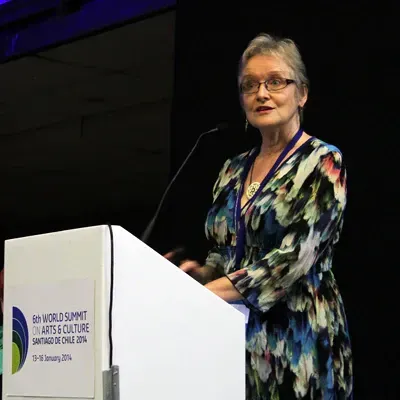
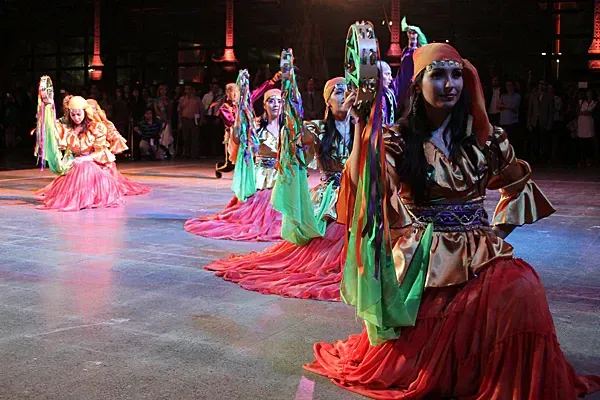
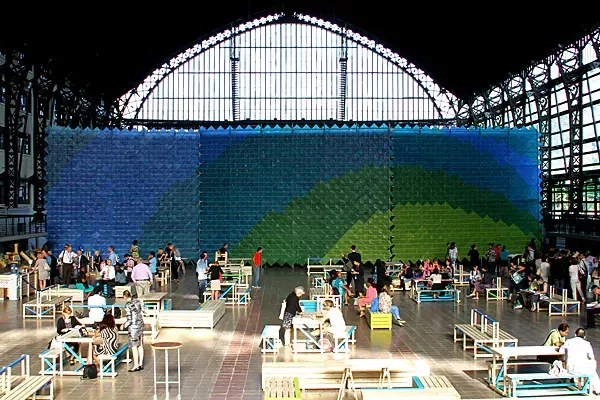
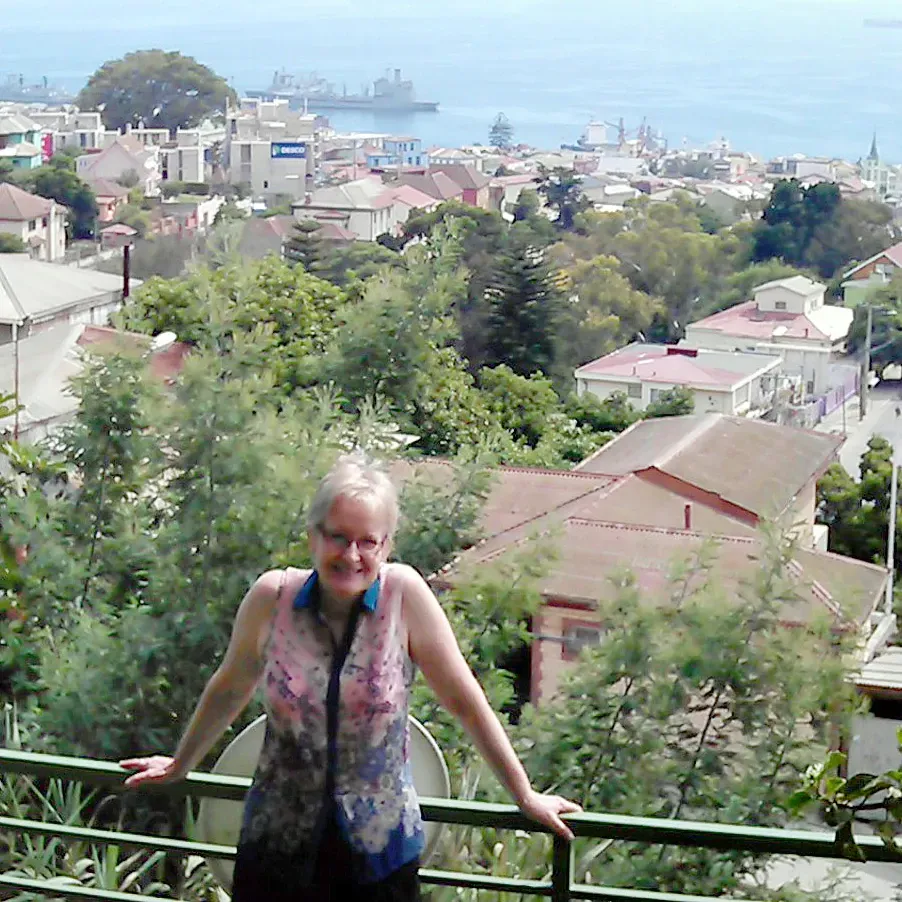
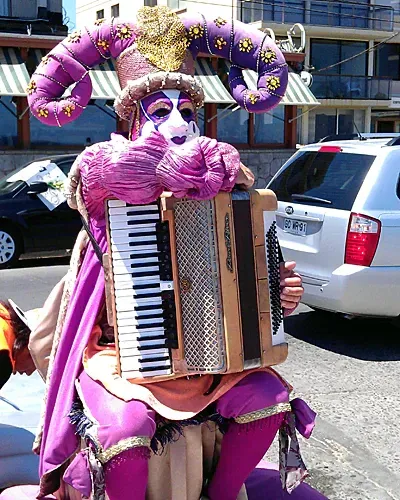
The Big Idea executive director Elisabeth Vaneveld has been flying the flag for New Zealand at the 6th World Summit on Arts & Culture.
Elisabeth reports back from Chile on her take on the summit’s theme of ‘Creative times: new models of cultural development’.
Overall, she says it's about the transformational power of the arts to reveal, question and contribute to the challenges confronting societies and the planet in these critical times - a key theme of the summit.
"It was a big opportunity for national arts and cultural agencies to consider why they may need to rethink and redevelop their policy frameworks to expand the reach and relevance of the arts for creative development, social innovation and sustainable economies - however, whether that will happen is an open question."
There was interest in the creative ecology model in New Zealand, outlined in Elisabeth's presentation, which she says sits alongside global cultural economy work.
“The jury is still out about which metapahors will have the cut through, so it’s an exciting time in NZ to have a leadership role thinking into 21st century frameworks of art and culture that really connects with communities and society.”
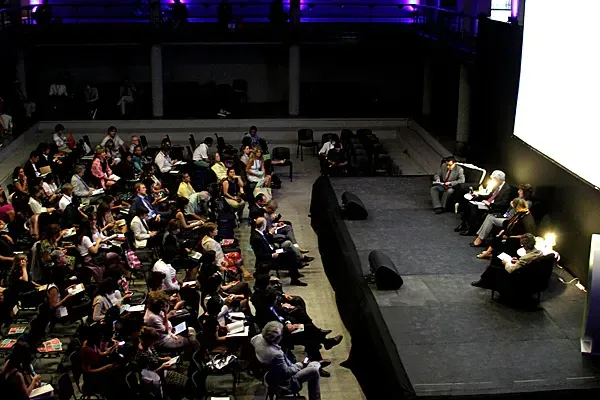
She said the New Zealand contingent had a visible and well-regarded presence at the summit - and there was considerable interest in the models being developed here.
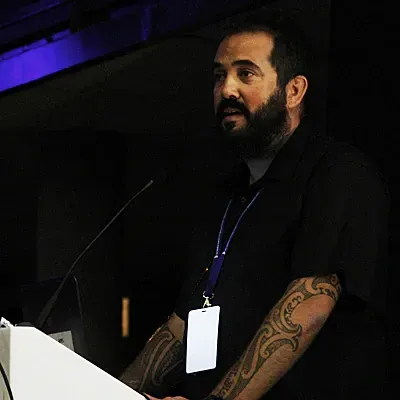
Elisabeth was one of three New Zealand arts leaders who presented, along with Scape Public Art director Deborah McCormick and New Zealand Maori Arts and Crafts Institute director Karl Johnstone.
Her presentation on 'Creative platforms for rethinking industry' (see the full text below) started with a provocation - that the arts are not yet sufficiently valued in the mainstream of business, politics, governance and policy-making - and the transformational role of arts-led creativity is under-valued, under-used and often under-ground.
Elisabeth used The Big Idea and Art Venture as examples to answer these questions:
How can we make the value that talented creative people working in the arts offer more visible?
How might that value be integrated with pride into the day-to-day lives of everybody?
Elisabeth's presentation ended with some challenges for the audience:
- See what happens when you make a conscious effort to stop using 20th century industry language, like 'industry', 'sector', 'creative capital', 'inputs' & 'outputs'.
- Explore new ways of talking about and illustrating success that encompass not just financial returns but also cultural, social and environmental outcomes
- Map your own creative ecology – who’s in it, the roles they play, how they connect, what they contribute, what the nutrients are that feed the system and what the fruits are . .

'Creative platforms for rethinking industry'
Elisabeth Vaneveld - Presentation notes
6th World Summit on Arts & Culture
Chile, January 13-16, 2014
Buenos dias

Or as we would say in Aotearoa – New Zealand
Tena koutou katoa – warm greetings to you all . . .
At the heart of my comments today is a situation that I’ve been thinking about and working to change for over 38 years.
And that is:
The arts are not yet sufficiently valued in what I’ll loosely call the mainstream of business, politics, governance and policy-making - in other words, the transformational role of creativity as delivered by artists, creative entrepreneurs and producers is under-valued, under-used and often under-ground.
So how can we make more visible the value that talented creative people working in the arts offer?
And how might that value be integrated with pride into the day-to-day lives of everybody?
My intention today is to leave you with some insights into how we have explored these questions while delivering two trailblazing creative platforms:
The Big Idea – and ART Venture . . .

I am the Executive Director of that project.
By contrast, ART Venture (of which I am the Programme Director) accelerates the enterprise development of 12 highly talented Auckland based creative entrepreneurs over the course of a year.
Both platforms (different though they are in scope and scale) connect creative imagination with people, organisations and technology, using the power of networks and entrepreneurship to deliver results - and for those who like results that can be measured – yes, I mean those too.
Each uses proven community development principles and practices that develop resilience and stimulate growth.
 Today, I’d like to show how casting a wide-net, The Big Idea has provided a national networking platform with global reach for New Zealand’s creative communities – and just what the value of that has been.
Then, share how ART Venture is growing Auckland’s creative economy through creative entrepreneurs who are serious about growing their business acumen as leaders in their respective arts fields.
Finally, I’d like to give you a taste of how, in partnership with local policy makers and advocacy groups, we are breaking down silo-thinking that is a common feature of many industry models (including those in the arts).
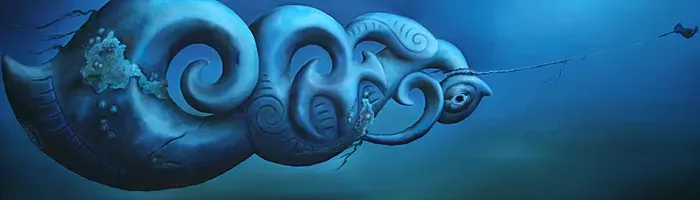
 1. These are navigational maps and tools used by Polynesian voyagers centuries ago and European sailors more recently to travel the vast Pacific Ocean using only stars and ocean waves to chart their journeys.
2. Fourteen years ago when The Big Idea project began, we thought that the mattang especially was a fitting metaphor to chart the unique journeys that creative people make to forge careers and to build organisations in New Zealand’s creative ecology.
3. Back then, we knew as we do now that parents, school-teachers and friends are often very discouraging about pursuing a career in the arts, especially given the cost of arts education and the very small number of full-time jobs available.
4. We wanted to make a difference but it all seemed very complex.
5. Our brainwave was to wonder what would happen if we presented a picture of the entire creative ecology and then gave people the tools to navigate it.
6. For example if a visual artist could see more opportunity for applying their vision and talent than a career as an exhibiting artist in an over-crowded gallery system, how would that make a difference to that person’s long term prospects of having a successful arts practice?
7. This of course was in the days before social media – but we did know already the power of the internet and the importance of networks. From there The Big Idea website was born.

Fourteen years on, we are a charitable trust, an online portal for creative people and those who want to connect with us and a team of creative sector specialists, delivering innovative community & cultural development projects firmly grounded in the convergence of creativity, the arts, business and technology.
The online community has evolved into vital soft-infrastructure that is widely used and a trusted arts brand that is highly valued. In 2013 for example, the website had over 1.2 million visits from 510,000 unique visitors who accessed 3.2 million pages.
“The Big Idea rocks basically! It's where I go when I want to know what's on, what's hot, what's not. I go there when . . . I want advice or professional expertise. I go there when I'm looking for job and mostly when I need a lift in my day!”
The Big Idea is also a social enterprise.
In a good year we generate more than $5 of additional income for every $1 that we receive from grants.
Our mixed revenue model includes public investors such as Creative New Zealand, philanthropy and our own income generating activities that create measurable results for our clients.

This whakatauki or proverb drawn from tangata whenua – Maori culture – anchors ART Venture - a programme of Arts Regional Trust delivered by The Big Idea that is now in its 5th year and that is highly sought after by leading creative entrepreneurs in Auckland.
ART Venture challenges participants to redirect their hard-wired entrepreneurial energy to the question of their financial viability – not only for the ‘now’ but also the future
without compromising their commitment to their creative practice and communities.
The heart of the programme is a learning community of peers, specialists & mentors that responds to each participant’s unique situation, opportunities and needs; - including the behaviors and attitudes that are holding them back.
 So far, over 50 top creative entrepreneurs and producers have completed the programme – drawn from a wide variety of arts and creative disciplines as this photo shows.
In the top row you’ll find:
- One of NZ’s top performance poets
- The director of NZ’s only Academy Award accredited film festival
- A super-talented illustrator
- A highly qualified arts governance specialist
- A top transmedia producer
- One of NZ’s most industrious and acclaimed street artists
Bottom row:
- A music producer
- One of NZ’s best photographers
- An internationally acclaimed music artist
- A pioneer web TV series producer
- The director of NZ’s only film organisation focusing on script development
- Auckland’s textile up-cycling queen
 There’s a common purpose between ART Venture and The Big Idea despite their differences in scale.
Simply put, we’re firing up the transformational power of the arts to grow strong communities, businesses and organisations that are led by confident, creative people who are determined to make a difference - for personal success, community development and the health of the planet overall.
It’s no surprise that our main challenge is breaking down silo thinking – where ever it is found – because it’s often the case that when the ‘going gets tough’ (as we say in New Zealand), narrow, self-centered perspectives become the default position.
 One of the things that’s really great about living in New Zealand is that more and more of us are engaging with arts and culture-based experiences, like Art in Dark, one of Auckland’s brightest annual arts festivals – which was in ART Venture 2012.
The interesting thing about these new “arts consumers” is that they are people who my colleague Marianne Doczi calls “dr@mateurs” – digitally revved up amateurs who with their desire to self-actualise, the availability of mobile technologies, social media, e-commerce, and crowd-funding – can simply no longer be thought of as audience members.
Instead Marianne proposes, for almost all arts organisations and businesses, these “dr@mateurs” are now being cast as potential funders, ideas testers, market researchers, promoters, distributors and last but not least, critics!
Clearly exciting changes are underway that are transforming the cultural context in which we do our work.
Nonetheless, many of us – and I count myself among you, have at times and without much thought continued to use the 20th century language of industry in this fast-changing, exciting 21st century world.
And that presents some challenges and opportunities that the last part of my talk is focused on.
 In Auckland, I’m a member of Creative Coalition, an advocacy group championing the visibility and value of the arts to policy makers and politicians.
Over the last year, we have been developing a new model of the creative ecology extending the work of creative economist John Howkins.
In our research to show how expansive a “creative ecology” is, we are proposing a shift in the way that we think about creativity generally.
Our focus is on revealing an inter-dependent system where each and every one of us (meaning all citizens) has a role to play in the creative process.
Our creative ecology model, still in development, firmly places creativity including the arts within a holistic system that intersects with other systems in other sectors of society including finance, community, culture and the environment – to name the obvious ones.
We think that this quote sums up very well our starting point:
 “To study creativity by focusing on the individual alone is like trying to understand how an apple tree produces fruit by looking only at the tree and ignoring the sun and soil that support its life.”
Our emerging model seeks to dissolve boundaries and it invites in those who have previously been excluded from the creative process.
The Big Idea website does this, by the way, every time someone from outside the arts visits to explore and connect.
We think it’s also important that through the model, strong connections can be drawn between economic and non-economic zones of activity.
In ART Venture, this is a continuum that participants explore so that for example, their for-profit work actively supports their public good projects.
 But back to the language challenge and the opportunity to “re-think Industry”.
Some of you will recall that fifteen to twenty years ago we began to adopt the language of industry because we wanted to attach a monetary value to the arts in an economic development context in order to profile the worth of what we do.
Overall, this proved to be a good strategy; for example, it created an environment that made The Big Idea project possible –
And it has led to wonderful opportunities for creative entrepreneurs such as Caroline Robinson (ART Venture 2007) who, as a sculptor has contributed to a number of urban development projects in Auckland.
The photo is of the Albany Lakes Bridge and Wetlands project which Caroline designed and then was fully involved in building.
In many ways though the cultural context in which we work has moved on and the time is right to re-think industry by developing a new language for the arts that supports whole-system thinking in all its rich diversity.
Through the creative ecology model that we are developing – a work in progress I stress, we are making some headway.
And for those of you who are interested in the detail of the model that is emerging, I would be very pleased to talk with you after the session.
 At the outset of my talk, I asked the questions:
So how can we make more visible the value that talented creative people working in the arts offer?
And how might that value be integrated with pride into the day-to-day lives of everybody?
I’ve outlined two creative platforms, The Big Idea and ART Venture that are playing their part in our search for answers.
I’ve also introduced a way of re-thinking industry – a creative ecology model that is inclusive in its scope and that represents a new dawn.
Going out on a limb, I’ve advocated for a new language to replace 20th century industry speak. Indeed I would even go so far as to call for abandoning the idea of a separate creative industry or sector altogether.
 To finish, - would you like to be involved?
Here’s three things you might like to do:
See what happens when you make a conscious effort to stop using 20th century industry language, like “industry”, “sector”, “creative capital”, “inputs” & “outputs” – and so on . . . For example, I’ve tried really hard not to use the word sector in this talk – not so easy to do and so that’s made me think . . .
Explore new ways of talking about and illustrating success that encompass not just financial returns but also cultural, social and environmental outcomes
Map your own creative ecology – who’s in it, the roles they play, how they connect, what they contribute, what the nutrients are that feed the system and what the fruits are . .
Thank you – kia ora koutou katoa . . .
- The 6th World Summit on Arts and Culture, held on 13-16 January 2014, was organised by the National Council for Culture and the Arts, Chile and the International Federation of Arts Councils and Cultural Agencies.