Festival Fugues: Week 2
I'm sitting in the Festival Garden at the Auckland Arts Festival, chilling out to a rather funky jazz trio.
It's a sunny weekend afternoon with plenty of similarly blissed out people, circled by either 1: glasses of wine or 2: inquisitive children (take your pick).
These last two weeks I've been even more peripatetic than usual, spending weekends in Auckland, weeks in Wellington. Thus my blog this week will bring you events from both Festivals.
Cineastas, at the NZ Festival, was intriguing before it even started, with its two-room set, one placed on top of each other, much like a life size doll's house. A chair on the bottom half was filmed and projected onto a screen on the top half. But the blurb:" Downstairs, you’ll follow the work, lives and loves of four film-makers …Upstairs, the films they are making come to life" turned out to be misleading.
Cineastas is much more complex, a whirlwind narrative where character after character (most of them filmmakers) is introduced, actors moving between upstairs and downstairs, swapping between stories and roles until it's unclear who is real and who is just someone else's character. It's at once like every 'meta' movie you've ever seen and like none of them. I grinned inside when I realised that despite being a commentary on film, this piece utilises theatre can do and film cannot: show scenes apart in time and space on the same stage, intersecting with each other in theme and characters.
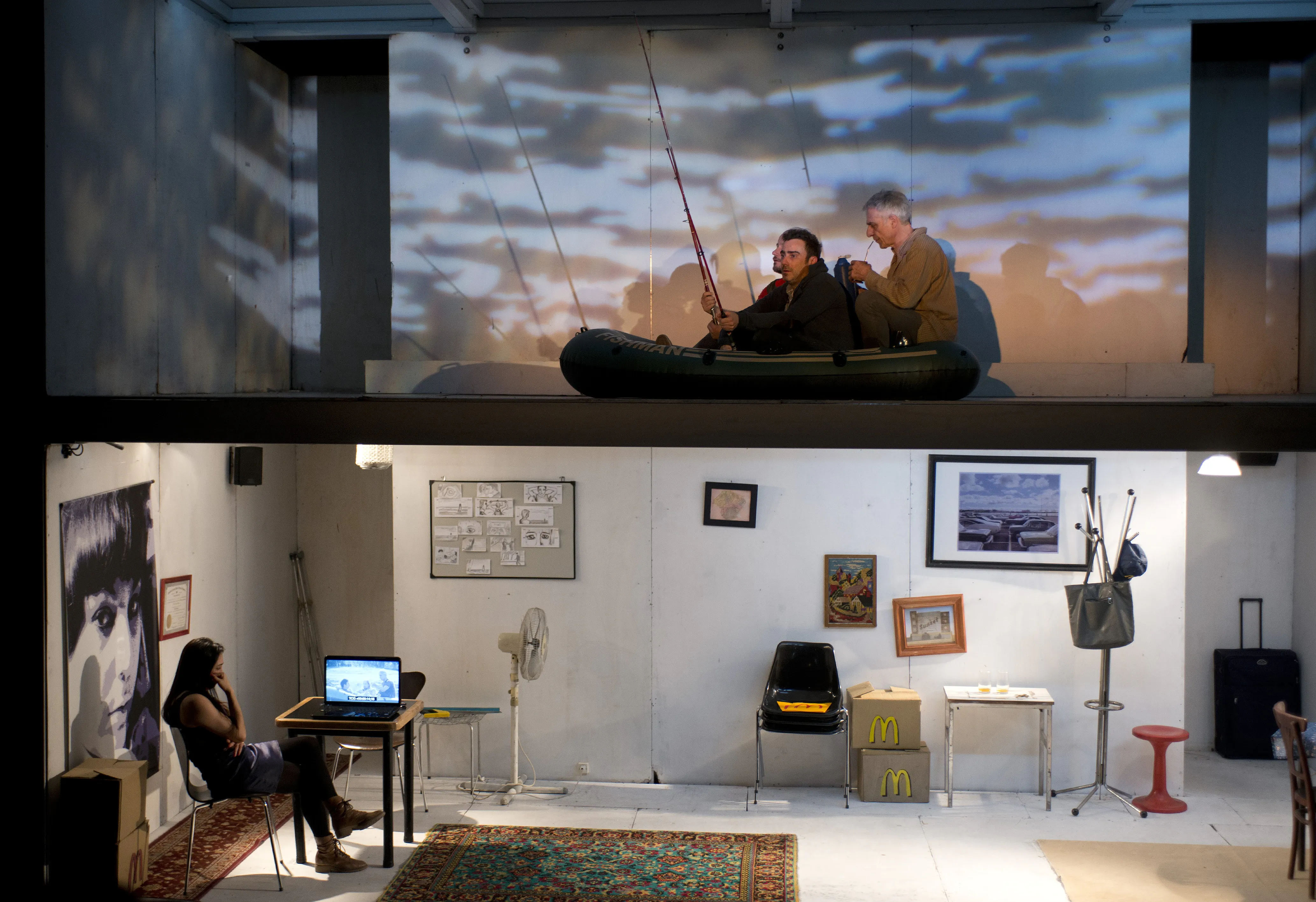
Only one character seems to know exactly who they are: the man in black who speaks no lines, and interacts with no one, but who patiently moves between upstairs and downstairs, removing and inserting bits of set. It seems fitting that it is the stage manager who is the only real one in all of this stage magic.
Judging from the comments around me afterwards, there seemed to be a mixed reaction to the show. A feeling of not quite grasping it all seemed to be common, and this was certainly the case with me. It's not a bad thing though, to not always understand exactly what is going on.
Brass Poppies proved to be a different analysis of altered reality. A chamber opera by composer Ross Harris and poet Vincent O'Sullivan, Brass Poppies has been co-commissioned by both festivals. The piece, which explores war by juxtaposing the battle of Chunuk Bair onto the living rooms of early twentieth century Wellington, is perfectly hosted in the intimate space of the Mercury Theatre (itself with a long history of conflict and loss.)
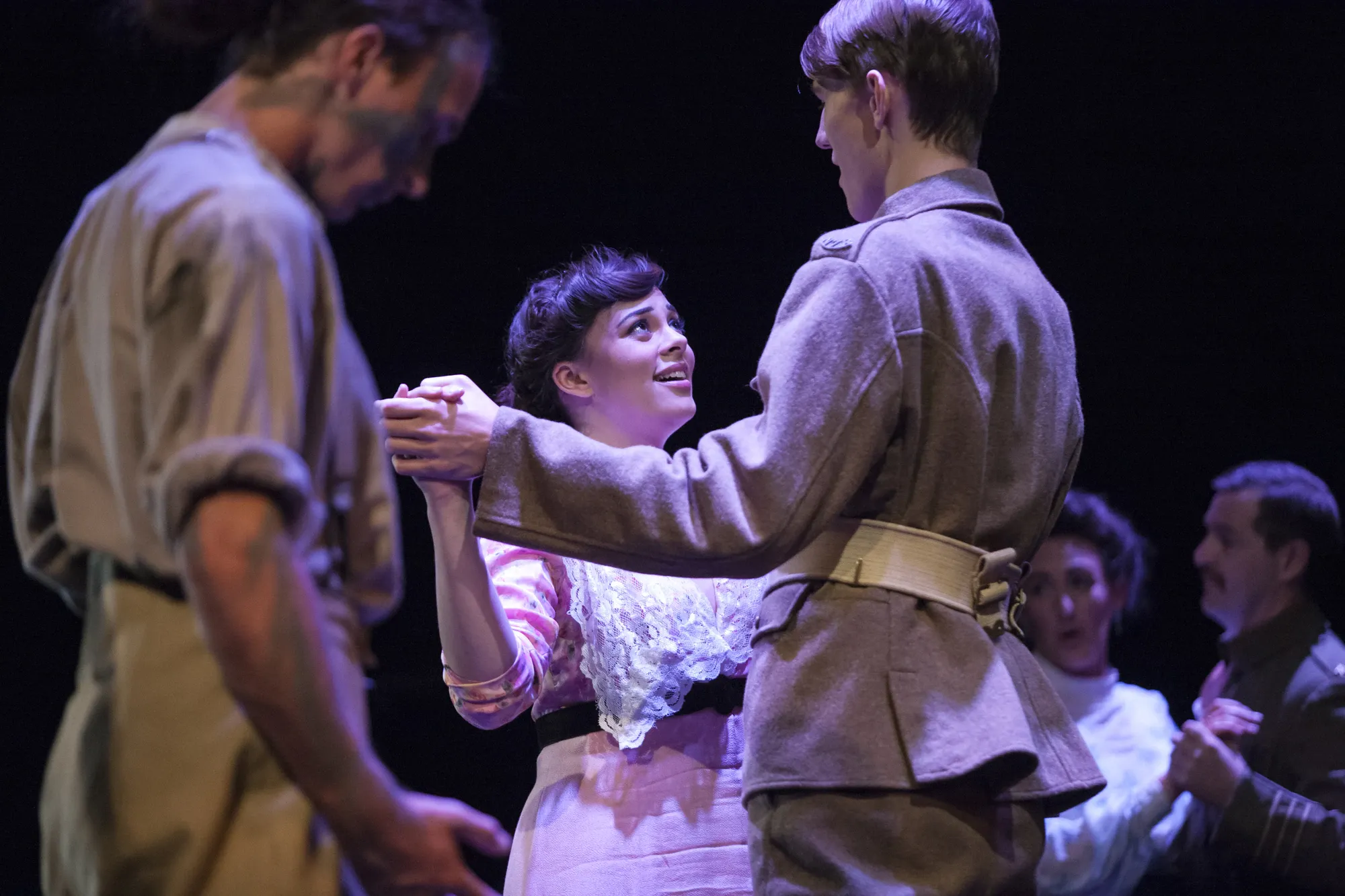
Harris and O'Sullivan have written a passionate piece protesting against the glorification of war and specifically, the legend of 'sacrifice'. They point out that at the end of the day, the dead are still dead: families are bereft, and men rather than going bravely to their deaths are mostly frightened and doubtful. In other words, we're human and should resent having our story reframed by others. This is a refreshing view in a period where, with the centenary of WWI upon us, we are immersed yet again in bombastic commemoration.
With a ten-piece musical ensemble, nine singers and two dancers, this is an ambitious work with big themes. Images projected onto a four-column screen show historical footage juxtaposed with images underlining the poetic metaphors in O'Sullivan's libretto. There's a predominance of images of growing things, fading then renewing: genteel hydrangeas, vivid apples, bloody poppies. I took this as a warning that war, like life, renews itself. In our generation, the same story is likely to repeat.
From war to war. My husband is a big Game Of Thrones fan so I took him to see James I, the first of the three 'James Plays' performed by the National Theatre of Scotland and the Auckland Arts Festival. Promising bloodshed, courtly intrigue, sex and swords, it did not disappoint. As you'd expect for a big budget international co-production, the acting and staging by a large cast were top notch. Best of all was the snappy writing by Rona Munro, full of irreverent (and very Scottish) throwaway lines, as well as fair number of visual gags. Ever wondered what Scotsmen of yore would say if their speech was upgraded to the modern vernacular? Munro has a pretty good guess, and it's hilariously sweary and not at all hard to understand.
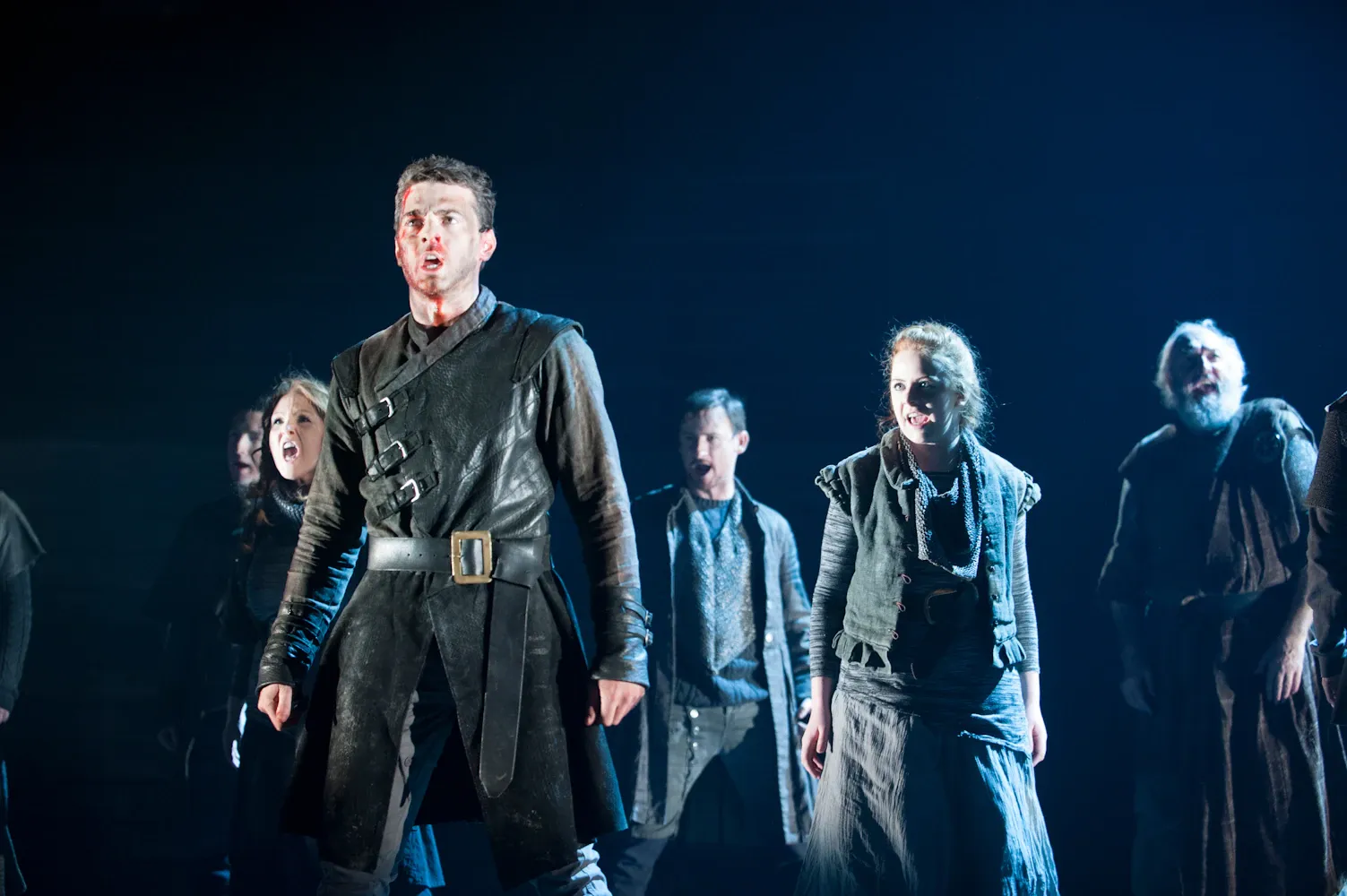
As entertainment, this was good fun and, although we were not among the number to do the marathon 7 1/2 hour watch of all three James plays that day, it wouldn't have been hard to sit through. There were good solid character arcs for the theatrical nerds among us, though nothing terribly complex. I left satisfied, a little more upgraded on Scottish history, and hubby had a big smile on his face as the blood ran down the giant sword on stage at the end.
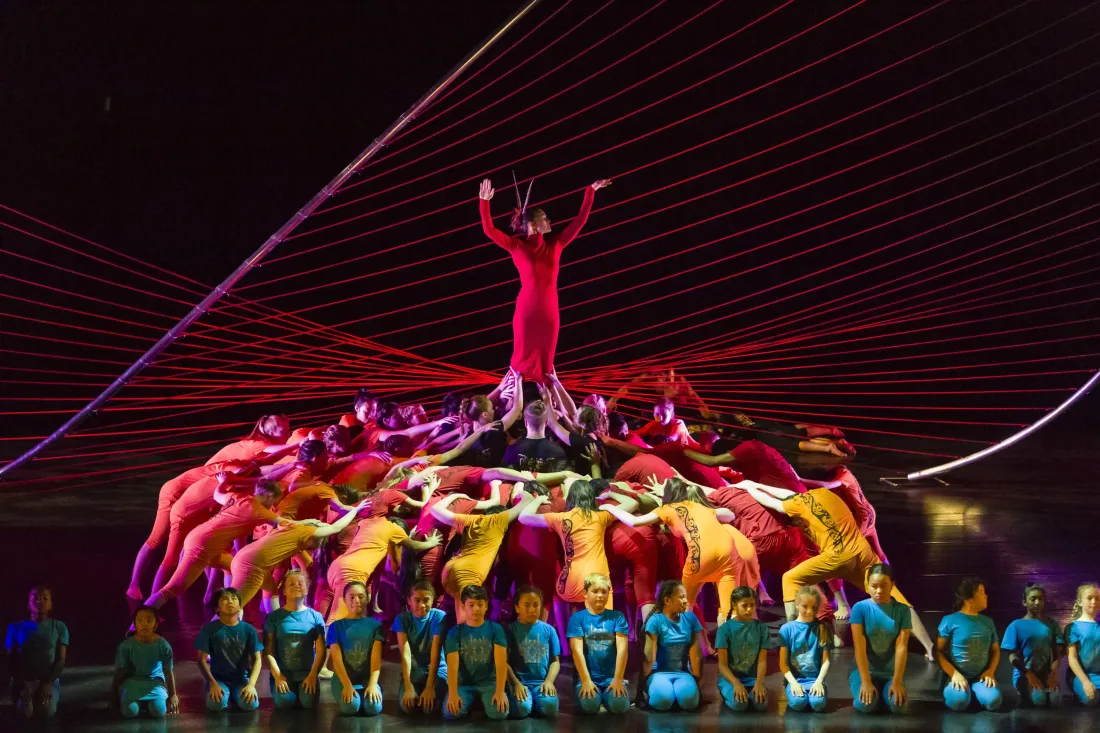
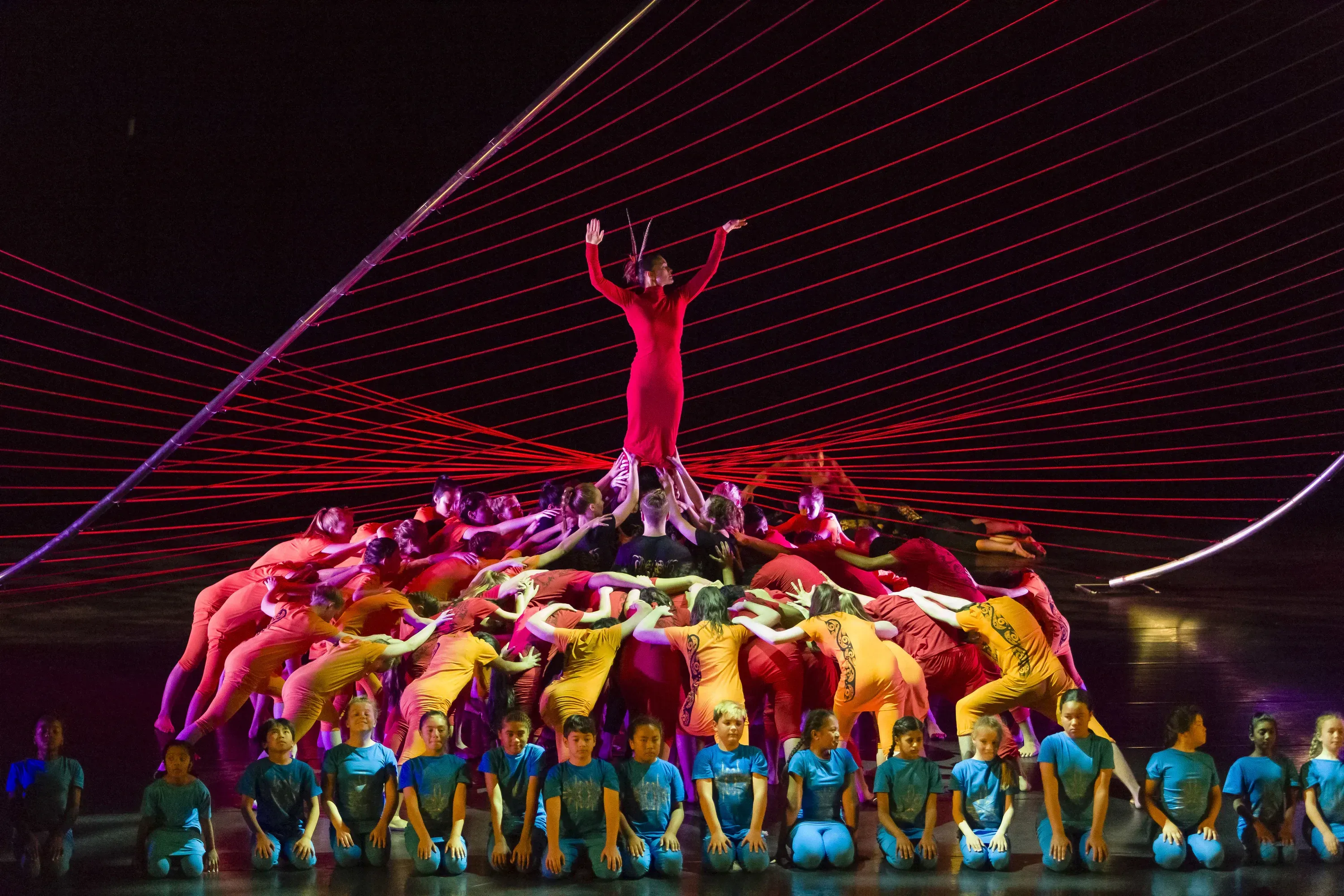
Ruaumoko, later that day, was a completely different experience. We crowded into the Civic with the excited parents and kids, many of them girls in pretty dance skirts. It felt like we had suddenly found ourselves in the middle of a community event that had been going on for some time.
In fact, Ruaumoko is the culmination of months of work, although the actual rehearsal astonishingly only takes four weeks. Choreographer Moss Patterson has taken as his inspiration an early work by composer Gareth Farr, the titular Ruaumoko, god of earthquakes. Over 100 students took part, ranging in age from (I'm guessing) seven to 23. Professional dancers from Atamira Dance company were also involved, and the whole thing is an initiative of the APO. If they weren't brave/foolhardy enough already, the program says that the Auckland Dance Project has already happened annually five times.
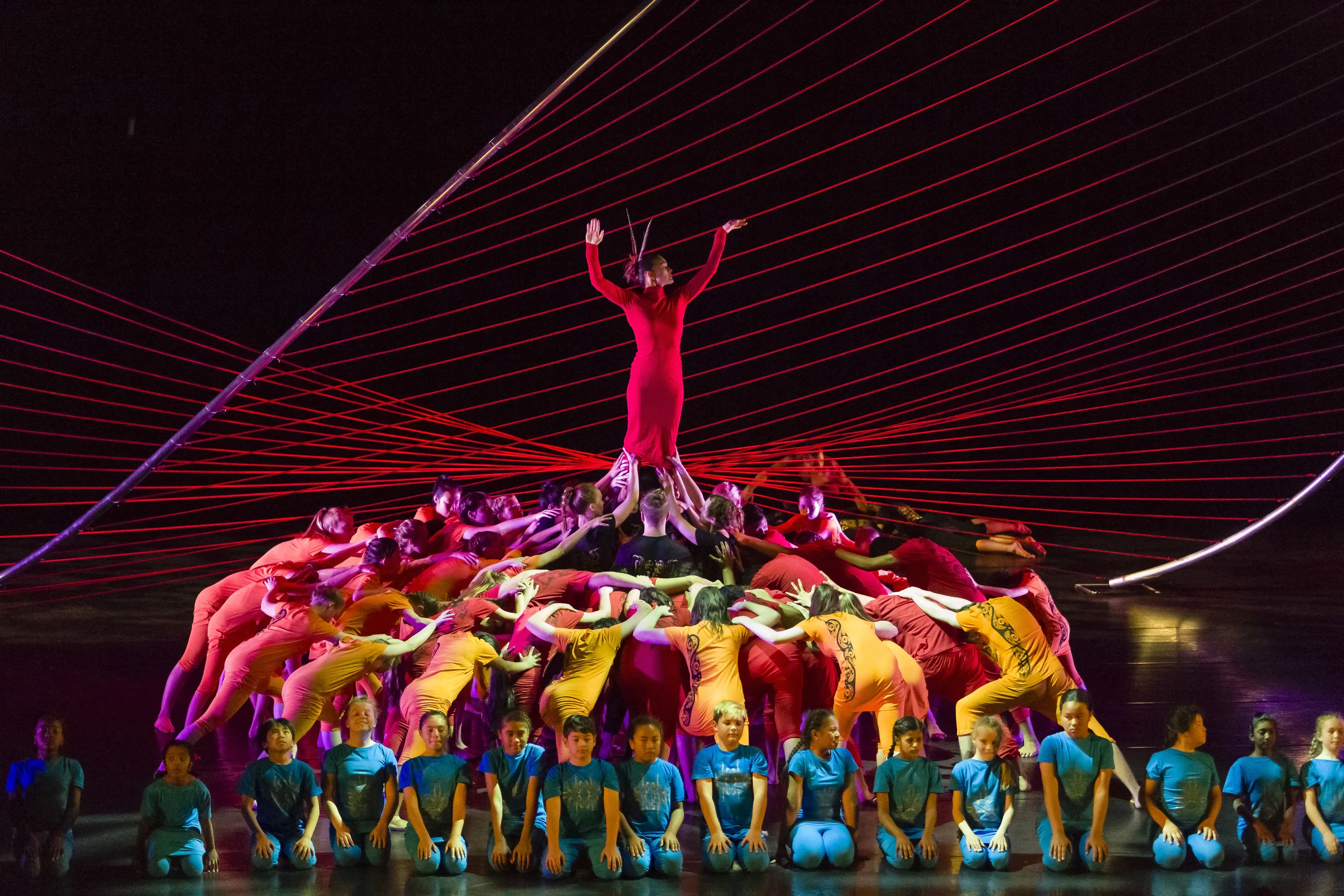
Patterson has rehearsed five different groups of students, twice per week for four weeks, before an intensive three-day mass rehearsal with orchestra, plus additional soundscape by digital artist Paddy Free and an impressive sculptural set by Robin Rawstorne. The performance is a one-off: an explosion of sound and colour, the movement of the children the perfect companion to Farr's ambitious, bouncing percussive piece. Patterson uses massed bodies to great effect, with light falling on arms and faces as waves of movement ripple through. The dancers are not professional so it's not perfect, but it's wonderful to see how committed and disciplined they are - even the very little ones. Despite the age of the performers, Patterson doesn't shy away from showing darkness - the scene of a man desperately trying to keep his face skywards before being overwhelmed and swallowed by a volcano is particularly unnerving.
Afterwards, there's a QnA, where the audience have the opportunity to ask questions. The best question, by a forthright little girl: "So what's the story?" Patterson explains the convoluted plot which is based on Maori mythology, and which neither I nor my viewing companion got. But then, I've long stopped trying too hard to get a narrative from contemporary dance: just letting the images and ideas wash over me is the reward.
And so on to White Night. The idea behind this annual event, championed by Auckland Arts Festival after seeing its success in other big cities, is to 'light up' as much of the city as possible with arts events through the night, tempting people out to find activities and venues they maybe wouldn't access. This year, the footprint of the event is huge, reaching out into far-flung suburbs. There are bus tours and a biking trail, but if you're a pedestrian like me, the information can be patchy depending on where you are.
I must admit, I started late: after my third show of the day (Brass Poppies) I set off at 9.30 pm. The man at the info booth had assured me that all the information was online, but after 20 minutes of fruitlessly following links from the official email I was none the wiser as to what was actually going on along K'Rd. So I just started strolling, and it was quite nice: K'Rd after all is lit up with arty happenings much of the time anyway, so it was hard to tell what was on due to White Night and what was just happening. White Night is uncurated so a lot of the events, such as exhibitions in art galleries or cafes, were probably happening anyway. But others are specially put on just for the one night.
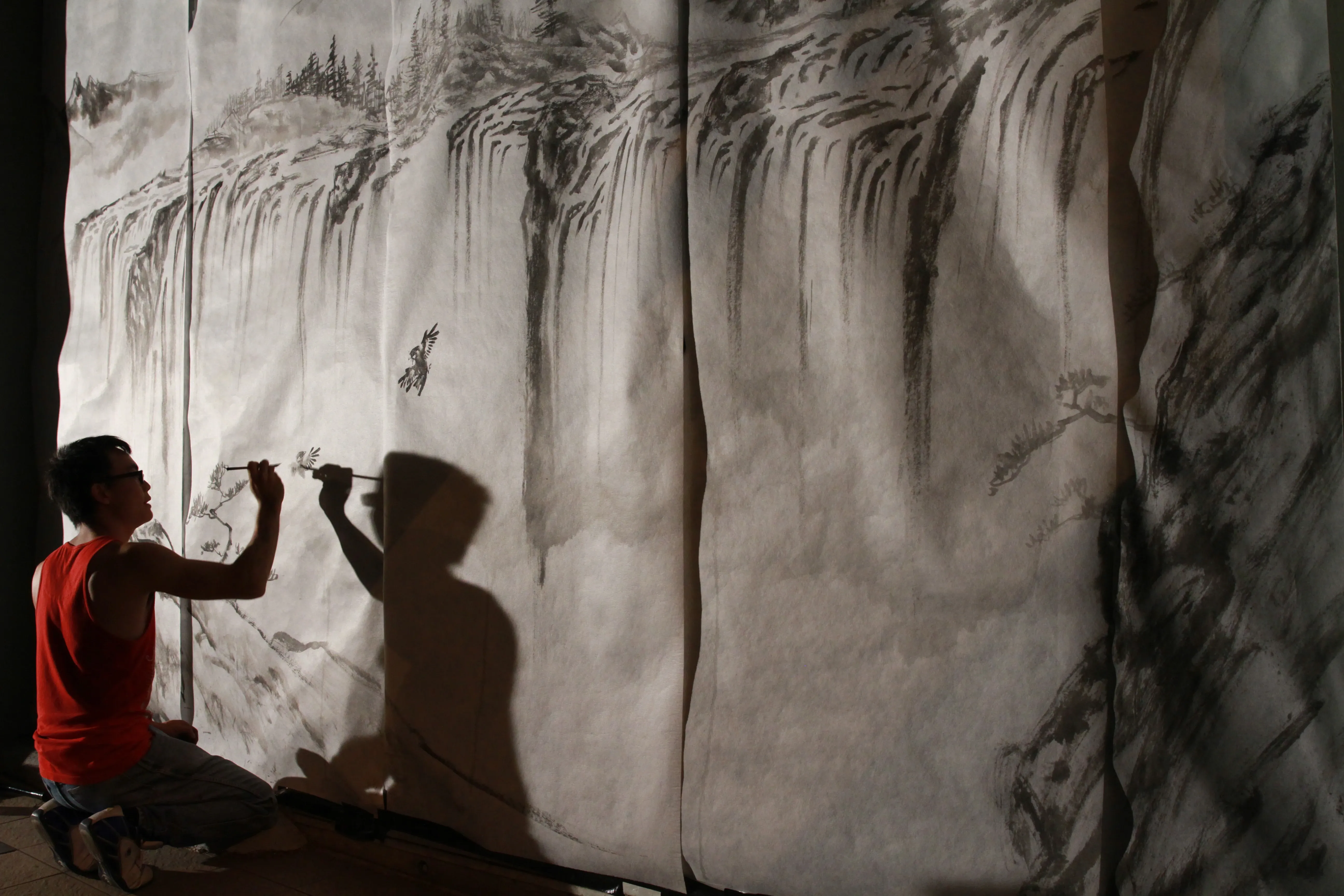
Some observations from my walk along K’Rd and then down to the central city:
- balloons to mark spots for White Night activity were useful, but a little more signage describing what was inside would have been useful. Despite volunteers in bright pink T shirts often being visible, they weren't that proactive in engaging confused-looking people (like me) standing around wondering if they should go in.
- several times I wondered if I was crashing some private function. Free alcohol and nibbles, trendy people standing around with their backs to work, beer in hand - yup they brought back to me the days of attending random art openings, and why I don't go any more.
- Many of the interesting looking activities were shutting down by 9.30 pm, resulting in a feeling that I was always just missing the party. This is despite White Night supposedly running until midnight.
- Despite this, it was a way to discover new things about the city. I have never been inside the Auckland Libraries mobile bus for example, and now I have (a lovely little exhibition called dorf - bus of tales where visitors are encouraged to read, borrow or take handmade zines from young artists). Also, I never knew there were artist's studios in the Sunday School Union buildings in the heart of Queen St.
- Some venues were far more organised than others, and attracted better patronage due to better publicity and networks. For example, Auckland Library had well thought out events running outside, inside and projected onto the walls of Lorne St buildings; similarly the Art Gallery still had huge crowds inside it close to its closing time of 11 pm, probably due to astutely programming a jazz performance; and Q Theatre's bar was still pumping at midnight though most of the shows had finished before 11.
I realise this event is still evolving, and with the extended footprint resources must be pretty stretched. For me the highlight was probably the people I bumped into in my stroll through the city - friends I only occasionally see, acquaintances I had no idea were into the arts - and the conversations I had with them. I also appreciated the opportunity to safely stroll through my city late at night and browse.
One more week of festival madness to go. See you out there.