Exploring performance ethics
Written by
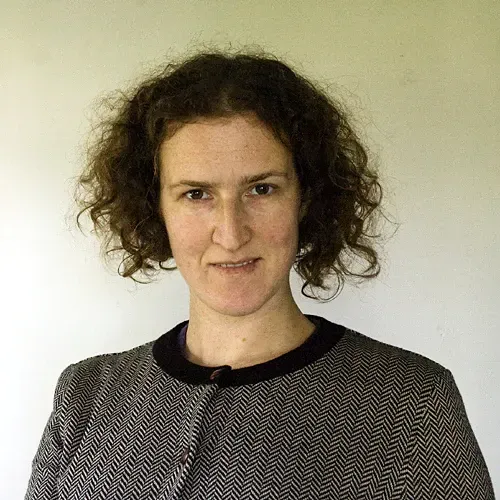
Melissa Laing tells us about her two year mission to explore and document performance arts ethics in NZ.
The result is a series of audio interviews with 23 practitioners, producers, curators and researchers across theatre, dance and visual arts which Melissa hopes is the start of a toolkit for performance professionals and emerging artists.
“I’m hoping the podcasts will, without being prescriptive, provide people with awareness and a toolkit to identify potential ethical issues and develop strategies to respond to, eliminate or mitigate them before they become a problem.”
* * *
Tell us a bit about yourself
Over the last 16 years I’ve worked as an artist, academic and curator in New Zealand, Australia, Germany and Holland. I returned to New Zealand in 2009 after completing my PhD at the University of Sydney. I’ve spent this last year working on the Performance Ethics Working Group podcasts and a documentary on the controlled climate labs in Palmerston North.
Tell us about the Performance Ethics Working Group
The Performance Ethics Working Group was set up in 2012 to consider what ethics has to do with performance. It brings together people who engage with performance across theatre, dance and the visual arts. We’re always open to new members and, on a conceptual level, anyone can be part of the working group at any time by engaging with the question of ethics and performance.
What was the impetus for this? What did you hope to achieve?
While there was no one single impetus for initiating the working group I can point to a few instances where the question of ethics was brought firmly to the front of my mind. These include making a formal application for ethics approval while studying in Sydney, reading Yvonne Rainer’s open letter to Marina Abramovic about the treatment of the performers she employs and administering an electrical shock to Mike Parr.
By forming the working group and interviewing 23 people for the podcasts I was hoping to develop a nuanced discussion on ethics in the context of performance which would be useful for both experienced practitioners and people starting out.
Had there been much focus on performance ethics in the past?
Ethics is something that is coming more and more to people’s attention in the arts. In the past it has been discussed, but often under different names or in fields outside of the arts. This was made clear to me in 2010 when I wanted to teach my MSVA students about ethical processes for working with individuals and communities, and bodies of knowledge to create documentary or participatory work. The only resources I could find were from film, sociology, anthropology, and post-colonial studies. All relevant, but not directly focussed on creative practices.
In the area of labour relations, concerning the treatment and payment of performers and creators, organisations like Equity, other artist’s unions and advocacy groups have done a huge amount of work. Similarly there has been a lot of discussion around informed engagement with knowledge and taonga which we can draw on.
What the podcasts do is bring all of these issues together through the common question of ethical practice and related them to concrete experiences that the participants have had.
What range of artists did you interview – how did you decide who to focus on?
I interviewed practitioners, producers, curators and researchers across theatre, dance and the visual arts. I started out with an initial list of people and then asked them after the interview if there was anyone they thought I should talk to, a method known as snowball sampling. Who I ended up interviewing is only a small selection of the amazing people working in the field of performance.
What questions did you ask?
The first question I asked was what is ethics? A really tough question to start the interview with. I then went on to ask questions about the responsibilities and consideration inherent in working with communities, traditional knowledges and audiences, as well as the ethics of how performers are treated and paid. Most of the questions focussed on applied ethics rather than philosophical ethics.
What were some of the main ethical issues that they identified?
The principle of transparency came up a lot, from communication with audiences and participants to financial decision making. This then also led into discussion of the conundrum that many practitioners find themselves in when the vision and concept of the work, which often requires an unmediated encounter comes up against people’s right to make an informed decision. Issues around systemic power imbalances and powerlessness also came up frequently.
Was there anything that surprised you?
Not coming from a dance background I was surprised by the stories that the dance practitioners had to tell. Not because I didn’t know that there was a history of abusive choreographer-dancer relationships, but because I was surprised it is still an unresolved issue.
What are some of the tools to deal with ethical issues?
One of the biggest tools to deal with ethical issues is consultation both at the outset of a project and when face to face with an ethical issue. Both because other people have encountered and dealt with these issues before and because our perception of the necessity of the work and our centrality to its creation clouds our ability to perceive and evaluate ethical issues.
Who are the audiences for the podcasts? What do you hope they gain from it?
The podcasts were deliberately edited in an accessible, conversational way so that anyone can engage with them. While making them I did have two audiences in mind, performance professionals and people studying or in the early part of their career. I’m hoping the podcasts will, without being prescriptive, provide people with awareness and a toolkit to identify potential ethical issues and develop strategies to respond to, eliminate or mitigate them before they become a problem.
What responses have you had so far?
I’ve had really positive response from the participants which was a relief as I feel a responsibility to do something good with the time and knowledge people gift me. There has been a lot of positive feedback and general interest in the topic across the board and how it might be further developed. I also got a really great response form Radio New Zealand National and Concert who both featured the podcasts on their arts programmes.
Did you also explore ethical issues for the audience?
I didn’t ask any direct questions about the audience’s ethical position in the interviews, a gap which came clear to me as the project progressed. I did later led a conversation at the Festival of Uncertainty about audience ethics, and will be incorporating this question into the future of the research. I think asking ourselves as audiences what responsibility we have for both engaging with the performance and protecting ourselves from it enables us to choose when and how we are carried along by the performance.
You made it non-academic to be accessible – but what academic principles did you apply to the structure of the interviews, research and curation of the podcasts?
By using a semi structured interview process with predetermined questions the research process aligned with clearly defined qualitative interview methods. Because the research had a definable outcome and process it was easy for me to provide participants with information sheets and use written releases, something that many participants said they found obstructed artistic processes.
What were your ethical considerations and how did you approach them?
There were two ethical layers, the first was the question how can we determine what an ethical position is or how ethics construes us. The second was the applied ethics question: what would constitute harm to the participants and the broader communities they operate within and how might I mitigate this. I felt given that the research was about ethics I needed to ensure a clear ethical process in developing and furthering the research.
To identify potential harm I developed a matrix of stakeholders, including creators & producers, audiences, institutions hosting performance, myself and the wider research community, and examined what potential harms might come out of participating in the research, such as a negative impact on people’s careers as a result of what they might reveal or a curtailment of what is possible in contemporary performance. Once I’d identified these potential harms I developed strategies to address them and ensure that the principles voluntary participation, informed consent, privacy and confidentiality were adhered to.
What funding and support did you get for this research and podcast series?
The first stage of this research was self-funded with non-financial support from the University Without Conditions. The podcasts would not have been possible though without the support of the people who were interviewed. They all gave generously of their time and experience.
Tell us about the University without Conditions
We’re a free university and self-organising collective, without ties to Government or corporations. We exist not to produce ‘degrees for jobs’, but to enable a human being to improve themselves and the society in which they exist. Currently, in addition to the working group we run a reading group and have previously held talks and classes around Auckland. We’re always looking for more people to join the collective and help shape it.
What are your future plans for the working group?
I want to open the conversation up further and bring more people together to discuss ethics and performance. I’m talking with various groups about the possibility of running an unconference on the subject. An unconference is a highly informal conference with no spectators, only participants. You don’t go to lectures or presentations, rather you come together to discuss things, setting a programme and running sessions in collaboration with other participants on the day.