Exploring art
Written by
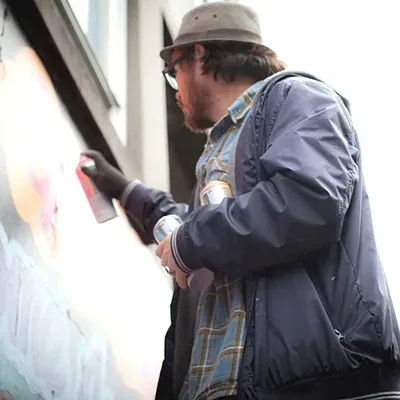
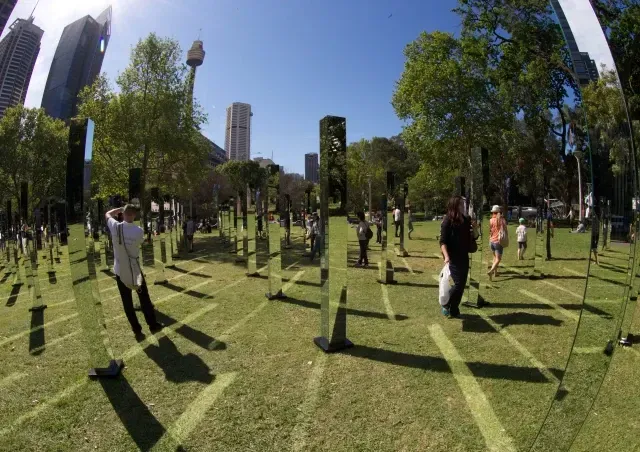
After creating engaging works for Splore with Cut Collective for the past three festivals, this year artist and curator Ross Liew is stepping up as art director.
“I’m really looking forward to the transition from emails and spreadsheets to hammers, drills and sweat. There is quite a bit involved in installing a large programme of work an hour from the city on a site with no infrastructure.”
Ross tells us about selecting the art works and integrating them into Tapapakanga Regional Park, his new appreciation for data management, and working on site with the artists, installation techs, climbers and riggers, lighting tech and arts volunteers.
Tell us a bit about your background as an artist and project director.
I’ve been a practising artist since 2000 with a background in photography and street art. After founding Cut Collective in 2006 we have had the opportunity to exhibit at the the New Dowse, Auckland Art Gallery and the Dunedin Public Art Gallery and of course Splore - three times! My role within the collective included the production and internal curation of these projects and led to me working on other projects such as Graffiato, Red Bull Pop Life and All Fresco in a similar capacity.
Why is art an important part of Splore? Who is the audience?
Splore is a music and art festival, more than that even. It is very much about the experience you have while there and is reflected in the location, services, ethos and stimulation provided. The art programme is another means through which we can engage and enhance the experience of the Splore audience who are very attuned to the type of work typically present. The art at Splore is for anyone looking for a new experience.
How did you select the artists?
We receive submissions through a window several months out from the festival. From these we try to shape a programme that provides a good range of works that explore different mediums and formats with an emphasis on those that are designed around audience engagement, interactivity and cross disciplinary practice. This year we also asked the artists to respond to the festival theme of ‘Show Some Love’.
Tell us about the range of works and some of the highlights?
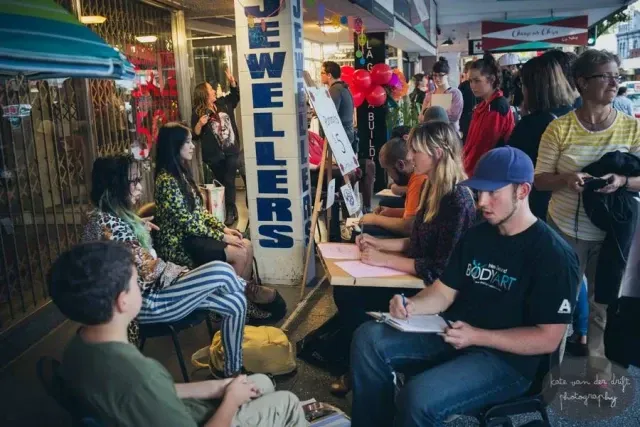
We have a series of tech based works employing augmented reality, mapped projection, MIDI sequencers and physical triggers. There are projects whose success is dependent on the participation of the audience and those that are there to host the audience in communal crafting opportunities. Highlights for me will be seeing the work Field by Out Of The Dark, taking part in the participatory audio work by UK collective Circumstance, and getting a seaside portrait with my lady from the guys at Illustrator love.
What role do the artists play during the festival?
A number of artists will directly engage with their work over the weekend with performance elements. Jaan Temple, Nag, Camp Curious and Ka Kitea are some of the projects that you should time your weekend around. For others it’s really like being on call, the nature of it being an outdoor site with an audience of 8000 means that anything can happen.
Any tips for artist applications for this kind of festival?
If you haven’t been to the festival then do! There is an intangible sense of things that is good to experience and note. While not all work has to reinforce what is already established as a hall mark of the festival, if you are going to challenge it - it’s probably good to do so in an informed way. Also if your work is relatively passive in nature I think it needs to offer something quite special to stand out amongst the other applications.
This year you’ve moved beyond the arts trail. How have you positioned the works and what’s the thinking behind this?
We have been keen over the last few festivals to try and activate the site on a wider level as far as the art content goes. Each time we get a wider spread and this year is no different. The nature of the site will always dictate a concentration of works around the traditional Arts Trail zone, but where possible we have looked to make use of transition points and natural destinations.
What’s involved in the installation of the works?
A lot of planning! I’m really looking forward to the transition from emails and spreadsheets to hammers, drills and sweat. There is quite a bit involved in installing a large programme of work an hour from the city on a site with no infrastructure. Beyond the transportation and lighting there is a team of 12 who will be working on site alongside the artists in the week leading up to the festival.
Tell us about your previous involvement with Splore as an artist. How does this help your current role?
I have been involved with art at Splore through Cut Collective projects in 2012, 2010 and 2008. So while this time there will be no Cut Collective presence, I’m in much deeper than ever before. I’m not too sure previous experiences have helped that much, when there as an artist you are focused quite tightly on a successful installation of your own work and you are not that aware of the big picture. Something I’m even more aware of now through my work in this role.
What does your role as Splore art director involve – in the lead up and during the festival?
The lead up to the festival begins with the selection of projects and ends when I hop in the car on the 9th to head to site. In that time I have email threads that have grown over a hundred deep, a spreadsheet that sprouts new tabs every other day and a new appreciation for efficient organisation of data - something I struggle with. It is kind of a dual role where on one side you are facilitating the development of a programme that includes 29 projects, and on the other side have to integrate the art into a festival framework that has about 15 other departments and department heads that overlap with my responsibilities. On site I am a labourer with a clipboard and during the festival I hope to be able to enjoy the whole of Splore as just another audience member. Fingers crossed.
What combination of people and resources do you work with?
The main crew I work with during install are the installation techs, climbers and riggers, lighting tech and arts volunteers. These are the ones who will really be making things happen and there is some great experience and knowledge in that group. I’m currently compiling orders and consumables for them and amongst it is a lot of timber, concrete ballast blocks, coffee sacks, old inner tubes, cable ties, a bunch of lighting including 66 par cans, strops, tape, cord…..
It’s a very physical and hands on operation.
What have been the main challenges so far?
Managing the data. I’ve now gotten to the stage where it’s becoming faster to email new requests for information I might already hold, than trawling existing correspondence. This probably casts a bad light on my systems but it’s true!
The nature of the art programme also means we end up with a very wide range of projects that all require quite different resourcing and installation planning, making the level of detail to get familiar with for each project is quite high.
Any tips for aspiring festival art directors?
Start early and know that there is no end to the detail and preparation that you can engage with. My belief is that the more I do in regards to prep before getting to site, the less chance I have of things falling apart on me. But then again, we are an outdoors event and at the mercy of mother nature to some extent. And draw on your team, the calibre of people working on Splore is incredible and I get a lot of confidence and support from them making my job just that bit easier.
How do you measure the success of an artist programme?
Anecdotal feedback for me is pretty powerful. Like at exhibitions you might have work in, circulating and eavesdropping on conversations about the work on display is gold. I’ll also have the long standing staff of Splore who have seen a lot of art over the years at the festival and can offer some perspective. Obviously there is the degree to which it travels on a legacy front online, if the work resonates with the audience then we will expect to see some chatter. And on a practical level if no-one is hurt, nothing breaks and all projects get across the line then that is success.
Tell us a bit about your other recent and upcoming projects.
Splore really has been my main summer project. I painted a 40 foot container for Ports Of Auckland over Auckland Anniversary weekend with Elliot ‘Askew’ O’Donnell that is now about to drop into circulation and complete a year long round the world cruise. As Cut Collective we have just initiated a repainting of the Sohole hoardings in Ponsonby with a great line up of artists, and we are also currently working with Massive on their next production My Bed My Universe. My focus post Splore will be getting into the production of If These Walls Could Talk, a web series that features six NZ street artists and explores the creative process and relationship between artist and community.
What’s your big idea for 2014?
To take holidays! Self employed burnout is a constant threat and this year I’m going to tackle it with some mandatory time out. I hope.
- Splore is on from February 14-16 at Tapapakanga Regional Park, Auckland.