Encountering objects with Louis de Vaillant
Written by
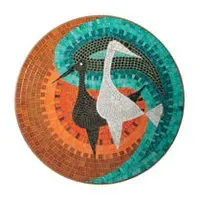
Auckland Museum recently opened a permanent exhibition of New Zealand design and decorative arts.
The Big Idea's Isaac Davison discussed with curator Louis de Vaillant how objects play an important part in New Zealand identity, and asked him why there seems to be a Western slant in the exhibition. Auckland Museum recently opened a permanent exhibition of New Zealand design and decorative arts.
The Big Idea's Isaac Davison discussed with curator Louis de Vaillant how objects play an important part in New Zealand identity, and asked him why there seems to be a Western slant in the exhibition.Isaac Davison: What triggered the exhibition? Was it influenced by other recent exhibitions?
Louis de Vaillant: It was internally driven. It was part of a continual thinking about the storylines that are going on in the museum. The Asian and international decorative collections were on display before the first stage of the museum's new development. By reinstating the international collection, and for the first time exhibiting the New Zealand collection, we finished the narrative pathway. These collections also became link galleries from the old building into the stage two grand atrium project.
How do you provide a context for these pieces?
The basic layout is a chronological narrative. The 1,100 objects are drawn from the New Zealand Applied Arts collection (7,000), so we have not borrowed any pieces. The layout is broad-based, but is broken up into vignettes which capture, say, the progression of New Zealand ceramics.
The beginning of the show looks at the arrival of Captain Cook, and the whalers, and their visions of the South Pacific. Their visions were turned into wallpaper in Europe, which decorated people's dining rooms and informed their thinking about New Zealand. At the end of the show we have a section where contemporary designers are still looking at Cook and considering the legacy of that exchange between Europe and the South Pacific.
The exhibition is not meant to be authoritative, because it cannot be. But we do want it to be informative. When we were thinking about the show we asked 'what are the objects people have asked to see, and will want to come in and observe from the collection?' There is a propaganda aspect in this - these objects will reinforce in people's minds and memories that 'these are our things'.
What qualities did you look for in the decorations? Innovation or the ordinary?
We have displayed a range of pieces from people who are highly skilled and highly trained. But there are also intuitive and everyday objects which have become part of who we are and how we represent ourselves.
For the first time we have not just displayed ceramics, furniture, glass, and silver, but also costume and textiles. So we incorporate a history of New Zealand fashion and textile design. And these additions are surprising to some people who thought they were completely familiar with our collection.
The focus is on key makers, artists and designers. But we are interested in what I like to call 'A-ha!' moments, where there was a breakthrough in making or thinking. Some of these moments are clumsy, and some have been magnificent failures. Garth Chester's Curvesse chair (1946) was so advanced for its time, technologically and conceptually, that it was not picked up on or publicly recognised. Ready acceptance of his work only came in the late 1980s to early '90s, when people recognised it as a major development in furniture design.
At what point does a sort of New Zealand-ness come into the decorations and design?
I do not think there is certain point - it is fairly blurred. We have not expressed that shift in the gallery, and we do not want to. We want people to discover that New Zealand-ness, or identity, by themselves. The exhibition is called Encounter - we want to encourage people to ask what their identity is through the lens of these objects.
The exhibition ends with a fantastic quote from Jim Anderton at the launch of the Design Taskforce. He says New Zealand design can no longer be about a fern leaf or a tiki printed on an object. It has to be something that comes from within. That is a huge shift in the way we present ourselves, and the way we are designing, and our relationship with overseas ideas.
As early as 1860 - in the making of Bishop Selwyn's document box - there is a desire to represent New Zealand identity. The makers were looking at New Zealand woods and saying 'this is the new palette of materials which we have, and they are unique. If we are sending this to England we need to represent ourselves'. So the box has a canoe stern, and kauri seeds as knobs, and other natural motifs. But these natural motifs come in and out of fashion. If you look at Garth Chester's chair, it strips away those symbols and considers instead international modernism, and suggests doing it here in New Zealand.
I see indigenous design does not have a strong presence in the exhibition. Is the exhibition influence by the Western notion of decoration or objects?
No. We are not looking for a 50/50 balance of Maori and Pakeha objects. Some of them are definitely Maori-made for Western audiences. And others are made by non-Maori, and have tricked people in the past, because they thought they were specifically Maori.
The tapestry of Princess Elizabeth and Prince Phillip on their wedding day was made by a Maori woman. I hope there are some works in disguise in the show, because we are trying to get people thinking about the notion of encounter: 'What about those encounters between two cultures and two culture-making practices?', 'Where have the crossovers come from?', 'Who has informed who and how has that developed object-making practice?' We do not want to spell this out. People have to discover this.