Empowering eco-systems
Written by
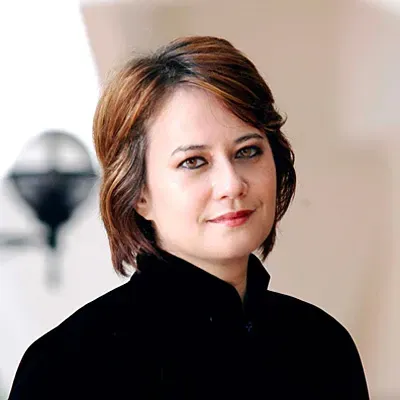
With a Japanese father and an American mother, in an era when this was unthinkable, Keiko Hagihara Bang says she had a head start from childhood. The Singapore based media consultant today sees the term 'third culture kid' as a metaphor for how we will all live going forward, able to fluidly relate to people regardless of their culture or background.
With a Japanese father and an American mother, in an era when this was unthinkable, Keiko Hagihara Bang says she had a head start from childhood. The Singapore based media consultant today sees the term 'third culture kid' as a metaphor for how we will all live going forward, able to fluidly relate to people regardless of their culture or background.
"I no longer see content as limited by geographical or cultural borders neither do I see content as limited by how it is distributed.
"Within this paradigm shift it will take the entire eco-system including governments, advertisers, media platforms, producers, talent, financiers to come together to create new business models for sustainable content production that is exciting. But this is unproven and that’s what I’m focusing a lot on these days."
Keiko Bang talked about thriving in a borderless world, as part of the Going Global | Destination Asia session at Survive & Thrive 2013 on Friday 13 September.
Tell us a bit about what you do?
Bang is today a leading media consultant, pioneer for the creation of a single Asian content market encompassing the eco-system of independent producers, broadcasters, and private/public sector stakeholders. Since 2010, Bang has been advising Japan’s Ministry of Internal Affairs and Communications (MIC) on several multi-million dollar projects for the development of Japanese co-production projects and initiatives. In 2013, Bang initiated the 1Asia co-production scheme with the Asia-Pacific Broadcasting Union (ABU).
With the private sector, Bang has worked with more than 100 Asian companies in the branded content and media messaging area and has created complex partnerships with media platforms, NGOs such as UNESCO and consumer product companies such as Samsung and Panasonic. Currently Bang is helping to forge a partnership with Samsung Mobile and UNESCO to create the world’s largest platform on the Silk Road to be promoted on Discovery Channel. Bang is an evangelist for new media including the promotion for transmedia content projects and is currently expanding into the mobile app and new media business with a focus on China.
Tell us about your recent or upcoming projects?
In addition to the work that we do with the government, private and NGO sectors, we are very committed to promoting the independent producer community. To this end, Bang is in the process of establishing the Asian Documentary Federation which is a non-profit entity comprised of 13 independent documentary networks from across the region.
The objective of ADF will be to provide capacity building, training, funding support, a networking platform and a news portal to better disseminate news on documentary projects within the region. ADF is also supported by numerous associations and festivals around the world and will launch at a new forum to be held tentatively in Hanoi in 2014. The hope is that the activities and outreach will enable Asian filmmakers to share their perspective and stories from this dynamic region with the rest of the world.
Do you look at the big picture or focus on the details?
Both are important. I prefer to focus on the bigger picture because in order to be successful in the details, you need to be very clear about the end goal. Often the end goal requires finding the common interests of many like-minded parties and coming up with the solution that benefits all with a win-win solution. Too many times, I feel that people are only concerned about their own success but in actuality real success comes when the project takes precedence over everyone else’s agenda and ultimately that means everyone benefits.
What's your number one business tip for surviving (and thriving) in the creative industries?
Be brave enough to fail. I feel being willing to take risks is absolutely the most important factor that differentiates people who achieve success and those who come close but don’t cross the finish line. Of course passion, innovation, having the ability to persuade people are all important but at the end of the day you have to be willing to fall flat on your face, believe in your ideas, pick yourself up and be prepared to do it all over again.
‘So it’s the future already, all ready?’ What does this mean for you and what you do? Are you ready?
I think that I’ve been fortunate enough by virtue of how I was brought up and being an anomaly; having a Japanese father and an American mother in an era when this was unthinkable gave me an incredible head start from childhood. I feel I’ve never taken anything for granted and when it comes to business or content, if you think in a borderless way and you pick and choose the values and the mores, the customs and the rituals that you like, you end up creating your own destiny. I’ve been lucky enough in that what I’ve chosen has ended up being ahead of the curve so I think I’ve always been living in the future and I’m always astonished when things that I once thought were a dream become a reality.
Do you think people realise they are in the future and are prepared for that reality?
I think that peoples’ ability to prepare for the future and to live in the now is entirely based on their willingness to accept entirely different points of view, different perspectives and to think out of the box. I think we’re often trained not to dream or to hope because we’re afraid to fail but in the world we live in today and even more in the future, those able to transcend traditional barriers of thought and process will be our role models. There’s a term that is becoming more common, The Third Culture Kid -“TCK”. Originally it was meant to refer to a person with a mother from one culture and a father from another culture with that person living in a third culture. However, I take this today as a metaphor for how we will all live going forward, able to fluidly relate to people regardless of their culture or background.
What are you doing now (in business or practice) that you couldn’t imagine doing a year or two ago?
I no longer see content as limited by geographical or cultural borders neither do I see content as limited by how it is distributed. We are seeing Asians cross into Hollywood, we see portals such as Amazon or Netflix investing in content and governments in developing countries releasing more funding than ever. Within this paradigm shift it will take the entire eco-system including governments, advertisers, media platforms, producers, talent, financiers to come together to create new business models for sustainable content production that is exciting. But this is unproven and that’s what I’m focusing a lot on these days.
The rate and pace of change is constantly increasing. What challenges and opportunities does this present for creatives?
I think the biggest opportunity is empowerment. I think it’s extraordinary that anyone with access to the internet and a computer can now do anything that it used to take a large corporation to do be it publish a book, create a film, produce a documentary and they can distribute it to the world and become world famous without spending a dime on marketing. But that same empowerment can be our greatest obstacle. How will veterans differentiate themselves from this creative youth and the business models and the ability to monetise content in this media paradigm shift remains the greatest challenge of all.
With all the information and noise, how do you scan and decide what is important to you?
I think the most important thing is to find the right people to listen to and to follow on the internet and in the local community. There are great thinkers, great innovators and great pioneers out there. MIT Media Lab, National Film Board of Canada, the speakers on TED and even here in Auckland, you need to find mavens who understand the intersection between art and technology and, in a sense, they are curating much of the knowledge that’s out there. It is hard to find the signal amidst the noise but they have already done a lot in curating the knowledge of the world and in the short free time that I have, I find I am able to still remain inspired and keep up with the cutting edge trends for the future.
It’s been a rocky few years, how have you rolled with the punches (in business or practice)?
We’ve been very lucky to live in a region with the fastest growing economies in the world. But there is a conundrum – there are third world problems and there are first world problems. In developing economies we are looking at decades of capacity building before they reach a level of sophistication that will enable them to compete on an international level and yet because there is a lack of regulation, it’s often possible to do the impossible. In first world countries, we have extraordinary veteran talented individuals who have been in the field for decades but we have also built up decades of bureaucracy and this can prevent great projects from getting off the ground. So we diversify our activities by building projects utilising the economic growth of Asia with the sophisticated skills and experience of the West, many parts of which are in economic recession.
We’re talking about resilience at Survive & Thrive, what’s your top tip for staying on top of things or bouncing back?
I view the world perhaps a little differently than other people and I see my network as the entire eco-system not just limited the government or to media platforms. I meet with private companies, new media portals, venture capitalists and NGOs and find people who have funding and who like content in unexpected places. Diversifying your network in this new world is the key to survival.
What’s your top tip for balancing work and life?
Whomever has the answer to that, I'd like them to give me a call. I'd pay dearly for that advice.
What excites you about the opportunity to be in NZ at Survive & Thrive?
I admire the eco-system in NZ in that it is so supportive of its creative industries. It is challenging to understand the trajectory of an artist or an entrepreneur’s career path but I feel in NZ that there is an amazing amount of sophistication and maturity in supporting the creative industries particularly in the new media space, the move to make Auckland becoming a new digital hub for Asia and for enterprise funding. Strategies like these are rarely found elsewhere in Asia.
What’s your big idea for 2014?
Mobile, mobile, mobile. For most of Asia, mobiles are not the second screen but the 1st screen. They are not only a source of entertainment but of education and therefore serve a vital social purpose. It is also the case that advertisers are moving much of their advertising dollars from television to mobile and hence the telecommunications companies are well funded and yet have few non-gaming application options and are inexperienced in the area of content. We believe there are endless opportunities in this area and it is only just beginning.
* * *
- Survive & Thrive is a smart-thinking event for artists, creators, innovators and entrepreneurs on September 13 & 14 in Auckland. Brought to you by The Big Idea and Arts Regional Trust.