Draft Energy Efficiency and Conservation Strategy launched
Written by
A detailed action plan to maximise energy efficiency and renewable energy in New Zealand has been launched by government for public discussion.
In a letter to Jeanette Fitzsimons (Government Spokesperson for Energy Efficiency and Conservation), urban design professor Dushko Bogunovich says that a mix of environmentally responsible art, design, architecture and engineering is needed to really capture the minds and hearts of the general public.
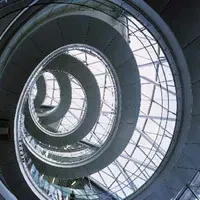
Image: London's new City Hall, an example of environmentally responsible architecture.A detailed action plan to maximise energy efficiency and renewable energy in New Zealand has been launched by government for public discussion.
In a letter to Jeanette Fitzsimons (Government Spokesperson for Energy Efficiency and Conservation), urban design professor Dushko Bogunovich says that a mix of environmentally responsible art, design, architecture and engineering is needed to really capture the minds and hearts of the general public.
Image: London's new City Hall, an example of environmentally responsible architecture."Let's be realistic - people don't read government strategies," says Bogunovich. "They don't even listen much when the news of such documents appear on TV for half a minute. Thus capturing their minds will be quite a mission, I am afraid. Instead, I suggest we try the heart channel."
"Generally, I support its apparent comprehensiveness and balance of vision and pragmatism. I am, however, disappointed with the role given to education and demonstration. In my opinion, the Draft does not place enough attention to 'influencing and modifying NZ-ers' energy purchase and use behaviours' (as defined by Question No 8 in the Draft, on p 57).
"After all, your own endorsement of the Draft clearly states: 'This is a strategy for all New Zealanders including government, business and every individual. To be successful the strategy needs support from the whole community.'
"I don't see that 'every individual' and the 'whole community' will support this huge and urgent transition that our society needs to undertake over the next decade or so - unless we capture the minds and hearts of the people. But will this happen? I doubt it.
"Let's be realistic - people don't read government strategies. They don't even listen much when the news of such documents appear on TV for half a minute. Thus capturing their minds will be quite a mission, I am afraid. Instead, I suggest we try the heart channel.
"Seeking broad popular support for major changes in lifestyle and related design, technology, investment, purchase - and ultimately taste - decisions, requires a promotional effort of extraordinary scale and extraordinary visibility. Physical projects which demonstrate new types of technologies, buildings, procedures and lifestyles on particularly prominent sites in most densely populated and public places in NZ urban areas need to be an important cornerstone of the NZEECS.
"Such projects - whether you define them as public art, or (landscape) architecture, or infrastructure, or all of the above - will have to be beautiful, unusual and exciting. You don't capture people's attention and incite their positive emotional response by ugly and/or ordinary structures. In other words, to promote important, and presently for most of us rather vague, aspects of the new technologies and the associated low-energy or low-carbon lifestyles, we will need a particularly attractive mix of art, design, architecture and engineering.
"I have for years advocated that the best site for such design experimentation - which goes beyond aesthetic explorations and technological innovation and addresses strategically important economic investment decisions for NZ - is the segment of Auckland waterfront known variously as the Western Reclamation, Tank Farm, Wynyard Wharf/Point.
"Not only do I still hold this view but I also think that - after the 'change of political climate' on the global and the national scene we have seen in 2006 - it should now be utterly obvious that this is the only thing what should happen on this exquisite piece of urban land.
"I am referring to the peninsular part of this site jutting into the harbour - Wynyard Point. This unique site has been variously misinterpreted in the recent past by planners, architects and politicians as a piece of 'real estate' ripe for redevelopment. It surely is ripe for redevelopment, but not in the form of conventional office-retail-residentilal mix.
Neither should Wynyard Point be a traditional green urban park as has been more recently suggested. This would be an expensive, hard-to-maintain, wind-swept, struggling landscape with no surrounding population to serve.
"Instead, Wynyard Point should be developed as a new urban design form - and 'eco-tech park' - a large, publicly accessible open space which, besides the usual active and passive form of recreation (including some cultural and commercial activities), would accommodates an array of cutting technologies which: generate and store energy from local, clean sources; treat storm- (and perhaps waste-) water; generate clean water, and manage some forms of urban waste.
"In other words, Wynyard Point would remain a large piece of infrastructure (which is what it has been from its beginnings 70 years ago). But there would be a significant difference. This would be turning the concept of infra-structure on its had: something that was 'infra' (under) would now be 'supra' (above). Thus the flows of water, energy and material that support every city - and of which we rarely think - would become more visible, more environmentally acceptable and, hopefully, even a beautiful addition to a familiar waterfront landscape.
"It is such demonstrations of a post-fossil fuel economy and carbon-neutral urbanism that every NZ city needs.
"On the world stage, such notable examples of new, environmentally responsible architecture/infrastructure/landscape/public art have been:
- the new London City Hall, on South Bank of the Thames;
- Pergola Fotovoltaica on Barcelona's new, Forum waterfront;
- Sanyo's Solar Ark, near Nagoya, in Japan;
- Fresh Kills landfill-to-park near New York City;
- Solar 'mallee trees' at Adelaide's Festival Plaza
"We have similar opportunities for such demonstrations in all our cities.
"I therefore call on this Strategy to take better account of these psychological aspects of the great eco-transformation that awaits our society and economy."