Digital Storyteller on National Radio
Written by
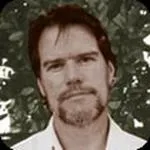
Linda Clark interviewed Joe Lambert about Digital Storytelling on National Radio from "Nine to Noon" (April 9th). Joe Lambert was in New Zealand running some workshops at e-vision in Wellington.
Presenter (Linda Clark): My next guest calls himself a digital storyteller... Linda Clark interviewed Joe Lambert about Digital Storytelling on National Radio from "Nine to Noon" (April 9th). Joe Lambert was in New Zealand running some workshops at e-vision in Wellington.
Presenter (Linda Clark): My next guest calls himself a digital storyteller...He's founder of the Centre for Digital Storytelling in San Francisco and he's here at the moment running a couple of workshops, encouraging people to use new technology to tell stories of their own. Let me tell you, this isn't the same as reality TV. Joe Lambert joins me now, good morning to you.
Joe Lambert (Founder, Digital Storytelling, San Francisco): Oh, good morning to you, Linda. I'm happy to be here.
Presenter: Can anyone tell a story?
Lambert: Yes.
Presenter: Really?
Lambert: It's a fundamental human quality. Most of us tell stories at dinnertime about experiences we had that day. Some people tell their travel stories or how they got maybe a little bit too drunk one night or something like that. The quality of storytelling I think is what's changed.
Presenter: Except you're in a country now where we have a culture of not blowing our own trumpet, of not necessarily talking about ourselves that comfortably, so can even new Zealanders tell a story?
Lambert: Well, the odd thing is that we often tell stories about other people that tell more about ourselves than they are really telling about other people and I think New Zealanders, like any people, have rich traditions of sharing experience and some of those traditions I think are rooted in the land, meaning a place like New Zealand has stories, many about the special-ness of this place but I think what's happened is that people have lost quality of storytelling because we don't necessarily sit around the hearth any more in our families or in our communities, entertaining each other with storytelling. We have so many..
Presenter: Well, in fact quite the reverse. We sit passively and watch in New Zealand, predominantly Americans and British tell their stories on television every night?
Lambert: Precisely. So we use a metaphor of the re-storification process of our cultures. Just as clear-cutting has deforested some of our beautiful places in the world and we're now in process of trying to figure out an agricultural method of bringing back those beautiful trees, digital storytelling, along with a lot of other storytelling processes, are about bringing that sense of story back into our communities and investing our sense of being, of being alive, with a kind of necessity that I think we're increasingly understanding of story exchange.
Presenter: So firstly, do you need to convince people that they have a story to tell?
Lambert: Yes. There is an enormous editor or series of editors that start with our grade school teachers and our parents and people along the way that says you're not a storyteller, somebody else does that well. You know, maybe a professional on the radio is a good storyteller but you're not, you're not the writer, you're not the "a" student in that particular process and that silences us and we need to be encouraged in countless ways to say no, my voice actually matters and it matters not only to me but to an enormous number of people. And of course we all realise that when somebody dear to us passes away and we say do we have a recording of their voice? Do we have a piece of them that's part of their being? And if we don't we feel greatly saddened by that and you know, we all should believe that there's somebody that loves us greatly in this world, in some place, who would love to hear our voice and hear the stories that we have to tell about our life experience.
Presenter: It's quite an interesting thought actually, because often if you know of someone who's been given a terminal prognosis, that's when we get the video out, that's when we get the tape recorder out and we start recording their story, their life, their voice, the way they moved, but it takes that kind of crisis event to think about it.
Lambert: Absolutely and to be frank, sometimes we think to do this after they're gone and it's the memorialising impulse that leads us into stories about them. I mean I come from theatre and in most cultures worldwide, the anthropology of theatre suggests the theatrical moment is the funeral and when we speak for the dead and bring voice to the voiceless, we're doing something fundamental that human beings need to do. So sadly you're right, it's often a kind of recognition way too late in the process but I happen to believe that the baby boom generation has spent this enormous amount of time in introspective activities and I think that's worldwide, I don't think that's.. you know, listening to your radio yesterday, that people talking about various issues, there's a tremendous amount of processing that's going on and all that needs to be said is that you know, those things need to be captured in your own way. It's not just talk radio, it's finding a method to write. It could be a journal, it could be a photographic archive. Digital storytelling is about the integration of all of that into a language we all know how to read which is called film, and it's teaching as a general literacy, speaking in the language of film so that these stories are captured and it's as rich a tapestry of sound and language and music and image as we see all the time but it can affect us in really profound ways as a result.
Presenter: So do you need to have expensive equipment to do this?
Lambert: Well, it's increasingly less expensive if you think about the kinds of machines that are coming out at the low end of the computer market being able to do most of these processes in that there are inexpensive softwares that will allow you to do this. And you know, we're heading toward a period where it's not much more expensive than your TV and your VCR to do this kind of work. We're imagining that memory box is a kind of universal appliance of the middle class in the not distant future. As it is, there are millions of people that are experimenting with digital video and I'm sure in New Zealand there are hundreds of thousands who tried to figure out how to make an image and some sound and some music on their computer and even if it's in power point they've tried to do that and that's the essence of digital storytelling, It's not ..[indistinct].
Presenter: Because the potential of this technology opens a whole lot of doors and possibilities?
Lambert: Well, that's our feeling. I mean the process itself of writing and thinking about your story is something that creative writing people have known and have used in therapeutic processes. people have worked with photo documentation as a kind of life process. I think bringing it all together in the computing platform just presents a tremendous range of literacies to be experimented with in the classroom, in community settings, and frankly in business settings where these are skills of communication and if you're an effective storyteller you're an effective leader. Anybody knows that.
Presenter: When you first got into this there was a sort of.. from what i've read about your centre, there was a quasi political idea of where this might go, where this energy might lead you, is that right?
Lambert: Well I mean, in a sense the ironic twist of our work is that we're using media to defeat broadcasts, that I consider broadcasts in a funny way a historical mistake. You know, it's not that it will go away but that this kind of intermediation where a narrow number of people decide which stories we get to hear is not actually that healthy. It's very useful for things like covering wars that are taking place in the world and maybe live sporting events, but beyond that it's like this intermediated culture which the internet ironically brings us back to a kind of circle of circles, of people communicating between each other in stories is much more effective. Now, is that political? Yeah, I think that's political in the sense that there's a kind of lost community psyche that as I suggested at the beginning, broadcasts or allowing the British and American storytellers to tell us our meta-myths, our meta-narrative, that's a mistake. New Zealanders deserve better, they deserve their own stories told the way they would tell them.
Presenter: Well, the internet ultimately.. using the internet and using digital technology is ultimately more democratic?
Lambert: Ultimately more democratic, yeah. It doesn't mean it's not filled with the possibility of abuse but essentially it's a more democratic form, yes.
Presenter: In the workshops you run, are you encouraging.. I mean when we talk about having a story, are you encouraging people to tell their own stories?
Lambert: Yes. I mean even.. We're doing a series of workshops here with e-vision supported by creative New Zealand and I'm here on a Fullbright. The stories that we are doing might have started from impulses that they're about a kind of community project or a larger business project but we try to say come back through the personal story that relates the values that you want to communicate in an effective way because we think.. it's an old saying that the story you know best is your own and if you write certain stories in certain ways, even if it's about again other people you know and how you experience them, you're going to communicate a system of values or issues that can be useful to you in countless ways, like a community organisation just encouraging people to be active or encouraging people to share their stories as a way to make a history of the community or connections between the community around social issues.
Presenter: The idea here though, is that other people will see it, yes?
Lambert: Definitely, though I have to say we've worked in contexts like domestic violence survival and incest survival where the people seeing it may be a very limited number of people because the feeling is, this is work that's about a kind of purgation of a story.
Presenter: So it's a kind of a therapy, telling the story?
Lambert: It's a kind of therapy and that those stories might be intimately shared only by those people initiated who have a right to see it, either other survivors or people that feel that that's important.
Presenter: Do you tell your own stories?
Lambert: Yeah, I do. I work on my own pieces, though ironically just as we said a minute ago, the last three pieces I've done were for my mother, my brother and my partner in starting this business so.. and they were all after they were dead so the use of it as my own sense of therapeutic work has been profound for me because..
Presenter: So in those cases what did you do? You gathered still photographs and..
Lambert: ..[indistinct] and processes that normally go.. think about what story you're going to have to tell, begin to assemble the images and then write in to the images a notion of a short narrative. And we're talking about three to five minute kind of pieces and that then you know, maybe add a little bit of video and then assemble it with a recorded voice narrating it through. And for me I mean other people see these movies I made but what I get to do is revisit them every once in a while to kind of go into the emotions and it's a wonderfully effective process. Just that would be value enough frankly, if no-one ever saw those movies again except me.
Presenter: Do you think it keeps those people alive in ways that looking at you know, an old family photo album might not do?
Lambert: I turn it around a little bit in that everyone is allied to us only through our perception and yes, it keeps the sense that we have of why the values that they gave us, the things that they gave us are still vital to us. Some of it is actually hearing their voice and in the case of my mother I was able to you know, use excerpts of video I had shot of her to integrate inside of it and ironically to use an excerpt of her best friend who happened to die two weeks after she did, in the space between when she died and when her memorial was as part of the voices so it was as if the dead were in fact speaking at my mother's memorial as well.
Presenter: So in that case.. when you're telling a story like that, that's quite an inspiring idea. A lot of people will find that a comforting idea, but also something they could do without having the training or the expertise necessarily?
Lambert: like apple's eye movie and tools that you can find on the PC side that are very inexpensive and relatively easy to use, to experiment with. But it's like all creative projects, if you don't do it in a communal setting you often don't do it, and so a lot of our work is about the same thing as taking a basket-weaving shop or you know, a painting class. This is really you do it for that feedback, for that sense of being together, for the story circle that's formed in the process, and that's why the workshopping forum of this has been the emphasis, as opposed to you know, a "how to" guide and our own software, is that we really feel that it's quite important to do this together with other people.
Presenter: Very nice to have you on the programme. I've been talking to digital storyteller, Joe Lambert, who's in Wellington running a couple of workshops at the moment at e-vision.
These excerpts are from a National Radio programme supplied by Replay Radio, RNZ Ltd. If you would like to order a copy of this programme, please call 0800 REPLAY (737 529).