Departing Silo artistic director
Written by
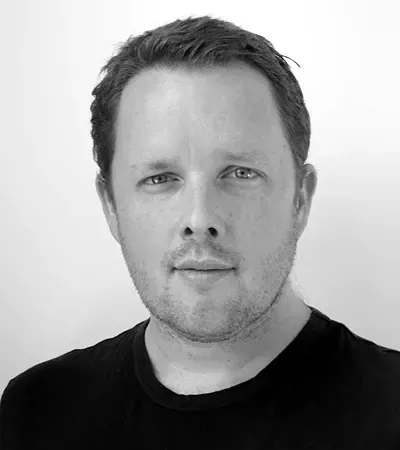
After 13 years, Shane Bosher plans to step down as artistic director for Silo in April 2014. But what's next?
Bosher answered this Silo QnA shortly after the announcement of his departure.
What made you decide to leave now?
It’s time. I’ve spent 13 years with Silo and want to explore different opportunities for myself as an artist, both here and abroad. Running a company is an extraordinary feat of endurance – you really do have to give over a huge part of yourself and your life. I want to create the time and space to invest in some big ideas which don’t necessarily relate to the aspirations of the Silo identity. I want to reinvest in my potential to see how I can transform.
I was also 23 when I started waving the Silo flag. The company has always celebrated its next generation status and I feel that I’m getting a bit long in the tooth to champion these ideas. There exists a wonderful opportunity for someone new to explore the parameters of the company, to celebrate its point of difference in the sector and potentially redefine its architecture.
What have been some of most treasured milestones over the past 13 years?
The evolution of programming. Dead babies have been eaten. We’ve done alcoholism, Welsh lyricism, fashion, the projects, Spanish classicism, Auckland narcissism, Ibsen revisionism, gay activism, Manhattan satisfaction and contemporary dysfunction. There have been white sofas. And lots of cocktails have been drunk by very witty people talking about their sex lives.
The increased investment and recognition from our sustaining partners. When I started, Silo had a grant from Creative NZ for a one-off project for about $30,000. Today we receive annual support from them to the value of $420,000. It allowed us to be able to shift remuneration from profit share to minimal wages to professional fees. People were paid appallingly at the beginning and sometimes not at all.
The Women, The Boys in the Band and The Goat were early successes that I’m fiercely proud of. They were huge statements of definition as a company.
The Ensemble Project has a specific legacy that I’m very proud of. Morgana O’Reilly, Sam Snedden, Sophie Henderson, Michelle Blundell, Natalie Medlock, Dan Musgrove amongst others have shifted and changed their generation since their exposure in this project. There is a culture of theatre-making now that didn’t exist before and I find that really exciting. As a bonus, Sam and Sophie are now doing wonders alongside the indefatigable Charlie McDermott at The Basement to stimulate the next generation of talent to make their mark. Standing beside these people, and promising pracitioners like Sophie Roberts and Arthur Meek, I feel like the future is in very safe hands.
Do you feel that you’ve achieved some of the long term goals you earmarked from 13 years ago when Silo first started?
Absolutely; there is a new, contemporary audience who have discovered that the theatre is for them. That there is a place that articulates their contemporary experience, that riffs on their own personal challenges. We provide a platform for the exchange of human, social and sexual politics. I’m known amongst my colleagues for my potty mouth and characteristic expressions: one of these is “Silo is not about a cup of tea”, which I developed from a random comment Michael Hurst once made in an audition. But it couldn’t be truer. When it is, we’ve well and truly fucked it up.
So what was it like when you first took up the reigns back in 2000?
When I arrived Sharyn [Duncan] had long since gone and the venue was struggling to keep its head above water, despite the extraordinary efforts of a very committed board of trustees. As the only employee initially, I became venue manager, bar manager, accountant, cleaner, publicist, marketing manager and general everyman and inherited a programme which was unconfirmed, very ad hoc and sometimes of debatable quality. Audiences averaged between 10-30 people a night and there were many stories of people selling their cars to pay for a show that had gone kerplunk.
I recognised an opportunity to focus the space, to concentrate on developing contemporary performance and to cultivate a new audience. I wanted to tell stories that were relevant to me, to my generation and to navigate ideas that held sway in my head. I wanted to operate in a space where people could push through the ceiling of their talent and find something new.
My first step was to provide an Auckland home for Mitch Tawhi Thomas’ Have Car Will Travel, a great piece of NZ storytelling, which was given a knockout production by Rachel House. But it wasn’t until the watershed production of Unidentified Human Remains & the True Nature of Love that Silo’s identity really began to take shape. The production’s visceral, challenging edge built the foundations for what would become the Silo house style. That early production featured Mia Blake, Edwin Wright, Toni Potter and David Van Horn – four extraordinary actors who I feel very proud to have worked alongside for so long. It’s very fulfilling to have had a part in who they are now.
What’s been the biggest challenge while acting as Artistic Director?
The greatest challenge has been financial. Stephen Sondheim says “art isn’t easy.” Too true, but resourcing it is even harder. There have been a number of projects which have not even been able to pass Go because of a lack of investment. This is the most wearisome aspect of a job I care deeply for. It’s hard not to feel it when you have to say goodbye to great possibilities because you can’t pay for them.
Whilst we have struggled to develop a large portfolio of NZ storytelling, I am fiercely proud of the investments we have made in this space: either in new ideas being cultivated or extinct work being revived. Back Story in 2009 felt like a pinnacle of new work development for the company. Oliver Driver’s production offered me one of the most transformative and spiriting moments in a theatre I think I will ever experience. I’ll never forget leaving the dress rehearsal, tears bursting out of my face, sitting in between true joy and deeply felt recognition. I saw this wonderful artist and his capacity for storytelling in a completely new light. It reminded me of the extraordinary courage it takes to speak authentically to an audience.
In contrast then, what about biggest achievements?
As a director, my proudest moments sit alongside productions of When the Rain Stops Falling, Holding the Man and The Brothers Size. The artists involved and the works themselves pushed me into new and unexpected territory.
Introducing new audiences to the canon of Toa Fraser’s work has also been a highlight of my time with the company. It’s also had a deeper meaning for me: I’ve been able to connect the dots back to the vision of Sharyn Duncan, without whom Silo would never have existed as a proposition at all.
We also focussed our work with an ensemble ethos. We began to articulate a mode of working which was backed by a strong community of practice and through repeating artistic relationships, reinforced a benchmark of excellence. Over time, we built a collective history of performance together. One of my biggest disappointments is not being able to realise a full-time ensemble of resident artists. Over time, the freelance nature of the sector has killed off so much of the potential of the sector and I feel like we’re held back from realising the full capacity of artists as a result. Again, it all leads straight back to that conundrum of financial resource.
There is a very definite legacy of craft sharing and practitioner development which has been fed through from extraordinary human beings like Raymond Hawthorne and Paul Minifie. I have strived to keep that alive, as Toa Fraser says “pushing the culture forward”.
So what next after you step down?
I very much want to work with some new ideas and new artists. There are lots of works which have not been appropriate for the Silo identity which I’m keen to explore. Some of them are tiny little ideas and others large and expansive and certainly more suited to a festival context. I’m looking to cultivate two new works: one which has been sitting in the back of my brain for some time and another which is a brand spanking new idea.
My fascination with gender, sexuality and emotional transformation will of course always be present in my work – I don’t think that will ever go away.
I am of course committed to continuing the artistic relationships with the people who I’ve worked alongside over the years. I don’t know that I could cope with not having John Verryt telling me that “that bit’s boring” at least once a year.
I believe in creating work that truly connects. If the head and the heart aren’t triggered, I’ve not done my job. I want to continue to make work that is transformational, that is deeply felt and of significant meaning to the artists and the audiences they serve.
What advice would you give the next person who becomes the artistic director of Silo?
Don’t feel you have to emulate what I’ve done: great companies evolve around the vision and personality of their leader. Maintain a company which is artistically led. Celebrate the possibility of your big idea.
My hope is that the next Artistic Director will maintain the deeply meaningful relationships that already exist with the wider Silo family of artists, but switch the conversation up a notch.
Silo is a space for new ideas and I would hope that the company celebrates the thrill of the new and all this could mean. Whoever that person may be, they’ll need to have courage, tenacity, playfulness and the capacity to be changed themselves, by their work and the work of others.