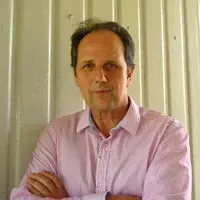
Cultural Storytellers: Mike Hudson
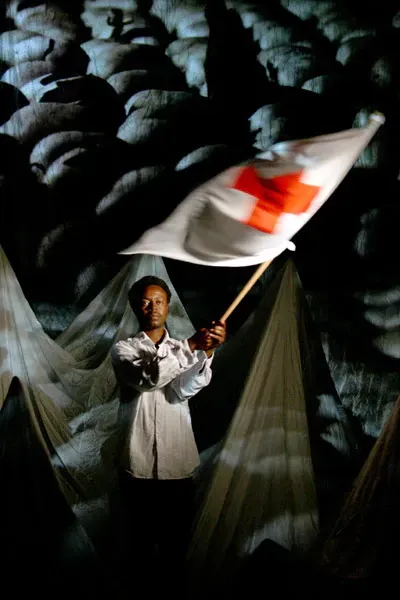
A Thousand Hills opens this week in Auckland. A hotly anticipated new NZ work, it’s had a long and careful gestation in the experienced hands of playwright Mike Hudson and director Margaret-Mary Hollins.
Renee Liang asked Mike about the challenges of retelling the real-life story of Rwandan genocide survivor Francois Byamana and aid worker Bob Askew.
A Thousand Hills opens this week in Auckland. A hotly anticipated new NZ work, it’s had a long and careful gestation in the experienced hands of playwright Mike Hudson and director Margaret-Mary Hollins.
Renee Liang asked Mike about the challenges of retelling the real-life story of Rwandan genocide survivor Francois Byamana and aid worker Bob Askew.
It’s “a story fuelled by impossible circumstances, loss of identity, terrifying consequences, cultural collisions and ultimately two people who find that the only thing left to trust is each other.”
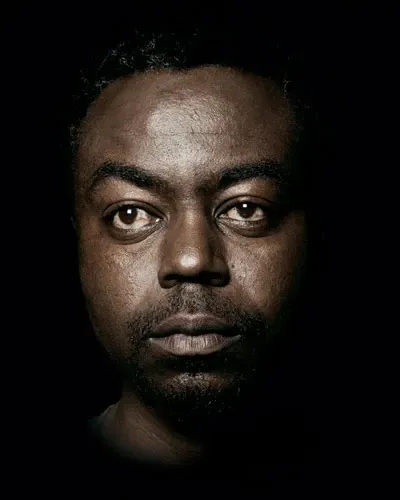
Francois has worked closely with Mike and Margaret-Mary, as storyteller and witness while Mike shaped the script, and then as actor – main character ‘Philippe’ bears distinct likeness to Francois himself. The script is littered with authentic details, everything from the mundane (water sanitation systems) to the terrifying and life-threatening. It also features African music and storytelling styles. I can’t wait!
* * *
How did you first come across Francois and his story?
I first met Francois through Mixit- which is run by Wendy Preston. Margaret-Mary and I just got kind of talking and he introduced us to his whole world of refugee camps, the genocide of Rwanda and the strange experience of being an African in NZ.
What 'hooked' you into the story initially?
It was when we met Bob Askew and with Francois they started to share some of their experiences. It was amazing, dangerous, inspiring and above all driven by dignity and respect. Great elements and very unique to my own personal experience.
What elements do you instinctively look for, as a writer?
I guess I'm attracted to worlds that are verging on chaos and where people are trying to make the 'right decision' in impossible situations. There was an element of this in my first play Beautiful Losers which touched on the world of Jack Kerouac and Neal Cassady. Their world was very chaotic, but some great things came out of it. In the case of A Thousand Hills, I was just fascinated by this disorder and with the post genocide situation of Rwanda and the surrounding countries, there was a lot going on. When you combine this with a strange balance between good and bad, right and wrong, I find that there is a huge space in which to develop characters and their decision making. There is also the focus on the human condition and Francois and Bob have certainly introduced me to a very human/extraordinary world.
How has the play evolved through its development process?
The play has gone through about 14-15 drafts and has been in development for about 4 years. It started as a huge epic story of all things of this world, while now it has been tightened into a very specific timeline and geographical setting. It has also evolved into bringing in characters (aid workers) into the story, people on the periphery just there to do their job. These characters created a whole new area to research and develop- the actual working of a Refugee Camp in the middle of Africa. Saying that, it is still being developed as my relationship with my director (Margaret-Mary Hollins) allows for her and the actors to breathe their own life into the words and some passages are still be reshaped and developed. So in a sense it will be fully developed when it finally hits the stage.
How did you and Francois develop a relationship which enabled his story to be told in a dramatic, and 'fictionalised' way? Were there any difficulties?
I have always been in consultation with Francois from day one and as the play has been in development for so long, Francois has seen a lot of drafts and re-writes and I guess we have developed a trust and respect for each other. There has never been a time when he has said 'this is wrong' or if there were queries we would work them through. The other thing is that there are elements that have been fictionalised, but they have all been drawn on real life events and in the case of this time and place in Africa, extraordinary things happened.
As a writer, how did you approach the problem of creating a world which you have no personal connection to?
When you are working with Francois and working with people who were there such as Bob Askew- you do have a personal connection. Only today I was e-mailing Bob about specific water and plumbing specifications to do with water hygiene to put in the play. It also helps to have Francois there as a constant consultant so creating this world is only based on what he has told me and what I have developed further in research.
How much of a role did the actors and director play in the development of the work?
The director is vital and so of course are the actors, but in particular Margaret-Mary knows how I write and how to develop it further. She gets as much credit to the writing as I do, as she knows how to shape it, communicate it and take it forward to the actors. The play may read as an hour on the page - but when it is on stage it may run for an hour and a half.
You say this play is about the idea of ‘being saved’. What do you mean?
We hear this expression all the time 'oh he was saved' but it's a very strange concept, saved from what? The assumption is that everything will be better, but when a refugee or someone has been 'saved' they are only at the start of a whole new journey, they might find themselves in some great country like NZ, but the cultural shock, the trauma of past events etc...may be quite overwhelming and they may wonder, has it been worth it all. I also wonder about the aid workers themselves – what are they seeking in these places, are they looking to be 'saved' , to do some great thing for mankind or are they looking for some redemption. All these elements fascinated me. I still don't know the answer.
How easy was it to write comedic moments into a script which deals with such dark events?
You've got to laugh or you will cry. No I guess it's an element of gallows humour that goes with the territory and at the end of the day, I'm not trying to preach, this play is a celebration of life and all that is great about life.
And of course laughing and humour is for the living.
What are you working on next?
Ask me that in about a month.
- A Thousand Hills
Herald Theatre, Aotea Centre, THE EDGE
20th – 30th October 2011
No performance Monday 24th
Tickets: $28 - $35 (plus service fee). Bookings at The Edge - 0800 BUY TICKETS or www.buytickets.co.nz
Performed by Francois Byamana, Andrew Grainger, Bruce Philips, Michele Hine, Jo Falou, Karima Mudut and Wanjiku Kiarie Sanderson
Writer: Mike Hudson. Producer: Andrew Malmo. Direction: Margaret-Mary Hollins. Set Design: John Verryt. AV Design: Theo Gibson. Lighting Design: Vera Thomas. Musical Direction: John Gibson and Percussion: Richard Yaw Boateng