Cultural perspectives on landscape
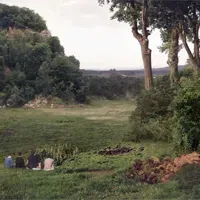
St Paul St is pleased to present two exhibitions as part of the Auckland Festival of Photography 2011. The exhibitions – German based Beate Gütschow in Gallery One, and The First City in History by New Zealander Fiona Amundsen in Gallery Two– both present works that question how images are made, but in quite different ways.
St Paul St is pleased to present two exhibitions as part of the Auckland Festival of Photography 2011. The exhibitions – German based Beate Gütschow in Gallery One, and The First City in History by New Zealander Fiona Amundsen in Gallery Two– both present works that question how images are made, but in quite different ways. They also offer two interesting cultural perspectives on landscape from different ends of the world.
The exhibitions offer ways to engage with how social and cultural surroundings are created through land use, architecture and urban planning, and provoke consideration of how the natural and urban landscape is represented and received, particularly in photography.
The First City in History refers to the Japanese city of Hiroshima, which was the first city to be subjected to nuclear warfare when it was bombed by during World War II. It is Fiona Amundsen’s second project in an ongoing series of works that address both site and the intangible cultural mechanisms – such as economics, politics and history – through which such sites are created. Despite her focus towards the cultural makeup of spaces Amundsen chooses to exclude people.
This lack of figures—common in Amundsen’s work—resists narrative within the images, further emphasising the space itself. The exhibition of her work is particularly interesting considering the changes in urban landscape Japan is experiencing through recent natural disasters.
Beate Gütschow’s work with photography addresses the construction of imagery, both within the medium itself through the use of digital and analogue technologies, and the cultural conditions that influence the creation of imagery.
Gütschow’s compositions reference 17th Century landscape painting, and architectural and documentary photography of the 1950s and ’60s. She draws from her archive of mostly analogue images of buildings, trees, landscapes and people to assemble digital composites. At first glance the final works appear convincing as real scenes, but on closer inspection the spaces and scenes are not quite genuine, causing the constructed nature of imagery to become apparent.
Both artists’ practices are images about images. They assert that our perception of the world is unavoidably shaped by existing images leading us to address questions such as: What is a picture? Can a picture really represent its subject, the thing it shows? What is the difference between representation and reality?
Public programmes:
Monday 15 June 5.30pm, Lecture theatre WE240, AUT : Beate Gutschow artist’s talk.
Thursday 16 June 5.30pm, ST PAUL St Gallery Two : Panel discussion on photographic practice dealing with the cultural construction of imagery, place and space with reference to the works of Beate Gütschow and Fiona Amundsen.
Panelists: Cassandra Barnett, Tim Corballis, Aaron Kreisler (Chair), Natalie Robertson.