Copyright Judgement Day
Written by
By Helen Baxter
You are reading this on Judgement Day, two days ago Skynet became aware. According to the sci-fi series The Sarah Connor Chronicles, on 21 April 2011 the machines declare war on mankind - which may be why the Government rushed through amendments to the copyright law last week, to save us from the Terminators.
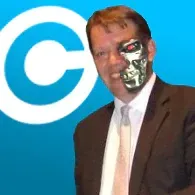
Without the discussion on Twitter I would never have known the Copyright (Infringing File Sharing) Amendment Act was being passed in the house, and I tuned into Parliament TV for what would have been the best comedy on the box if it wasn’t so serious. Hearing the Internet described as being like Skynet by MP Jonathan Young was amusing, but the level of technical ignorance displayed by Members of Parliament was deeply worrying.
You may have thought that the copyright issue had been dealt with, after the highly publicised #blackout campaign in 2009. So why are people blacking out their avatars again in protest, and how does it affect New Zealand’s creative community?
The main issue is the speed that the bill was passed without warning, under ‘urgency’ as part of the Christchurch rebuilding measures. To bloggers like Russell Brown at Public Address the timing seemed rather cynical, and many were left wondering what copyright had to do with an earthquake.
The new amendments to the Copyright Act are designed to protect the rights of artists facing a rising tide of Internet downloading from Peer to Peer (P2P) and Torrent websites. Internet Service Providers (ISPs) will be sent infringement notices by copyrights holders, if their customers’ computer IP addresses are shown to have downloaded copyrighted material.
ISPs are required to pass the infringement notices on to their customers with a warning, and after three notices the complaint can be escalated to the Copyright Tribunal, who can issue fines of up to $15,000. A provision has also been left in the bill for a future government to add the ability to order disconnection of a user’s Internet account for up to six months.
Techliberty has published an excellent quick guide to the new copyright bill and outlines the three main issues:
1. Whoever is responsible for the Internet account becomes responsible for everyone else who uses it. Flatmates are responsible for the people they live with, parents for their children (and their friends), libraries and cafes will be responsible for people who use their free wi-fi services.
2. The Copyright Tribunal has been told to take the view that the accusations of rights holders are correct unless they can be proven otherwise. This reverses the traditional burden of proof in law of being innocent until proven guilty, and there are many cases internationally of rights holders getting their accusations wrong.
For instance Google’s 2009 submission on S92A states that 37% of infringement notices received were unable to be proved as valid claims, and 57% were from business targeting rival companies.
3. Internet disconnection is still potentially an option in a couple of years, if the current measures do not reduce levels of file-sharing. It is unlikely that file sharing levels will drop in the future so the threat of Internet termination is still potentially on the table. Even after the advice from a select committee that this was a step too far, and potentially a breach of Human Rights.
Chris Esther has created some useful flowcharts that help explain some of the processes included in the new Copyright (Infringing File Sharing) Bill. They are not meant to be a comprehensive guide, but help show the steps for Handling Alledged Infringement and the Copyright Tribunal process.
Overall the new law is still better than the original s92A and there have been positive responses from the production and publishing industries. Anthony Healey, Director of NZ Operations at APRA supports the new bill and said in a press release this week that the current attitude towards file sharing must change, the law is needed to encourage the development of more legal digital services:
“We acknowledge all sides of this debate but there are basic principles that should not be ignored. The future is a digital one and whilst technology might change the way content is delivered it shouldn’t be used as an excuse to ignore the rights of those who create the content in the first place”.
The Screen Production and Development Association of New Zealand (SPADA) has highlighted the main reason that people turn to illegal downloads and the solutions required:
“As well as an education process around illegally downloading content, the screen industry is moving towards business models that enable people to access digital content readily and legally for an appropriate price. Hence the ability to access high speed broadband is imperative for this to happen in New Zealand,” said SPADA Chief Executive Penelope Borland.
“This legislation also gives some assurance to international distributors that IP rights in New Zealand are recognised; and therefore should give confidence that the introduction of business models that exist elsewhere for accessing content digitally are now viable in New Zealand.”
The NZ Society of Authors has raised concerns that the bill does not cover mobile devices, is tailored more towards the film and music industries, and the cost of raising infringement complaints may be out of reach for New Zealand authors.
“Rightsholders need to supply evidence of infringement to the ISPs before the process can begin. This is done with the provision of evidence packs which are readily available. However without an international agreement similar to that set up by the music industry, the provision of these packs is cost prohibitive rendering the Bill useless to our members,“ said Maggie Tarver, CEO of The New Zealand Society of Authors.
The Creative Freedom Foundation says that while this law is a massive improvement on its predecessor s92A there are still a number of issues, mainly lack of guidance around fines, the presumption of guilt and the potential for activating Internet termination in the future as a penalty:
“With the majority of Internet connections in New Zealand being shared this penalty will inevitably punish many people for the actions of one, removing their ability to work, communicate, bank, shop, learn. Internet termination should NEVER be an option.”
I personally would like to propose that any parliamentarian debating Internet issues that affect the whole country take a simple technical literacy test before they are allowed to vote on these matters. It’s important to remember that not all file-sharing is illegal, many works are Creative Commons (CC) licensed or in the public domain, and not every free download leads to a lost sale.
More widespread use of Creative Commons (CC) to publish artworks digitally would help as CC licensing allows an artist to state clearly and explicitly how they are happy for their work to be used and re-used. Creative Commons should be an important part of any artists publishing toolkit, and help us move forward into a collaborative digital future.
Geek note:
According to the Terminator Wiki, April 21st 2011 is the new Judgement Day, after a temporal interference caused by Sarah Connor and the destruction of Cyberdyne Systems, the company which created the Terminators.
Image Attribution:
Image from a mashup by Chelfyn Baxter (BY-SA). Source images from WikiMedia Commons. Terminator's head by Steve Lacey, under a Creative Commons Attribution 2.0 Generic licence . Jonathan Young under a Creative Commons Attribution-Share Alike 3.0 Unported licence.