Chance to see a filmmaking robot in action!
Written by
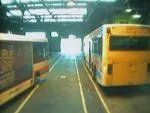
A filmmaking robot, created by installation artist Douglas Bagnall, is featuring in Telecom Prospect 2004 from 29 July at the New Zealand Film Archive in Wellington. Artist talk at 12.30pm on Friday 30th in the Mediagallery.
New Zealand Film Archive
Mediagallery
84 Taranaki Street
Wellington
Our knowledge of robots comes largely from the realm of science fiction. Robots give a friendly face to highly scientific technological progress, anthropomorphised machines that open up an indecipherable world to us.
Image: The camera records as the bus travels around the suburbs of Wellington.A filmmaking robot, created by installation artist Douglas Bagnall, is featuring in Telecom Prospect 2004 from 29 July at the New Zealand Film Archive in Wellington. Artist talk at 12.30pm on Friday 30th in the Mediagallery.
New Zealand Film Archive
Mediagallery
84 Taranaki Street
Wellington
Our knowledge of robots comes largely from the realm of science fiction. Robots give a friendly face to highly scientific technological progress, anthropomorphised machines that open up an indecipherable world to us.
Image: The camera records as the bus travels around the suburbs of Wellington.In movies like Star Wars, robots are presented as friendly mascots - cute and clever, if just a little bit naive. Sometimes, such as in the 1973 movie Demon Seed (where a robot transforms from a friendly assistant into a tyrant), robots represent the possible threat of new technology, where scientific innovations make humans redundant.
Bagnall, who created his filmmaking robot with the support of a Screen Innovation Production Fund grant, explores this territory in a highly complex computer project.
The Screen Innovation Production Fund is a partnership between Creative New Zealand and the New Zealand Film Commission and supports the moving-image arts by funding innovative, often low-budget productions.
It's a robot that can edit short films. In fact, what Bagnall has really made is a computer software programme, structured to select from a range of video footage, with an in-built ability to make aesthetic
decisions.
Bagnall has set the programme to "get bored" and endlessly shift its decision-making. And so the robot may choose footage based purely on the colour blue, or may focus on people and movement.
Of course, being a computer programme, Bagnall's robot doesn't have legs and can't move around the city gathering raw material. Instead, Bagnall has enlisted the aid of local transport company, Stagecoach,
who host small cameras on the front of their buses. The camera records as the bus travels around the suburbs of Wellington. When the bus returns into the city, the footage is automatically uploaded to the
robot through the aid of local company City Link's wireless broadband (allowing computers to be online in the inner-city without a power connection).
Inside the gallery space there are two projections. One is what the artist has described as the robot's "dreamings" - the robot's thought processes as it sifts through material. The other screens the robot's
finished films.
For more information on Telecom Prospect 2004: New Art New Zealand please go to www.telecomprospect2004.org.nz