Breaking the Mould - Writing Across Cultures
Written by
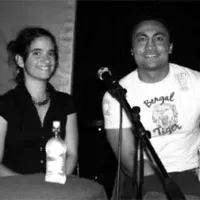
The last Writer's Room for 2006 featured four award-winning film makers who have brought innovative cross-cultural stories onto our large and small screens. With the evening's host MC - writer and cross-cultural cross-dresser Te Radar - Shuchi Kothari, Roseanne Liang, Rene Naufahu and Zia Mandviwalla revealed that the experience of taking their stories to the world had not been without challenges. The last Writer's Room for 2006 featured four award-winning film makers who have brought innovative cross-cultural stories onto our large and small screens. With the evening's host MC - writer and cross-cultural cross-dresser Te Radar - Shuchi Kothari, Roseanne Liang, Rene Naufahu and Zia Mandviwalla revealed that the experience of taking their stories to the world had not been without challenges.Writing about a culture that is not your own poses unique issues. "You can get away with writing about cultures of which you are not a part," said Rene Naufahu (The Market, Bloodlines, Stone Dogs), "but I think this is often done lazily. Effort must be made to approach someone genuine within that community for advice."
Roseanne Liang (Henchman, Rest Stop, Banana in a Nutshell) felt it was important to be truthful. "Be true to yourself - people will respond to that even if there are repercussions within the community."
While seeking funding for the film Eating Sausage, Zia Mandviwalla was asked repeatedly how she could successfully tell a story about a Korean family when she was not of their culture. "I wanted to write about isolation," she said. "I chose to write about Koreans, the new wave of immigrants at that time, because I felt their struggle to cope within a foreign culture typified the type of isolation I wanted to explore. The film was accepted by the Pusan Film Festival and no one asked me that question there."
Shuchi Kothari (A Taste of Place, Fleeting Beauty, Clean Linen) pointed out that you don't have to be of the culture to write about it, as long as you engage with it, adding that when writing is culturally specific, it often unlocks something universal.
Stereotypes such as the Polynesian security guard or the Indian dairy owner often appear in ethnic films. Rene Naufahu felt a specific challenge for him was to break down barriers to write "raw and genuine stories" about Pacific people. "I want to see good quality stories," he said. "I'm sick and tired of seeing male Polynesians as thugs or lovable guys who never have sex. Once you have a story to tell, find a producer who shares your vision, someone who can absorb the knocks for you."
Shuchi Kothari warned that a writer could also become 'ghettoised', citing herself as an example of an Indian writer who, it is perceived, can only write Indian stories. "It's important to have the freedom to write something else."
The requirement of funding bodies and festivals that films contain something that can be read as 'distinctly New Zealand' creates complex problems. Rene Naufahu described making films about minority communities as "a tough game, like trying to make foreign films within New Zealand". "
It's the predicament of being a young country," said Zia Mandviwalla. "Most other countries are over this distinction and film makers just tell their stories." Shuchi Kothari concluded by saying, "Ultimately, it's your level of engagement with the material that matters. We're trying to play catch-up in New Zealand. We've caught up demographically and socially but not in terms of film making."
Roseanne Liang said a new response to the funding problem was "a wave of independent film makers who just find their own money" and make their own films. She began her film Banana in a Nutshell by asking people to work for little or nothing and funding eventually came once the film was under way. Zia Mandviwalla added, "If you see funding as the reason to make your film then you shouldn't be making it."
The Writer's Room series will resume in late February 2007.
Image Zia Mandviwalla and Rene Naufahu.
About Script to Screen
Script to Screen is an independent, industry wide initiative, established to develop the culture of screenwriting in Aotearoa/New Zealand. Script to Screen is a charitable trust that is core funded by the New Zealand Film Commission and governed by a board of trustees. Our trustees are appointed by the New Zealand Writers Guild, Nga Aho Whakaari, and the New Zealand Film Commission.