Beyond The Darkside
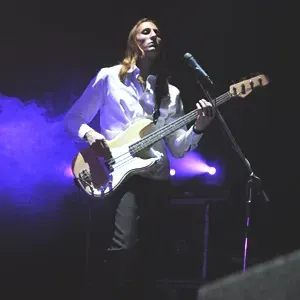
Kiwi Michael Kitching talks to Renee Liang about his hands-on role as co-producer, technical manager, and performer in Beyond The Darkside, a technically extravagant stage show that seeks to recreate the atmosphere of original Pink Floyd shows.
After listening to Pink Floyd on his dad’s LPs as a six-year-old, Michael at the age of 23 joined the BTDS family and worked his way up to become a co-producer of the show along with Kevin Hunt.
On show days, Michael divides his time between a dozen different jobs at once, co-coordinating the extensive set up of the light show alongside show and lighting director Athol Sargood, along with the laser technicians, video screen, and the many complex computerised systems which coordinate all the separate aspects of the show ....and then he performs in the show.
Renee asks Michael about developing his career, taking risks with big projects and what it's like behind the scenes.
What made you want to become a musician?
For me, like for most people, music is a big part of my life, but as a kid I always had aspirations of being a professional musician playing live on stage. Any chance I got, I wanted to see live gigs and footage on video of live concerts. I used to go to sleep listening to all my favorite albums, imagining I was on stage with them. Like standing next to Eddie Van Halen as he did a guitar solo.
Were you ever influenced by a "Kiwi" worldview in your music?
One of the favourite songs that I learnt when I first started playing was April Sun in Cuba by Dragon.
How did you make the jump from performer to producer?
I wouldn’t class myself as a producer, just an all-rounder, and have dipped my hands into all aspects of the industry. With Beyond The Darkside, Kevin Hunt is the Producer and my job is to aid him and I help where ever possible. With this show we handle everything from the ground up, including painting black boxes to servicing our production, promoting, logistics, training, working as a musician in the show and all web work. I guess producing to me is to produce the whole product.
Would you call "Beyond the Darkside" a tribute band, or is it now something different?
I would definitely not use the word tribute in our title or to describe ourselves. Technically I guess you could say it is, but the term tribute is used more for the pub club circuit I think, or as a generalised term. Shows of our nature think the word tribute is a bit tacky - we spend huge amounts of money and work hard to put on a show with class. We try to give our audience an experience similar to what they loved about their favourite artists.
There are a lot of great 50’s,60’s and 70’s artists who are not around anymore and producers and musicians are aspiring to cover them. Very similar to what orchestras have done for years with artists such as Beethoven.
Even if we are classed as a tribute show our show is still very different than any other general tribute act around. We stage a very big production, close to what it would have been like to see a real Pink Floyd live show with a mass of light, lasers and a big clear surround sound system. There are a lot of Pink Floyd acts around these days but not on this scale or who have spent the time or money to try and give you the true Pink Floyd experience.
How do you and the other creatives work together on this show? Do you have rigorously defined roles, or work more loosely?
Basically it comes down to three of us who work this show and are in the business. We do have defined roles but also work together on a lot of ideas and odds & ends. Kevin Hunt is the creator and owner. Apart from being the lead guitarist and singer he also produces all the music , video, web design, TV, radio, newspaper ads and handles all the accounts and any electronics that need to be fixed or worked out when designing. Athol Sargood is the lighting and stage designer/director, myself I handle all the maintenance on the production, build new stage props, logistics for the production and staff, web marketing and data basing, HR, am the show manger on show days, and play Bass for the show.
How do you wear your multiple hats and keep sane?
Keep in mind that I love this show and the excitement I will get when the show is setup and it comes to show time!
The biggest thing that I have to keep sane for is that is a very technical show and you do have to have your wits about you. It is very easy for something to go wrong if you’re not on the ball. We have a huge trussing system which will have over 150 digital lights and high powered lasers hanging off it, a huge surround sound system powering at the audience and a lot of other stage props and effects going on throughout the show. This all has to be safely assembled and tested before being used during the show.
It's often difficult for a creative to make the mind shift from "small and contained" to "big and risky" projects, however much they know they need to. Did you have this difficulty at first? How did you do it?
It is a hard change I think. After being introduced to Kevin when he was well on his way to taking on big and risky shows, I don’t think it was easy for him at first and still isn’t. Deep down inside we are all just musicians, trying to make a living doing what we love. One of the biggest problem with this industry I see, is everyone wants a guarantee and a safe bet, but anything good is not easy or a safe bet.
Apart from a lot of hard work the reason I think why this show is becoming successful is the way it is treated. Kevin treats this show like any business, if you have a product that you believe in and it has a client base then follow the rules, set budgets and percentages to meet, do your figures right and know your product and the covering costs involved and basically give value for money. A lot musicians or normal bands don’t want to or have to worry about the business side of things so they have management and promoters handle it, but in certain circumstances that doesn’t always work. For this show particularly there are huge costs involved - over $150,000 per show, a lot more than your standard cover band and even similar acts of this nature touring this side of the planet, so it’s not an easy one to look after nor an easy ride for someone trying to make a quick buck.
One thing we know is Pink Floyd is a popular act, so we don’t have to re-invent them but we do have a lot of expectations from people who come to the show, so our main action is we work very hard. I think it will always be very scary putting up money to stage a show such as ours. We are not rich nor will we make millions from doing this, it is more about passion and being able to live as musicians and doing something you love.
Do you have a career as a musician outside of this massive (and no doubt very time consuming) show?
This show has now become a career and at the moment these upcoming shows have and are demanding a lot of my time. Pink Floyd is dear to our hearts as we all love the music, but we have built a very large sensational production and this will allow us move onto new projects in the future so I hope to spend my working life in the industry and as a musician.
- Beyond The Darkside is on 12 Feb 2011 - The Civic Auckland, 18 Feb 2011 - TSB Arena Wellington.