Auckland Youth Symphony Orchestra in Whangarei
Written by
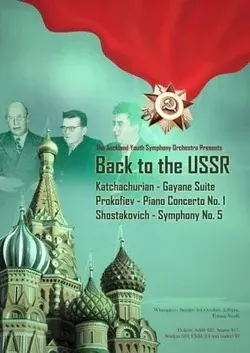
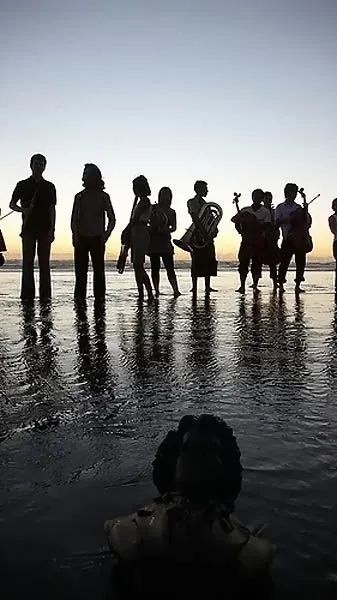
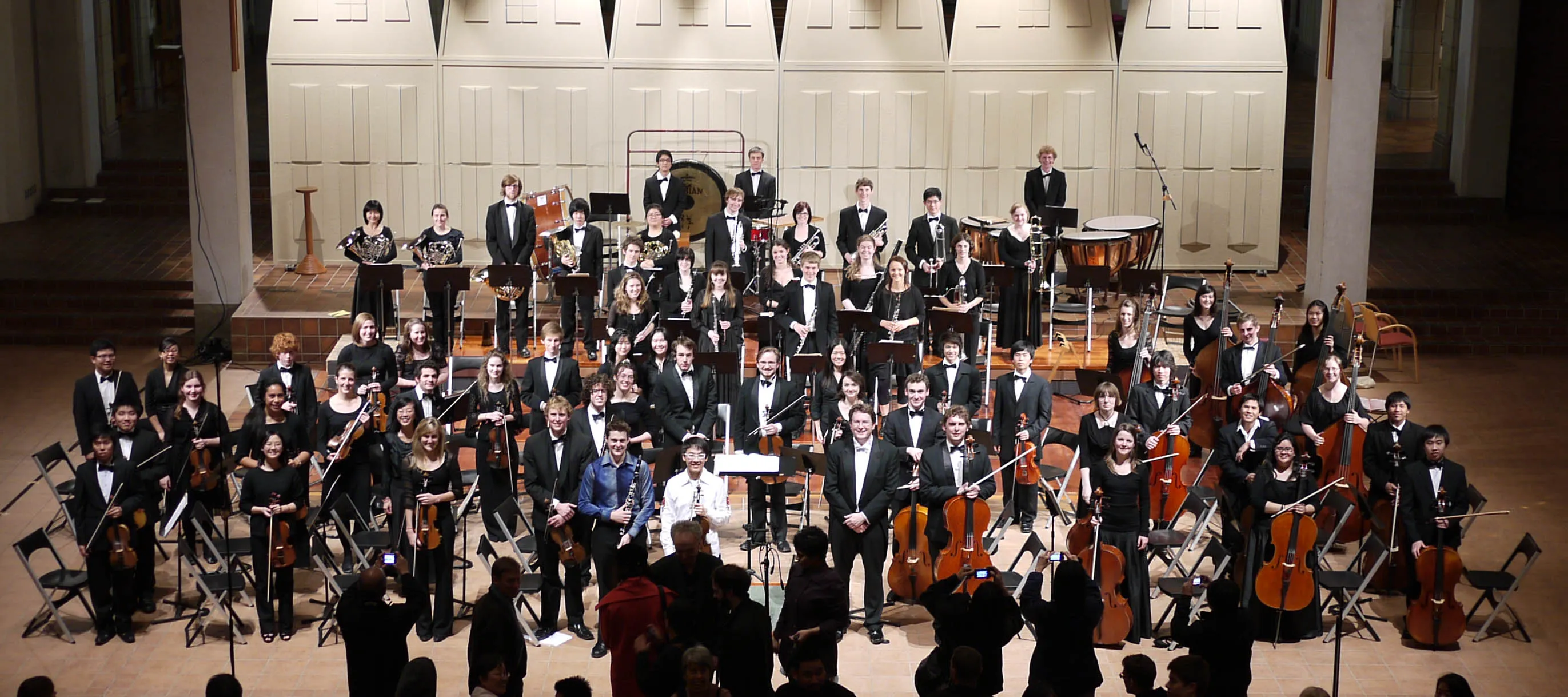
The good folk of Whangarei and its neighbouring districts are in for a very rare treat. On 3 October 2010, a real, live symphony orchestra is coming to town. To whet your appetites, here’s an introduction to the colourful music to be played in Forum North by the professional-standard Auckland Youth Symphony Orchestra.
Nowadays, it seems that everything has to have a slogan, doesn’t it? Classical music is no exception – in recent years “themed” concerts have become all the rage. The programme that the AYSO is bringing to Whangarei is called “Back in the USSR”. This is an especially tasty prospect, because Russian composers, and latterly those of the wider Soviet bloc, are renowned for exceptionally colourful, physically exciting music – concerts of which invariably induce paroxysms of ecstatic anticipation in any habitual hedonist.
In 1932, “Dialectical Materialism” was ousted by “Socialist Realism”. If you don’t know what these were, don’t worry – nobody does, really. Socialist Realism, for example, was defined by what it wasn’t. What it wasn’t was “Formalism”. Needless to say, Formalism was conveniently defined as anything of which the State disapproved.
This, under Stalin’s benevolent leadership, divided Soviet composers into three classes: (1) those who wrote what the State desired, (2) those who wrote what they wanted to, but disguised it as what the State desired, and (3) those who were dead. Class 2 composers were a very rare breed – most who met with the least hint of State disapproval either hurriedly transferred to class 1, or suffered summary demotion to class 3.
In the USSR, the same as anywhere else, the music written varied between utter tripe and great masterpieces. However, the Soviet régime unwittingly spawned an extraordinary “new” style – certain class 2 composers produced truly great masterpieces masquerading as utter tripe. Some of these, notably Shostakovich’s Twelfth Symphony, were so effectively written that even today many folk in the so-called “West” still can’t see past the putative tripe to the masterpiece concealed within.
Khachaturian – Suite from the Ballet “Gayaneh”
Although a class 1 composer, Khachaturian was by no means a hack producer of utter tripe. Admittedly, his music can sound a bit – or even a lot – brash and gaudy, particularly to folk of more delicate sensibilities, but it is well-crafted, vital, melodious, brilliantly scored, and suffused with the tangy folk-music styles of his native Armenia.
Probably the less said about the plot of the ballet “Gayaneh”, the better – it’s just some nonsense about denouncing bourgeois backsliders on a collective farm. The music, though, is fabulous, mixing some intensely dramatic action scenes with lots of delightful diversionary dances. It would easily do justice to a far finer libretto.
The best-known – but nowhere near the best – number is the rip-roaring “Sabre Dance”, closely followed by “Gayeneh’s Adagio”, the latter through its association with shipboard routine in Kubrik’s film, “2001, A Space Odyssey”. If the AYSO plays the “standard” concert suite, you’ll hear the former but (sadly!) not the latter.
Prokofiev – Piano Concerto No. 1
The 21-year-old Prokofiev wrote his First Piano Concerto in 1911-12 – some five years before the October Revolution! Yet, stylistically, it would sit in perfect comfort amongst the stuff being written during the USSR’s first decade, in the heady days before Stalin’s social strategy really started to bite.
Although a very early work, the concerto already exhibits the two contrasted characteristics – brittle abrasiveness and melting lyricism – that were to become Prokofiev’s hallmark. This absolute cracker bristles with youthful energy, irrepressible playfulness, and just a hint of alcoholic overindulgence. Nestling within the otherwise showy, fun-filled single-movement span is a deliciously sentimental andante, melodious music simply oozing dewy-eyed juvenile romance.
Shostakovich – Symphony No. 5
Shostakovich’s Fifth Symphony is a powerful musical drama of the highest order, one of the Twentieth Century’s very greatest works. It has everything, ranging from the pungent to the comic, from the brazen to the elegiac. Yet, although it can be listened to as such, it is not simply a symphony, it’s a slice of history – its story is a marrow-chilling tale that leaves fiction floundering. You can read a fairly detailed account in my recent programme note, or make do with these bare bones:
By the early 1930s, Shostakovich had become a celebrity, the USSR’s most prized musical asset, and his opera, Lady MacBeth, its most influential export. However, his increasingly radical compositions and his (perfectly reasonable) publicly-presented critique of Socialist Realism set him on a collision course with Stalin’s emergent Pavlovian social engineering strategy – soon to be more commonly, and less euphemistically, called the “Great Terror”.
Before long, oblique but ominous criticisms appeared in the press, then overt official vilification, and finally Shostakovich was “un-personed” (i.e. shunned and forbidden to earn his living). Ordered to “straighten himself out, or things could end very badly”, Shostakovich daily expected either death or imprisonment.
Stalin, though, was reluctant to bin such a valuable asset out of hand. All this ostracism was in fact a carefully-planned exercise to softening up the “misguided” composer – what Shostakovich did next would determine his fate. The “rules” predicted that Shostakovich would obediently scuttle to the safety of class 1. Most would have, but in this instance Stalin had overlooked something significant.
Yes, Shostakovich was indeed profoundly patriotic – he loved his country and its people. However, his realisation of what was being done to them ignited in his heart a commensurate hatred of the perpetrators. Shostakovich decided to fight, the only way he knew how – he became the epitome of class 2, the musical equivalent of an underground resistance-fighter. Making an art-form of ambiguity, he created musical wolves in sheep’s clothing. His first effort was the Fifth Symphony.
Simply as music this is a masterpiece, albeit with a question-mark hanging over the tub-thumping conclusion. But, as a musical wolf, it is a marvel! With incredible skill and judgement Shostakovich, in spite of the gun held to his head, pulled the wool over the eyes of Stalin & Co., convincing them that he had indeed “straightened himself out”.
Yet – and, remember, this was at a time when speaking your mind invited denouncement and death – at one and the same time the music told a very different tale to the people. Everything, even that banal ending, was laden with a codified real meaning. The people wept – although of hope there could only be the merest glimmer; instead it offered communion and consolation, confiding, “I know your suffering and your fear, and I shall speak for you.”
By and large, the outside world missed the message, but that’s entirely beside the point.
Paul Serotsky
Event Details
Auckland Youth Symphony Orchestra, Musical Director Antun Poljanich
Venue: Capitaine Bougainville Theatre, Forum North, Whangarei
Sunday 3 October, 2.00 p.m.
Tickets: available from Ticketek -
Adult $25, senior $15, student $10, child (under 15) $5.
Special rate for school/youth music groups: $40 per block of 10 tickets (number limited, so early booking is advised).
Programme: “Back in the USSR”:
Khachaturian – Ballet Suite “Gayaneh”
Prokofiev – Piano Concerto No. 1
Shostakovich – Symphony No. 5