Artsville: Disabled People Can't Dance
Written by
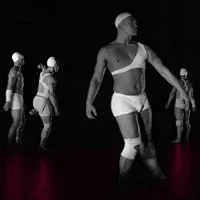
Disabled People Can't Dance is a portrait of two gifted dancers, Jesse Johnstone-Steele and Dan King, who happen to be disabled, and the unique dance company they dance for, Touch Compass.
Narrated by renowned comedian, Philip Patston, the documentary focuses on the company as the dancers embark on a tough rehearsal period followed by a national tour. Watch on Artsville on TV1 December 28.Disabled People Can't Dance is a portrait of two gifted dancers, Jesse Johnstone-Steele and Dan King, who happen to be disabled, and the unique dance company they dance for, Touch Compass.
Narrated by renowned comedian, Philip Patston, the documentary focuses on the company as the dancers embark on a tough rehearsal period followed by a national tour. Watch on Artsville on TV1 December 28.Touch Compass is a mixed ability dance company with an established reputation for showcasing the talents of disabled dancers. This year, Touch Compass celebrates their 10th anniversary as one of New Zealand's most unique and enduring dance companies.
Dan says: "I thought it would be cool to try something with people who society don't think can dance. I'd tell people I danced and they kind of look at me like 'No you don't, no, you're in a wheel chair, you can't.' I tell them I'm professional and they're like 'No, you're not. You can't be.' And they think it's like some community thing. They don't take me seriously."
Along with the rest of the company, Jesse and Dan begin a tough three-week rehearsal process with theatrical director Christian Penny and Touch Compass' founder and choreographer, Catherine Chappell. Christian's style of working is different to Catherine's and the dancers know he can be a tough taskmaster. The dancers have to dig deep to overcome the physical, mental and emotional challengers in front of them as they set off on tour.
Christian says Touch Compass transcends prejudice by making art. "Not by just sitting around going, we're wrongly positioned in the culture. We're making art in a new way on new terms. And that's not just liberating for the people who make it, it's liberating for an audience because when they watch the work they go. I know those people, I see them in the street, but now I can have a communion with them, that's not social, but spiritual."
"We're not selling any pain here - it is art," says Christian. "The audience pay to see the freedom of the performers just like any other art forms. A lot of the work with Touch Compass is getting able bodied dancers to enter in at that level. We auditioned 40 dancers and they can all dance, but can they dance in this environment? You've gotta want to bring something of yourself you're prepared to reveal in a similar way."
As the tour gets underway, the company take to the road in a minibus to Whangarei, then on to Hastings and Wellington. On the road the camaraderie and relationships of the dancers and the obstacles the company must overcome are revealed as they perform night after night and travel from venue to venue.
There could be several new able-bodied dancers in the show who haven't worked with disabled dancers before. They'll have to learn how to work with the disabled dancers before the tour kicks off, and master the difficult (and sometimes dangerous) act of controlled 'flying dance', where disabled dancers swing from ropes suspended from the roof. Meanwhile, behind the scenes, the challenges of putting the tour together mount up.
Follow the dancers through their gruelling rehearsal period and glimpse into Jess and Dan's private lives, by meeting their families and support people. Artsville: Disabled People Can't Dance uncovers these dancers' values and some of the reasons why they are driven to do what they do.
Sunday on December 28 at 11pm on TV One
Sunday 3 January
Dean Buchanan: A Profile
Dean Buchanan is a climber and a painter in his 50s whose daily exercise regime would daunt an athlete half his age. The stamina and energy gained in cycling and climbing mountains has been channelled daily for more than 30 years into producing a stream of large oil paintings which reflect his passion for the New Zealand outdoors.
Directed by Bruce Morrison, this documentary follows Dean's punishing exercise regime as he cycles miles of West Coast roads and returns to Ruapehu - a regular pilgrimage. It also documents the complete realisation of a major mountain painting from first crayon outline to final brushstroke in oil, giving unique insights into his technique, style and motivation.
Christine Hellyar: A Profile
Christine Hellyar is not only one of New Zealand's finest sculptors, she is also very good at talking about what lies behind her work. In this documentary, Christine guides viewers through the creation of four different sculptures for four different locations. See these sculptures emerge from original concept to working drawings, to models, and finally to the construction of the finished pieces.
Sunday 10 January
Liquid Stone
In the 1970s, a Kiwi lad on his OE stepped into the shoes of one of the greatest architects of all time, cracking the code needed to complete Gaudi's famously unfinished masterpiece and pioneering the use of digital technology.
The Sagrada Familia, Gaudi's most ambitious creation, was begun in the 19th century and is still under construction in Barcelona today. Since Gaudi's death in 1926 and the destruction of the original models during the Spanish Civil War, the building has languished for decades. No one has understood the complex geometry needed to complete the building. In 1979, 23-year-old Christchurch architect Mark Burry was offered the chance to crack the master's code.
This documentary is the story of one of the world's architectural masterpieces, the astonishing technology employed to complete it, and the Kiwi-led design team realising Gaudi's vision.
December 2008