Artspeak in wartime - Artists war diaries
Written by
By Jacquie Clarke
When the Allied forces first invaded Baghdad in their initial occupation of Iraq in March 2003 British literary journal Granta published the diary of an Iraqi ceramic artist Nuha al-Radi recorded on her return to Baghdad to visit her family home. With CNN she went on a search of her ceramic mural artworks that had adorned major architectural features around the city. One by one she discovered them smashed up, bullet ridden and destroyed. After 28 days in Baghdad she returned to her adopted homeland Lebanon to seek peace and quiet. She died a year or so later from leukaemia but her Baghdad Diaries went on to be published and recognised as a vital, intelligent and sometimes hilarious critique of the Allied occupation.
So what's it like being an artist in Lebanon this week?
By Jacquie Clarke
When the Allied forces first invaded Baghdad in their initial occupation of Iraq in March 2003 British literary journal Granta published the diary of an Iraqi ceramic artist Nuha al-Radi recorded on her return to Baghdad to visit her family home. With CNN she went on a search of her ceramic mural artworks that had adorned major architectural features around the city. One by one she discovered them smashed up, bullet ridden and destroyed. After 28 days in Baghdad she returned to her adopted homeland Lebanon to seek peace and quiet. She died a year or so later from leukaemia but her Baghdad Diaries went on to be published and recognised as a vital, intelligent and sometimes hilarious critique of the Allied occupation.
So what's it like being an artist in Lebanon this week?
The war-time diary, ie Anne Frank, has always been significant in providing a personalised account of war, but is now in the internet era a whole multi-media collaborative effort uploaded minute by minute by people all over the region. Art blogs reflecting on the Lebanon war are springing up on the internet like mushrooms.
A lebanese Graphic artist's blogspot Moment of Silence gets hundreds of comments daily including blogs of Jewish people opposed to the war.
I did a browse for art blogs re the Lebanon crisis - I found Impart Art Daily, which began with a kind of dispassionate artspeak discussion about language and perception.
"I want to talk about progress and decline as totalizing discourses: as meta-arguments that shape what we see and how we see it," writes Mary Anne of Beirut, Lebanon on the 4th of July 2006.
What then follows is an account of a families evacuation via 5 star hotels on the route to Damascus and eventually Tel Aviv. There are the prosaics of how to explain to children, a wondering if the artist will ever sleep in her own bed again, a reflection on the beauty of dirt and the overwhelming cleanness of the first world on arrival in Tel Aviv airport. Fleeing to safety has arrested the intellectual discourse for the diaristic for the moment. It makes one think about art discourse and where in the mind it resides. Is art discourse something only relevant in the privileged space of peace time.
In a recent email discussion on Empyre artists and academics have been considering the application of art discourse within crisis - the notion of the 'Bare Life' . After all not everyone's children are getting out alive as these photos posted yesterday (2006-07-30) testify.
So what is the notion of Bare Life? According to Empyre:
" Bare life deals with that part of our existence from which no measure of security will ever protect us."
War is one of those moments. Sometime during the discussion a Lebanese artist Zena el-Khalil living in Beirut began posting some diary entries of her experience of the war. It was an interesting moment as the hypothetical moved into the real - a kind of seismic paradigm shift happened in the discussion. The diary demanded that the academic discourse respond to the urgency of the present rather than a critique of the past.
Zena el-Khalil wrote from a beseiged Beirut;
"The question is what am I to do if I had the opportunity to leave? Would I leave? What do I do with my friends? My family? My art studio? I have a British passport; I could be evacuated with my husband. But what would happen to my best friend Maya? She has a very rare and bad case of CANCER!
"What about art work in my studio? What about all my brushes and paints and glitter and books! All my books! Again- the crazy things that cross your mind."
According to Zena el-Khalil Lebanon is "the only country in the region in which people of all religions co-exist peacefully." Lebanon is a trilingual country.
The Guardian picked up her story and began running her diary. The last post on July 14 has her worrying about electricity and whether that would be targetted too as she may lose her internet connection.
What is interesting about the internet diaries and blogs on the Lebanon war are the voices that operate in a paradoxical space. It makes you realise how much broadcast media emphasises the divisiveness of war but on the ground there are people of all backgrounds working in a volunteer space.
See Blogging Beirut.com for a range of interviews with people who keep emphasising the cultural diversity of those working together to get food to refugees.
Other art related blogs to look at include Miss Levantine though some of the posts are in French.
Also The Angry Arab News Service
See Maori Television's coverage of the Milk And Honey solidarity event in Auckland last weekend on Coast this Thursday.
If you are interested in the grass roots witnessing of this war then check out openlebanon.org
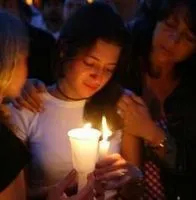
Today all around the world even in Tel Aviv people are holding vigils and demonstrations to protest the war in Lebanon.
You can check out the whole archive of Empyre threads here