Art at City Limits
Written by
When Amanda Wright got the gig to curate the Auckland City Limits Festival arts programme she called on her connections to commission a group of high-flying artists and designers to co-create a work.
The end result will be a large scale collaboration called Ngahere by artist Judy Darragh, 2017 Venice Biennale representative Lisa Reihana, architect Sue Hillery and designer Robin Rawstorne.
It’s one of nine works at the inaugural music festival. Some will be beacons, others found on transit, or places of play and respite. A founder of Splore, Amanda knows too well the audience demand for a more holistic and engaging experience to compliment music at a festival.
“Experiencing works by leading and emerging artists and designers outside of the gallery and in new contexts enables both artists and audience to connect in a more expansive space where barriers are broken down and works are seen from another perspective.”
Months in the making, Ngahere will be set up in the week leading to the festival on 19 March, and only up for one day. Until it is revealed all we know is the large scale collaborative work reflects a historic aspect of the Western Springs Stadium now removed, the pine trees, and will be a focal point of the festival.
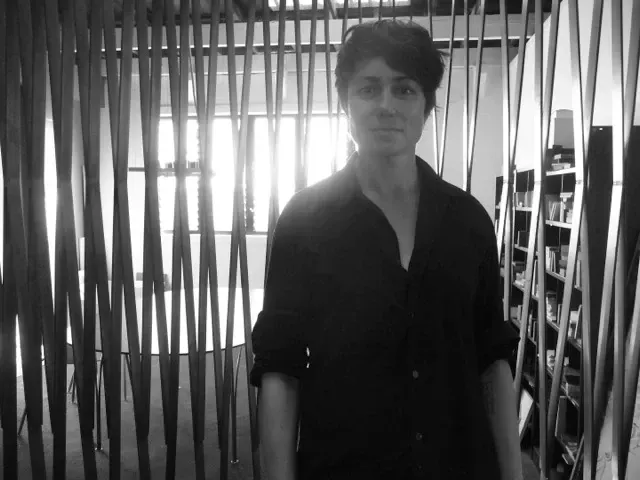
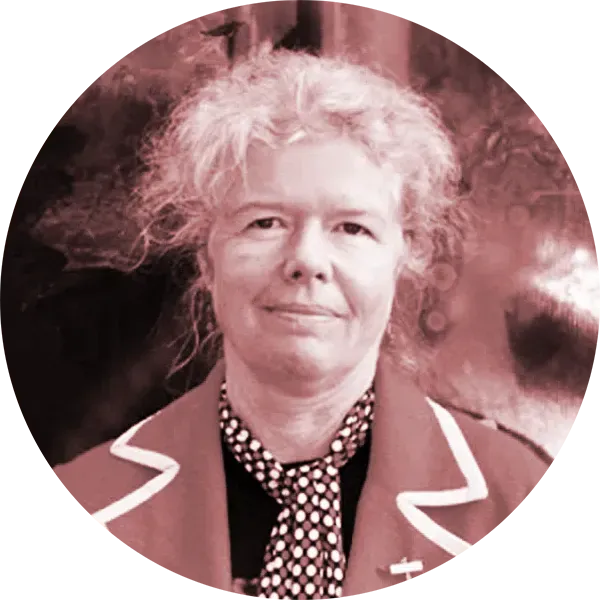
Local artist Judy Darragh (Western Springs) and architect Sue Hillery (Piha) tell us more about the work and collaboration.
What aspect of your creative practice gives you the biggest thrill?
Judy Darragh: For me that bingo moment when an idea arrives to you and is the right answer. You need to practise to recognise and trust this moment.
Sue Hillery: The transformation from a project brief to a three dimensional form. To be honest, making models & shaping the key ideas with a few pieces of cardboard is perhaps the most rewarding part. Simple and honest. I tutor at Auckland University_ and I can assure you that there seems to be a revival of hand crafted models that are cross referenced with CNC machining processes. One theory I’ve been ruminating on is that if the model is hard to make, then the actual building or installation will follow that course.
What's your number one business tip for surviving (and thriving) in the creative industries?
Judy: The term 'creative industries' is annoying, an industry implies the workers get paid for their work, artists and makers are unwaged for the work we produce but all other levels of the 'industry' and waged.
Sue: Ensure that you become involved in projects that well thought through and that the people included in each stage are a pleasure to work with.
Tell us about the work Ngahere
Judy: Ngahere will be a placed centrally in the field where the audience enters, it serves as a meeting place and visual focal point…it will be dazzling!!!
Sue: From my perspective, Ngahere is a formal abstraction that is grounded in the sheer stature of trees and bush, that emphasises key realities of shielding and providing protection. In tandem, Ngahere becomes a mark on the land, and focus point. A place to gather.
Why were you interested in a commission for Auckland City Limits?
Judy: Firstly the people involved, I get to work with my old mates plus I live in Western Springs and have an attachment to the site.
Sue: There is a robust community in Auckland around performance & installation. Knowing Amanda Wright and witnessing her incredible talent & vision from the Splore festival, I was confident that this would be great project to be involved in. ….…Oh you know… once I heard that the ‘ladies’ – Judy and Lisa were involved, and then Robin who I worked on a project in Anawhata about two years ago was also an instrumental part – then I was hooked-in rather easily.
Who is involved, what is your role, and how did the collaboration come about?
Judy: Amanda Wright has been working with ACL to present an arts programme, she was part of the original Splore crew, she approached Lisa Reihana, Robin Rawstorne, Sue Hillary and myself. We decided to all work together to share our skills and time. Also it was a more economic to spread the load and expertise.
Sue: The collaboration has been relatively seamless. Both Robin & I steer the design & componentry of the project, that then dovetails into the graphic concepts & colour experimentation directed by Judy & Lisa.
Tell us about the creation.
Judy: We have been thinking about the work for a few months, it has gone through several re-configurations, due to budgets materials and fabrication costs. We liked the idea of the Pine trees which have defined the stadium so drew from those forms.
Sue: From the start, we all agreed upon a modular design, whereby the simple repetition of forms could be further accentuated via the layout across the site, and then the colour & patterning presented by Judy & Lisa. The triangulated plywood sheets perform as a structural diaphragm when mechanically fastened to the welded steel frames. Practical and logical. Its not too hard really.
What’s involved in the installation?
Judy: The work is designed for installation on site, it will pack down after the day and can be reused. There is a frame work with plywood panels which are fitted into the ground.
Sue: With the maximum vertical height of Ngahere being just under 5.0m, then we made the call early on to find a fabricator that could take overall responsibility for fabrication, engineering [PS1 report] and then the installation. The success of projects at this scale & intensity are to recognise a time verses skill equation.
What have been some of the challenges?
Judy: I guess having ideas beyond the budget…..
Sue: We’ve experiences only a few minor bumps in the road to be honest, and this was more about the scale and size of the design verses cost expenditure. Initially the design was too complex. So will a few tweaks and revisions, the project has become highly resolved while maintaining a good sense of scale.
Why is public art important, especially at a festival?
Judy: There is no question art can alter a space, make people pause and adds to the event as a gesture and adds to the conversation.
Sue: Installation work can operate with several layers simultaneously. There maybe some festival goers that celebrate and become invested in the dynamism, conceptual approach around optical shaping & exploratory play around colour fields. And then conversely, Ngahere may be useful as a landmark of where to meet during the days events… or even more simply, as a place to take respite from the hot sun.
What do you hope the audience takes away from it?
Judy: Enjoy the moment….
Sue: We may need to take another The Big Idea QnA on the completion of the festival.
What’s your big idea for 2016?
Judy: To have some BIG ideas!!!!
Sue: To initiate a long term project that I’ve been brewing for the last two years – that involves collaboration with about six to ten people, and determination. It’s a bit top secret at the moment!
Auckland City Limits art programme
Other artists featured in the festival’s art programme include a mix of well-known names like sculptors Jeff Thompson, Lou Purvis and Aaron McConchie, mixed media artist Julieanne Eason, and environmentalist and textile artist Miranda Brown.
Another collaborative group, LGOP – the Looks Good on Paper Collective – are bringing Zietsetz to the festival. This set of structures is one of several works that will bring interactivity with art into play at the festival.
Auckland City Limits is on at Western Springs on 19 March.
Auckland City Limits 2016 Artworks:
- Shorthand by Aaron McConchie
- Field by Angus Muir & Alexandra Heaney
- Ngahere by Lisa Reihana, Judy Darragh, Robin Rawstorne, Sue Hillary
- Zietsetz by LGOP Collective
- Hive Huts by Louise Purvis
- The Bach by Jeff Thomson
- Ecology to Cosmology Flags by Miranda Brown
- Hashtags Get Real by Margaret Lewis
- Spray Stalks by Julieanne Eason