Annie Goldson's new documentary Elgar's Enigma to screen
Written by
Award wining Kiwi documentary filmmaker Annie Goldson's new film Elgar's Enigma: Biography of a Concerto follows the theory that the English composer, Edward Elgar, was moved to write his Cello Concerto in E minor by the WW1 death of a young New Zealand soldier, the son of Elgar's first great love.
Elgar's Enigma premieres on TV ONE on Sunday the 21st of May at 10:30pm, with a repeat screening on Saturday 27 May at 12:30pm.
Award wining Kiwi documentary filmmaker Annie Goldson's new film Elgar's Enigma: Biography of a Concerto follows the theory that the English composer, Edward Elgar, was moved to write his Cello Concerto in E minor by the WW1 death of a young New Zealand soldier, the son of Elgar's first great love.
Elgar's Enigma premieres on TV ONE on Sunday the 21st of May at 10:30pm, with a repeat screening on Saturday 27 May at 12:30pm.
The Concerto is one of the most loved works in the classical repertoire and is known as a powerful requiem, grieving for a world changed forever by the Great War.
Musicologist Brian Trowell, whose theory underpins the documentary, believes the origins of the Concerto lie in the story of the then penniless young Elgar, a struggling musician, and his first love, Helen Weaver. Both lived in Worcester, England and were briefly engaged in the 1880s. However Helen broke off the engagement, possibly for class or religious reasons or because she had contracted TB. She departed for the healthier climes of New Zealand to convalesce. There she married a banker, John Munro, moving worlds away from urban Worcester to the small settlement town of Patea, where she had two children.
Twenty years later, on the brink of WW1, Elgar had become a famous composer. Helen's children had grown and her New Zealand-born son, Kenneth Munro, joined the army and was sent to Gallipoli where he fought for three months. He then collapsed and was invalided to London. Trowell believes it likely that Elgar, now living close to the hospital where Munro was convalescing, would have known about the young soldier. On his recovery, Munro was sent to the Western Front where he was killed on the 3rd July, 1916, a fact that Elgar would have learned through the roll of honour published in the Daily Telegraph. Elgar left London several days later, suffering from a serious bout of depression. He fell ill and went into hospital.
One day, during his slow recovery, he called for paper and pencil and sketched the beginnings of this Concerto - the first serious music he had written since 1914. Trowell argues that the cello masterpiece, Elgar's last great work, was a response not only to the tragedy of World War I, but specifically to the death of Munro, who could have been the son he never had.
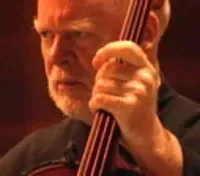
The narrative is told through a subtle weave of interview (with Trowell, filmmaker Ken Russell, and New Zealand historian James Belich, amongst others), archive and evocative re-enactments. Intercut into the backstory is a compelling performance of the Cello Concerto by the American cellist, Lynn Harrell with the New Zealand Symphony Orchestra, conducted by Matthias Bamert.
Elgar's Enigma premieres on TV ONE on Sunday the 21st of May at 10:30pm, with a repeat screening on Saturday 27 May at 12:30pm.
The New Zealand Symphony Orchestra will also perform Edward Elgar's Cello Concerto in E minor:
Sunday 21 May 6.30pm Michael Fowler Centre Wellington
Thursday 25 May 8pm Founders Theatre Hamilton
Friday 26 May 6.30pm Town Hall Auckland
Wednesday 31 May 6.30pm Town Hall Christchurch
Thursday 1 June 8pm Town Hall Dunedin
More information and booking details can be found at www.nzso.co.nz
The film held its world premiere at the Academy Cinemas as part of the World Cinema