An Odyssey of theatre
Homer’s classic Odyssey is re-imagined for the stage by a young cast from Northland and Auckland, opening at TAPAC this month.
Renee Liang talked to director Laurel Devenie.
* * *
Initially mounted as an outdoor production in Northland, the vibrant cast and the creative team of Laurel Devenie and Katy Maudlin (Company of Giants) now comes to Auckland – picking a local cast up along the way – to invade the space of The Auckland Performing Arts Centre (TAPAC) this month.
Renee Liang caught up with Laurel to find out more about her career path, the concept for Odyssey and working with a young, diverse group.
Performer, deviser, director, teacher and theatre-maker: why do you love theatre?
I find theatre astonishing. I think I can do without it and then I find myself immersed in another process of it and completely overwhelmed by what it can do. I love theatre because it’s a forum for exploration. A space to acknowledge the unspoken and investigate the complexity of humanity. My favorite kind of theatre experience is one that doesn’t tie things up too neatly – that provides me with lots of questions and dilemmas and not necessarily a whole lot of answers. I love the process of making theatre because it encourages us to listen to each other. In fact that is probably one of the most valuable things I think it does – allows and teaches us about listening – as theatre makers, as actors, as audiences. I love theatre if it can start conversations. I love theatre because it is a form that is constantly changing but reaches so far back to into an ancient tradition. It’s a place people can go and process the complex and multi-faceted lives we live. I want it to be active. Live performance is something everyone should have access too – and everyone has a right to do – to be heard, to be seen – that’s why I love working with all sorts of people making theatre because I think it serves different purposes.
What have been the high (and low) points of your career? Have you followed one path, or just taken the turns as they appear?
I’ve been following what seemed like a pretty random pathway of work initially – it’s always been a pretty hand to mouth existence, so the need to eat and pay rent has often driven decisions about work. I think the highest point of my career was when I decided not to waitress anymore – there was this day that I woke up and thought ‘I am working for minimum wage - I’ve trained to make theatre! So get on with it!’ –I quit every job that was not somehow related to the theatre and decided to live on rice and instant noodles – it was the best decision I ever made – I think early on after you’ve trained as an actor it’s hard to be empowered and figure out how to instigate work and opportunities.
Since then it has been a process of continuing to learn and develop relationships. I trained for four months with John Bolton, who is a wonderful teacher of theatre making and performance, and that was a huge turning point in wanting to initiate work where-ever I could. The thing that you have to get used to as a free lance theatre maker or actor is that you have to provide your own structure and process of building a sustainable existence. I am very excited by so many aspects of what I get to do – the constant changing of modes and groups can be discombobulating but is also an incredible thing – I love working as an actor and getting to explore the form of performance from the inside being lead by someone else, I also love the process of leading a group to make something. The main thing that drives me to make decisions about what work to take is: ‘Is this something which will challenge and excite me?’
Doing On the Upside Down of the World by Arthur Meek directed by Colin McColl with Auckland Theatre Company has been a pretty wonderful experience. It is a solo show that we first did in 2011 and I’ve been able to perform it all over NZ now (and we’ll take it to New York later this year). This was a very special project – collaborating on this work for a year and then the rare opportunity to perform a piece over a long period of time. Longevity is becoming one of my guiding principles. Longevity of relationship – developing and continuing working relationships with people who you spark with or speak the same language (and can disagree with you!) But also having the opportunity to build work over a long period of time. I think that’s what I’ve loved about the solo show – I’ve really learnt about how the audience changes things.
I think this is what this production of the Odyssey is about too. It’s a wonderful opportunity Margaret Mary at TAPAC has provided Company of Giants with, to continue building this piece of work and to celebrate continuing relationships.
How did the concept for Odyssey come about?
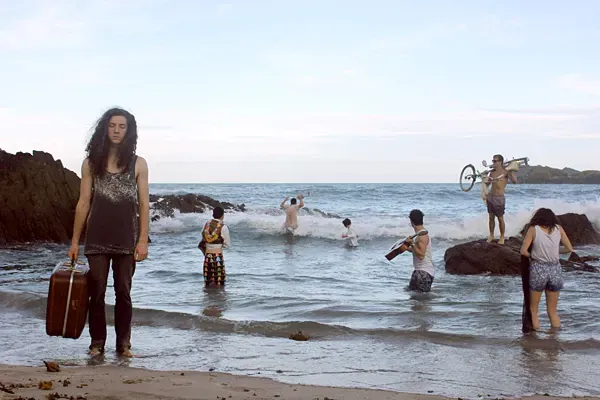
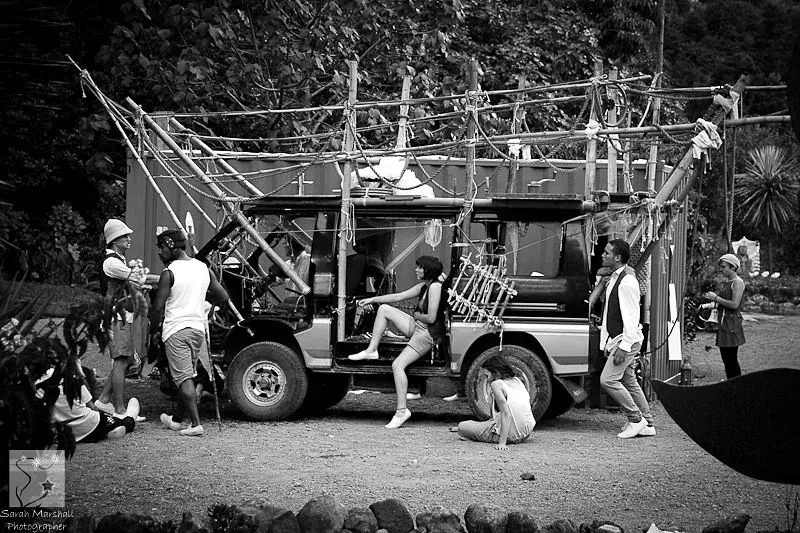
The concept for the production grew out of the company we were working with at Northland Youth Theatre – all we started with was a circle of people, a box of books from Whangarei Girls High School, a pile of costumes and fur coats and a relationship with John Tee automobile wreckers. It was a process of story telling, improvising, exploring characters, grappling with different ways people tell stories. The way we worked was to really celebrate each of the actors and find characters and atmospheres that challenged and excited us. I suppose our style and concept have been informed by the nature of working with a large group and also having a really low budget which means our pallet of objects have a junkyard kind of feel.
The form and style are still emerging – we are exploring who the chorus are and what they mean. The story has so many tentacles and facets to it – there is Odysseus’ journey home from the Trojan war with his crew of men and they are the ones encountering all the monsters – the Cyclops, the giants, the barking sea monster Scylla, the sirens, Circe – the witch who turns them all into pigs… Then there is Penelope and Telemachus; his wife and son who have been waiting for his return for 18 years (he left the day Telemachus was born) and are dealing with a kingdom which is going to rack and ruin, and to add to that there are the Gods, who are capricious and tempestuous, influencing the mortals in all sorts of ways. So it’s a big old story. The things we are grappling with are how to tell the three story lines with clarity and use the chorus to do so but also to explore the epic and the intimate. It’s a story which has these huge storms and monsters but also some incredibly soft and intimate scenes and human dilemmas.
Why did you choose this story for a work with, by and for youth?
I didn’t quite realise the scope of it when we first chose it – hahaha how wrong I was! It’s possibly the biggest story there is! And it only kept (and continues) getting bigger as we continued to explore it. Everything about it is exponential. Which means our process of making it is messy and exponential too.
But in fact it is a story that really appeals to young people and old alike. So many of our cast had studied it at school (in classics) and everyone has encountered aspects of the story in other forms. Even the really young cast members know the story inside out somehow, as it is littered through popular culture. I think there is a real appeal of this epic kind of story telling – it is archetypal – the hero’s journey, the monsters, the magic, the battles, the love story. Its in the same vein as Lord of the Rings and The Hobbit and all of those films which are so popular at the moment – don’t we all love a good yarn about a journey? Chuck in an angry, horny God of the Sea and a six headed monster and it makes it all the more exciting.
Why did the show take Northland by storm?
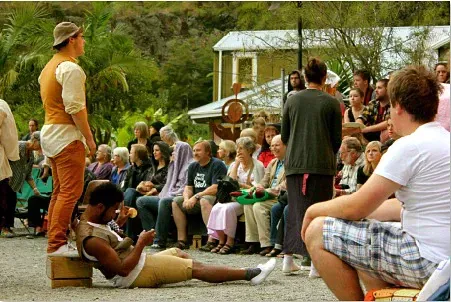
We made the show with a very low budget in Northland but Northland Youth Theatre has some incredible support from the local community – the cast raised $3500 from a Pledge-Me video and so many businesses and people supported it in different ways. We also did it outside at the Quarry Arts Centre – a treasured local space that is well loved by locals and a pretty magical place to make a performance in. One of the reasons it was so successful was because so many people collaborated and supported it so that is there was a feeling of local ownership.
Seeing a giant skeleton of a van with a bamboo ship built on the top of it, being hauled in by fifteen people charging to war is a pretty exciting thing to witness so I think that was part of it. The story has something for everyone – the epic battles, the monsters, the plight of a fatherless teenage boy, the love story, the goddesses, the final reunion – its an edge of your seat kind of journey and that was part of it.
How is it changing in Auckland?
We are moving inside! This is a massive shift. Instead of a long shot it becomes an extreme close-up. We won’t have fires and we won’t have buckets of water in our storm but the intimacy of the indoor space, the atmospheres that we can shift with song, music and lighting is really exciting.
We have made some major changes to the narrative structure we were using in the first season as we learn more about the story and how to tell it with more clarity. We have a really exciting bunch of young Auckland actors who are merging with some of the original northland cast. These new actors are bringing a whole bunch of new perspectives and qualities that are helping us find fresh ways to tell different parts of the story. We have a cellist who’ll be playing a live soundscape alongside our other songs and sounds. In fact it has changed dramatically, though the bones and the style are informed by the original.
What things have you learned from working with young people - any recommendations for other theatre makers?
I love working with young people. I find it invigorating and exciting because there is this energy and tenacity about diving into things. I think the thing I am always trying to do with young people is create a process and a structure where everyone’s voice is heard and valued. I am always looking for ways to put the pressure on and also take the pressure off. I think when you are working with teenagers it’s really important to know when the right time to make it easy to jump up and be in front of people and the right time to celebrate the fear of that and use it. At first it is really important to find ways of working that emphasize that everyone brings something really different and really valuable. The main thing is encouraging young people to own the form of theatre and make work that excites them – to make up the rules and use what has gone before but not be confined by it.
How do you approach devising with such a large and diverse group?
This is something we are still figuring out as we go along because the nature of devising is completely reliant on the particular group you are working with and the material you are working with.
It is similar to the above – one of my main concerns initially is to create an environment where everyone feels equally invested in the piece – a collective ownership. However I’ve learned it is important for devisers not to feel like they are carrying the weight of the whole narrative or structure or style. So there are times when its useful for people not to know too much so they can be free to make without having to carry the whole thing. The other thing that is really important is changing the form or mode of working all the time so things don’t get too soggy. Again, knowing when to take the pressure off and put the pressure on performers and makers at certain points so they can be free but also not have too much time to think! I guess every day changes so much so we work to try and find lots of different ways into exploring – sometimes its improvisation, sometimes character work, sometimes making separately in groups, sometimes working with ridiculous costumes and props, collisions, physical group sessions, chorus work, games or exercises which then turn into the basis of scenes.
I think its great to have lots of different ways in engaging people’s creativity. So as the leader I guess its important to facilities these rhythm shifts knowing when to shift into sometime physical, highly cerebral, singing, listening, improvising, playing.
Rogue elements are vital. So often, the best moments and ideas will come from the most unexpected sources or mistakes.
I recently read something in the Forced Entertainment devising book about some of their best work coming when they were so hot and sweaty and desperately wanting to stop and collapse and open windows but just pushed on for a little longer – I guess its sometimes about getting to that point of not caring or being off balance.
How can theatre bring communities closer together? Did you see this happening with Odyssey?
Yes! Theatre is essential to bringing communities closer together! – the form of theatre I mean. I think it’s something, which should be shared with as many people as possible. It is a collective forum for discussion, for being heard, for listening, for acknowledging conflict and why it happens, for exploring personal and social dilemmas. I don’t think theatre should dictate or pretend to provide answers – I think it can lead to understanding through showing how intricate the human experience is and showing lots of different sides for things. It is about building something together. It’s about the ancient joy and experience of listening and telling stories and histories and whakapapa. And also that wonderful thing of a huge group of people coming to one space to hear a story. Surely that can only be a good thing!
- Odyssey
June 26 – 30, 7pm / 3pm Weekend Matinees
Bookings: TAPAC