An Embarrassment of Riches
Written by
by Mark Amery Courtesy of The Dominion Post 2/3/07
An image of the prospector is one who pans with only the dream of finding gold. However, with City Gallery's triennial survey of contemporary art - Prospect: New Art New Zealand - a gold rush is virtually assured.
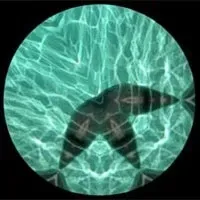
Image: Brett Graham & Rachel Rakena, Detail of U.F.O.B. (2006)by Mark Amery Courtesy of The Dominion Post 2/3/07
An image of the prospector is one who pans with only the dream of finding gold. However, with City Gallery's triennial survey of contemporary art - Prospect: New Art New Zealand - a gold rush is virtually assured.
Image: Brett Graham & Rachel Rakena, Detail of U.F.O.B. (2006)A City Gallery in-house curator has already done the sifting, picking their best bets from around the country. The artists' strength has most often been recognised by dealers and public galleries previously.
The exhibition tag 'new art' is necessarily glib and tricky to define, but it carries with it the intimation that the art will appear fresh, whether by an emerging or established talent. And going on results - few of us get to sift through shows like this around the country - 2007 curator Heather Galbraith has chosen well. Prospect 2007 demands multiple visits.
Yet there's a difference between a lump of gold and an ingot. For the most part, this Prospect like the last lacks definition, feeling crowded and difficult to take in in many places. The curator again seems hamstrung by the shapeless breadth of the gallery's uber-mandate to, like a brochure for The Warehouse, give us lots of new things and all at once.
It's no wonder that Liz Allen's design for a display of multiples for sale in the foyer has florescent star-shaped 'sale' teasers more familiar from displays of fresh meat. Poppy teasers like this were fresh and ironic back when they appeared with the first Prospect show - five years ago.
The lack of definition feels a little unavoidable given Prospect's context. In the absence of more tightly curated contemporary art shows of recent practice year-round at the gallery, Prospect still feels like it's trying to squeeze everybody from around the country into the building. It isn't allowed to be a tighter, more cultivated and personal vision of the contemporary landscape. Nor does its largesse react against such visions as does say a survey in a larger city. It's an embarrassment of riches in a city not used to it.
Certainly the show doesn't suffer from the crowded confusion of having its broad thematic threads spread over four institutions, which hampered Prospect in 2004. Yet with over 30 artists, and Galbraith quite sensibly wanting to give most either an installation space or room for a collection of smaller work, when the work is this divergent space feels at a premium. As smart conceptually as their positioning might be, in actual physical space they still have to fight it out.
There's often an uncomfortable relationship here between installation and exhibition. Having Pip Culbert' skeletal pinnies next to an installation by et al. (a far better example of her work's powerful discordant disturbance as some kind of fictional state laboratory than last Prospect's so-called 'Donkey in a Dunny') does neither any favours. Nor upstairs the quite divergent work of Janet Lilo and Simon Denny (the peopled Lilo videos begging to talk across Denny to the poignant empty cityspaces of Fiona Admundsen and Gina Matchitt's flash shopping bags).
Upstairs, under the two broad themes 'reconfiguration of the everyday' and 'augmented reality' there are a few great group shows threatening to break out. There are strong curatorial ideas at work here, but the breadth of the Prospect mandate keeps scrambling them. Rachel Easting's large shiny ornamental sculpture in the foyer, featuring a lion struggling with a unicorn, is an apt show mascot.
There are notable exceptions. Downstairs a gallery is devoted to abstraction. The work here has room to breathe and vibrate in its tension between the sensual and conceptual, and there are strong links made architecturally between stunning works by Miranda Parkes, Judy Millar and Rohan Wealleans and, on the other side, Yul Oh, Simon Morris and Jeena Shin.
Upstairs there's a nice perversity to the way the room dominated by Jacquelyn Greenbank's macramed, crocheted and knitted creations work together in twisting traditional cultural heirarchies, with David Hatcher and Cindy Bernard's delicious videowork The Inquisitive Musician slowly gaining poignancy in the background as you move around the space.
And some artists are luckier. The works by Nova Paul and, together, Rachael Rakena and Brett Graham (first seen at the Sydney Biennale) are knockouts but unlike et al. get their own spaces. Lucky local Kim Paton was commissioned to create a work for the gallery's reading room and proves worth the faith with one of the exhibition's genuinely new works.
Known for her architectural interventions, Paton's small building teases us with its emptiness in this most functional of spaces. Yet its mobility, recycled materials, modular look and hinged platforms open it up to our own theatrical uses and constructions, speaking for me to the sources for New Zealand architecture and the impermanence of this country's built heritage.
It's surprising given the space difficulties and the community reach of much contemporary practice and its potential to engage in this way with a broader public that the gallery hasn't fully yet taken the opportunity to move more of its Prospect art outside its walls and into the city (as the Museum of New Zealand's did with its 1994 first and only national survey exhibition Art Now).
From 30 March 30 to 1 April expect to see twelve sheep in different brightly coloured jumpers grazing behind white picket fences outside the gallery as part of Gregor Kregar's Matthew 12: 12 project. The project works nicely within this exhibition, with its wealth of absurdist tactics and upturning of different hierarchies. I just can't help wondering if some of the Prospect artists might feel a little like those colour-coded sheep might - a little uncomfortably fenced in.