A Rite of Passage: The NZCT Chamber Music Contest
Written by
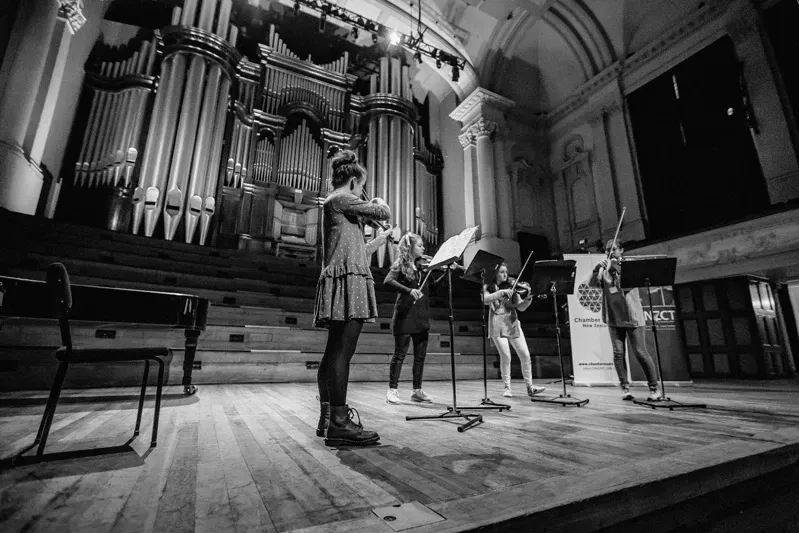
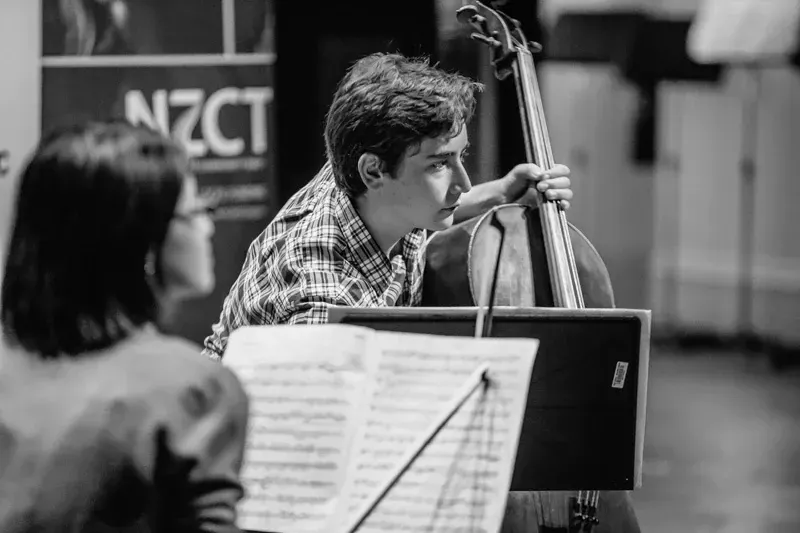
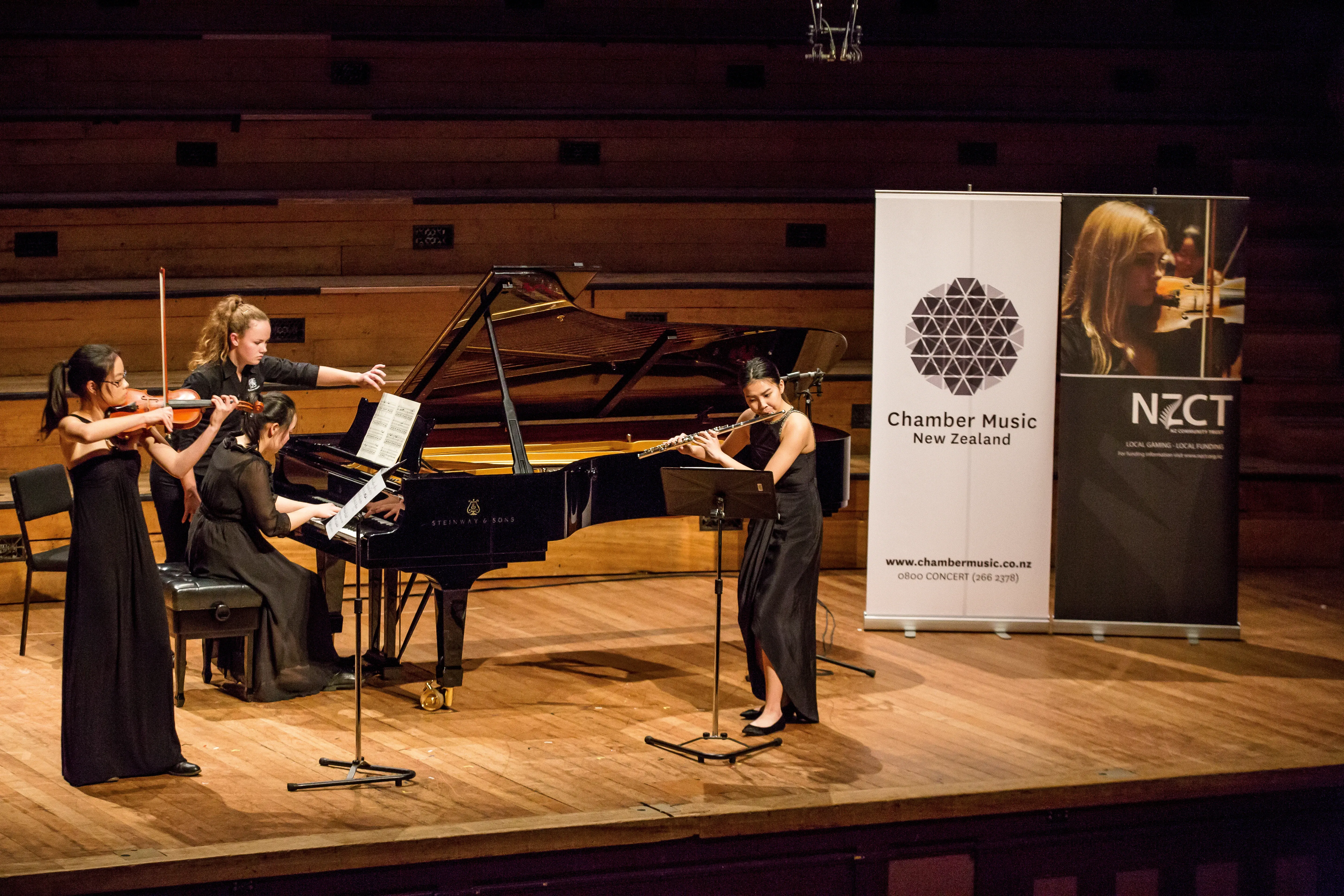
The NZCT Chamber Music Contest is well-known for nurturing young musicians who go on to successful musical careers. Founded in 1965, it is New Zealand’s oldest music competition, and its longest running school music event. In the very first event in 1965, there were 60 groups entered in the competition. Illustrating the growth of the contest year on year, this year there were 439 groups, involving 1675 high school students from all around the country.
“There can be no more inspiring sight than three or four young people really focusing on producing something excellent together, where the endeavor involves individual skill and commitment applied to a common goal.” - Chamber Music New Zealand Chief Executive, Peter Walls.
Arthur Hilton, President of the Music Federation in 1965 (now Chamber Music New Zealand) said that the idea for the contest arose from the organisation’s interest in music education. “[The Federation] felt that, for young players, making music with other young people was more fun than playing alone and it hoped that the formation of such groups would help counteract the temptation felt by many youngsters to give up playing an instrument as the demands of academic and social life grew greater.” (From The 50th Jubilee National Finals Programme)
The contest is open to full-time students from Years 9 to 13, and includes both a performance and original composition section. Groups of three to eight performers can enter. Any combination of instruments may be used, and the group may include a single voice, but may not include a conductor. The winning group at the National Final receives the Wallace Foundation Prize of $6000.
The significance of the competition has come up time and again in my own conversations with the likes of NZ Trio’s Justine Cormack and New Zealand School of Music’s Professor Donald Maurice. Both have highlighted the musical connections that were formed, and the influence the competition had on their careers. It feels very much that the contest has become a rite of passage for aspiring young musicians in New Zealand.
NZ Trio’s Justine Cormack, who has been involved with the competition both as a contestant and as an adjudicator, said she first played with Sarah Watkins (the pianist for NZ Trio) at the Chamber Music Contest. “I credit my love of chamber music to that competition. So many professional musicians have that competition to thank for their careers. The competition demanded the most of me as a young musician and I thrived on that challenge.”
Iconic New Zealand pianist Michael Houstoun who competed in the event when he was a high school student in Timaru, also attributes his love of chamber music to the contest. "Although I had heard other musicians playing chamber music it wasn't until I played it myself that I fell in love with it. The contest gave me that opportunity and I've never looked back," he said.
Professor Donald Maurice of New Zealand School of Music, said he had been playing the violin for about three years, and had to switch to viola to enable a string quartet to be formed to play Beethoven's Op.18 No.4. “I never went back,” he said. Now extremely passionate about viola, Professor Maurice teaches viola at the School of Music, and is currently organizing the upcoming International Viola Congress. “My main memory was the thrill of making the national final in 1970 and being flown to Wellington along with the other finalists from around New Zealand and being part of such an exciting concert. I hadn't really travelled much or been on planes at that stage in my life,” he said.
Francesca Orchard-Hall is a semi finalist in this year’s competition with oboe group, Mahuta Trio. In her final year at St Cuthbert’s College, this is her fifth year in the competition. “The Chamber Music Contest is so different to other competitions we’re exposed to at school. With sports, the winner is obvious, but with music it’s so subjective. It depends on how the adjudicator hears and feels the music. You can be really disappointed with the result, but I think that helps you grow,” she said.
Francesca is playing with Emma Wu and Louise Hwang from Westlake Girls High School. Living across the city from each other, the group coordinates rehearsals via messenger chat, and having spent a significant amount of time together rehearsing, have become good friends. “There’s a certain sensitivity you need when playing in a small group. We all play in school orchestras and concert bands, but this is different. You’re given many opportunities to perform throughout the rounds, so you learn more about the piece and your own playing each time, and how you can support each other. Your confidence improves and you just enjoy playing it more. “
Currently considering a music performance degree, Francesca said, “Playing the oboe just started off as a hobby, but it’s turning into a real possibility for my future.”
Of the 439 groups entered in the competition, 12 have been selected for the semi finals, to be held on Saturday 5 August, with the National Final on Sunday 6 August at the Michael Fowler Centre.
The Virtuoso Strings Quintet will also perform the competition's winning original composition Toroa Rising/Piwakawaka Dancing, by Benjamin Sneyd-Utting, from Tawa College at the National Final.
The National Semi-Finals will be judged by NZSO cellist Brigid O’Meeghan and Auckland Philharmonia Orchestra principal bassoon Ingrid Hagan. They will be joined by renowned New Zealand pianist Stephen De Pledge to adjudicate the National Final.
Tickets are available through Ticketek www.ticketek.co.nz or phone 0800 842 538. The event is free for Chamber Music New Zealand subscribers.