6th World Summit on Arts & Culture concludes
Written by
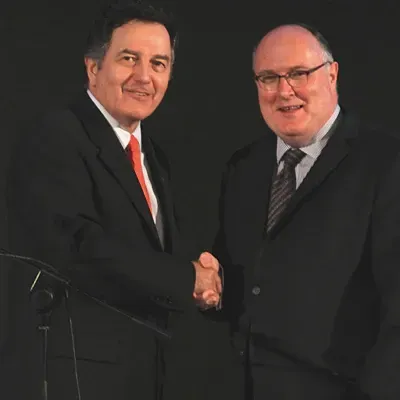


With an important conversation between the Chilean Minister of Culture, Roberto Ampuero and his Lithuanian counterpart, Sarunas Birutis, and an ending speech by Enrique Vargas, Assistant Director of Culture for the General Secretariat of the Latin American Area (SEGIB) the 6th World Summit on Arts and Culture, organized by the National Council for Culture and the Arts and the International Fede
With an important conversation between the Chilean Minister of Culture, Roberto Ampuero and his Lithuanian counterpart, Sarunas Birutis, and an ending speech by Enrique Vargas, Assistant Director of Culture for the General Secretariat of the Latin American Area (SEGIB) the 6th World Summit on Arts and Culture, organized by the National Council for Culture and the Arts and the International Federation of Arts Councils and Culture Agencies (IFACCA), developed at the Centro Cultural Estacion Mapocho was concluded.
During three days, over 500 attendees, 70 exhibitors and ministers of culture of different nations discussed the main challenges and opportunities in the cultural sector in times marked by globalization, changes in the social and economic development, and new forms communication.
At the same time, the participants could witness a unique conversation with Chinese artist Ai Wei Wei who exclusively, made a recording via Skype for this summit and spoke about the importance of technology, its influence on young people and his current situation in China, especially on the struggle for freedom of expression.
Finally, the next country to have the honor of hosting the 7th World Summit on Arts and Culture was announced: Malta.
Minister Ampuero referred to the importance of having made the summit in Chile and said that "This has been a great summit. Something that pleased me is that Chile could project its cultural image, its gastronomic image to all delegates attending the country and something very elemental for us, is that this summit was opened by streaming, something that gave the possibility to all citizens to follow the development of the different interventions, performances and presentations by the invited to this world of culture and the arts. "
Also, Minister Ampuero added that Chile is a pioneer in Latin America to start IFACCA’s presence in South America and that thanks to this instance, the country will not only share their experience with other nations, but also nurtured from it and from the cultural history of other realities.
Conclusions
With great success the World Summit on Arts and Culture concluded. It constituted intense days of artistic and cultural events of the century. For Chile and Latin America it was of great importance that this program was developed, and a milestone for the region.
There was a deep reflection on the creative times and the challenges facing the cultural industry, as well as the links that bind the world of culture in such diverse fields as economics, sustainability, globalization and technology.
One of the major conclusions of this summit was the powerful network that was generated, which has been considered as a space for reflection, consolidation and strengthening dialogue between cultural managers around the world, which ultimately means that there will be more and better ability to talk and use of creative spaces.
Minister Ampuero said that "between the main consequences is necessary to realize that this is a new paradigm in encouraging and promoting culture, marked by the new economic paradigm, international politics and marking also by social demands primarily for more culture in worldwide young sectors and also by new forms of communication, which gives a new outlook to what is the promotion of arts and culture."
Minister Ampuero also referred to the need for countries to have a better understanding and said it is necessary to “promote in a better way the roots of indigenous people, of past cultures that are still present as in the case of in our country" and claimed that "consider and incorporate the study and practice of the arts and culture in children and young people generates a more prosperous, a more critical country and much more creative citizenship."
Among the conclusions, also highlighted the need for these public and private cultural institutions to narrow relationship with the public.
Ministers, managers and artists
Important guests, both domestic and international participated in this summit.
They came to Chile, the Ministry of Cultural Heritage and Activities and Tourism of Italy, Massimo Bray; Minister of Culture of Costa Rica, Manuel Obregon; Hernan Lombardi, Minister of Culture of the City of Buenos Aires and Vice-Chairman Committee on Culture in Cities and Local Governments; Sarunas Birutis, Minister of Culture of Lithuania; Mabel Causarano, Minister of Culture of Paraguay; Ana Magdalena Granadino, Secretary of State for the Presidency of El Salvador; Mariana Garces Cordoba, Minister of Culture of Colombia and Jose Maria Lassalle, Secretary of State for Culture of Spain.
Important figures from international cultural world also attended including Faith Liddell, Director of Edinburgh Festivals; Mohamed El Sawy, former Egyptian Minister of Culture, philanthropist and Director of Culture Wheel Foundation; Jota Castro, Curator of the Pavilion of Urgency in the Biennial Venice 2013; The Australian Rachel Perkins, Executive Director of Black Fella Films; Rei Maeda, Coordinator of the Echigo-Tsumari Art Triennial; Jack Stanley, Director of Programs at Fogo Island Arts and Carole Karemera, Director of the Pan African Dance Festival and Secretary General of Arterial Network, among others.
Among the Chilean attendants was Sonia Montecino winner of the National Award for Humanities and Social Sciences 2013, Vice Chancellor of Outreach and Communications at the University of Chile and a PhD in Anthropology from the University of Leiden, Netherlands; Herlado Munoz, Assistant Secretary General of UN, Assistant Administrator and Director of the Regional Bureau for Latin America and the Caribbean of the United Nations Development Program (UNDP), Mahani Teave, pianist and founder of School of Music of Rapa Nui, and Antonio Altamirano, Director Festival Infinite skies among others.
Meanwhile, participating in this Summit were personalities like Hayes Raffle , renowned designer of interactive products Google [X] who is currently working on Project Glass (lenses for viewing information from the Internet on the same device ); Sir Peter Bazalgette, vice president of the School national Film and Television. Member of the boards of companies in market research: YouGov and MirriAd, besides being part of the BBH Advertiser Advisory Board, Chairman of the Royal Television Society, was the creative director of Endemol, and is on the board of the commercial chain leading UK TV: ITV. He is also responsible for the design of various formats internationally successful television; and Karl Johnstone, director of the New Zealand Maori Arts and Crafts Institute (NZMACI) .
The organization has national schools of Maori carving wood, bone and stone, fabric, and construction of canoes. With over 15 years of experience working in the field of Cultural Heritage, Karl has developed a dynamic and innovative leadership approach to projects leading culture and heritage and is the precursor of the replica canoe trips that were made over 700 years ago by Maori tribes to Easter Island and involving over 10 thousand nautical miles (18,520 km) trip guided only by the stars, moon, sun, ocean currents and wildlife.
Three days of discussions
During the three days that the World Summit on Arts and Culture was developed, delegates had the opportunity to participate in lectures, expert panels and sessions addressing the main challenges and opportunities in the cultural sector in times marked by globalization, changes in the social and economic development, and new forms of communication. In addition to a cultural program designed around these issues.
There were two areas of discussion: critical times, paradigm shifts scenarios marked by reactions to crises that impact the development, creation, participation and appreciation of the culture in the world, and creative spaces, the role of the arts and culture in creative spaces, as important vehicles for knowledge transfer as well as generators of innovation, entrepreneurship and development through creative industries and to promote the participation of civil society in the new development models.
Media Release: World Summit on Arts and Culture